¡Acompáñanos a viajar por el mundo de los libros!
Añadir este libro a la estantería
Grey
Escribe un nuevo comentario Default profile 50px
Grey
Suscríbete para leer el libro completo o lee las primeras páginas gratis.
All characters reduced
Lots of Sex in the Suite - Explicit Gay Erotic Short Stories for Men (Hot and Sexy) - cover

Lots of Sex in the Suite - Explicit Gay Erotic Short Stories for Men (Hot and Sexy)

Manuel García

Editorial: Publishdrive

  • 0
  • 0
  • 0

Sinopsis

In this raw and provocative collection of gay erotic short stories, Manuel García strips desire to its essentials. These are stories of real men—silent types, often rugged, sometimes bruised by life—who burn with the kind of lust that erupts not from sweetness, but from tension, defiance, and skin pressed against skin. The writing is carnal and direct, saturated with glances, smells, and the electricity of the unsaid. This isn’t about fantasy—it’s about virile eroticism, where men want men, and every encounter carries the weight of truth.
 
The title story, Lots of Sex in the Suite, unfolds in the dim rooms of a cruising club and the luxury of a hotel suite. Federico, a fifty-something businessman with money to spare and no interest in pretending, isn't looking for love—he’s looking for prey. Young, passive, delicate: that’s his type. Andrea, barely twenty-one, is lost, hungry, and still reeling from a secret relationship gone up in flames. When their paths cross, what begins as a simple transaction becomes something else—sharper, deeper, riskier.
 
He spotted him from across the bar. A waiter’s whisper, a knowing glance, and then the slow dance of two men pretending not to know exactly what they want. Federico leaned in—confident, controlled. Andrea hesitated, curious, unsure. Minutes passed like hours. Then the suite: velvet cushions, city lights through thick glass, and the heavy silence of two bodies measuring each other. The night stretched out before them, open like a wound.
 
And in that space—between need and power, experience and uncertainty—desire made its move. Bold, physical, undeniable.
 
Some nights aren’t meant to be remembered.Others become the thing you chase, again and again.
Disponible desde: 04/07/2025.
Longitud de impresión: 60 páginas.

Otros libros que te pueden interesar

  • Compassion and Reason: The 36 Leonard Vovniks - cover

    Compassion and Reason: The 36...

    B Raquen Clarebi

    • 0
    • 0
    • 0
    Compassion. Reason. Non-violence. Bodily Integrity and Autonomy. Freedom from Oppression. Freedom for your Mind. JOIN US! Live life compassionately. Shed the identity forced upon you by religion, culture, tradition and society. Only then will you be truly free.  It's our responsibility as humans to help each other and be kind to each other. Period. 
    It does not matter whether or not god exists, because either way-YOU EXIST!
    Ver libro
  • The Complete Plato - cover

    The Complete Plato

    Plato

    • 0
    • 0
    • 0
    "The Safest General Characterization of the European Philosophical Tradition Is That It Consists of a Series of Footnotes to Plato."
    
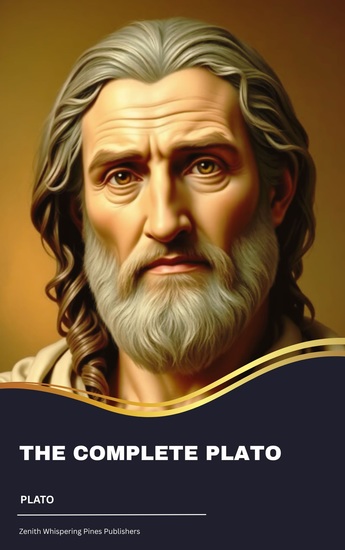
    Plato did not just write philosophy; he invented the way the Western world thinks. As the prize pupil of Socrates and the teacher of Aristotle, Plato captured the birth of logic, ethics, and metaphysics in the form of dramatic, engaging dialogues. This comprehensive collection brings together his entire body of work, offering a timeless map for anyone seeking to understand justice, beauty, and the nature of reality itself.
    
    Inside this monumental collection, you will explore:
    
    The Socratic Method in Action: Experience the "Elenchus"—the art of the cross-examination—as Socrates systematically dismantles the assumptions of his peers to uncover deeper truths.
    
    The Theory of Forms: Delve into the radical idea that the physical world is merely a shadow of a higher, perfect reality, and learn how to train the mind to "see" beyond the surface.
    
    The Blueprint for the Just Society: Explore profound meditations on governance, the education of the "Philosopher King," and the delicate balance between individual freedom and social order.
    
    Ethics and the Human Soul: Engage with timeless inquiries into the nature of virtue, the immortality of the soul, and the pursuit of the "Good Life."
    
    Plato's writing remains as vital today as it was in the Academy of Athens. His dialogues are not dry lectures, but living debates that challenge the reader to participate in the search for wisdom. This volume is the essential cornerstone for any library of humanities, political science, and classical studies.
    
    Begin your journey toward the light. Buy "The Complete Plato" today and master the art of thinking.
    Ver libro
  • Russian Nuclear Orthodoxy - Religion Politics and Strategy - cover

    Russian Nuclear Orthodoxy -...

    Dmitry Adamsky

    • 0
    • 0
    • 0
    A nuclear priesthood has arisen in Russia. From portable churches to the consecration of weapons systems, the Russian Orthodox Church has been integrated into every facet of the armed forces to become a vital part of Russian national security, politics, and identity. This extraordinary intertwining of church and military is nowhere more visible than in the nuclear weapons community, where the priesthood has penetrated all levels of command and the Church has positioned itself as a guardian of the state's nuclear potential. Russian Nuclear Orthodoxy considers how, since the Soviet collapse in 1991, the Church has worked its way into the nuclear forces, the most significant wing of one of the world's most powerful military organizations. 


    Dmitry Adamsky describes how the Orthodox faith has merged with Russian national identity as the Church continues to expand its influence on foreign and domestic politics. The Church both legitimizes and influences Moscow's assertive national security strategy in the twenty-first century. This book sheds light on the role of faith in modern militaries and highlights the implications of this phenomenon for international security. Ultimately, Russian Nuclear Orthodoxy interrogates the implications of the confluence of religion and security for other members of the nuclear club, beyond Russia.
    Ver libro
  • The Lyceum Address - The Perpetuation of Our Political Institutions - cover

    The Lyceum Address - The...

    Abraham Lincoln

    • 0
    • 0
    • 0
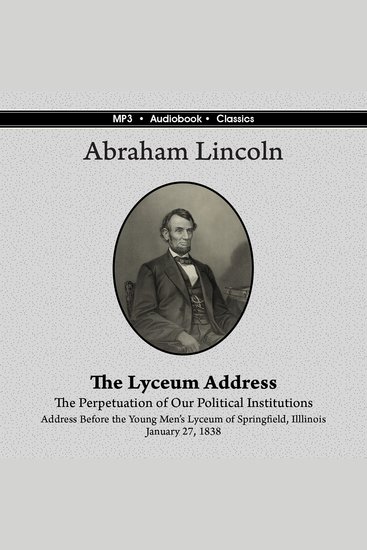
    Abraham Lincoln's Lyceum Address, delivered in 1838, reflects on the fragility of American democracy and the potential dangers of lawlessness and mob rule. Lincoln begins by honoring the Founding Fathers and their sacrifices, emphasizing the importance of preserving their legacy. He warns against the threat posed by individuals who seek to undermine the rule of law and exploit public discontent for personal gain. Lincoln argues that the true danger to the nation comes not from external enemies but from internal strife and moral decay. 
    Central to Lincoln's message is the idea that respect for laws and institutions is essential for maintaining a stable and just society. He calls for citizens to uphold the principles of justice and equality, stressing the need for education and moral guidance to foster responsible citizenship. Lincoln uses historical examples, including the rise and fall of ancient republics, to illustrate the consequences of unchecked lawlessness and civic indifference. 
    Throughout the address, Lincoln's eloquence and deep concern for the future of democracy in America are evident. He urges his audience to cherish and protect the nation's democratic ideals, emphasizing that the strength of the United States lies in the unity and moral character of its people. Lincoln's Lyceum Address remains a timeless reminder of the enduring values that underpin a free and democratic society.
    Ver libro
  • The Thirty-First of March - An Intimate Portrait of Lyndon Johnson - cover

    The Thirty-First of March - An...

    Horace Busby, Scott Busby

    • 0
    • 0
    • 0
    An intimate retelling of Lyndon B. Johnson's politics and presidency by one of his closest advisors. 


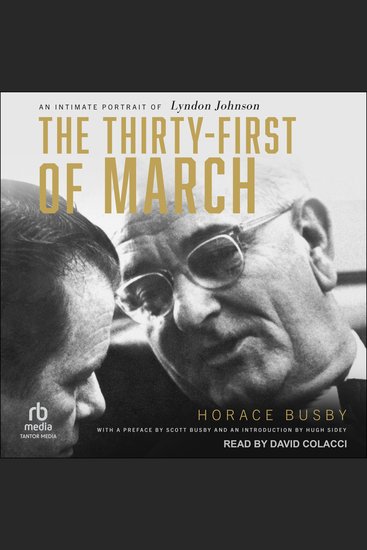
    Horace Busby was one of LBJ's most trusted advisors; their close working and personal relationship spanned twenty years. In The Thirty-First of March he offers an indelible portrait of a president and a presidency at a time of crisis. From the aftereffects of the Kennedy assassination, when Busby was asked by the newly sworn-in president to sit by his bedside during his first troubled nights in office, to the concerns that defined the Great Society—civil rights, the economy, social legislation, housing, and the Vietnam War—Busby not only articulated and refined Johnson's political thinking, he also helped shape the most ambitious, far-reaching legislative agenda since FDR's New Deal. 


    Here is Johnson the politician, Johnson the schemer, Johnson who advised against JFK's choice of an open limousine that fateful day in Dallas, and Johnson the father, sickened by the deaths of young men fighting and dying in Vietnam on his orders. The Thirty-first of March is a rare glimpse into the inner sanctum of Johnson's presidency, as seen through the eyes of one of the people who understood him best.
    Ver libro
  • The Goddesses of Olympus - The Divine Females of Greek Myth - cover

    The Goddesses of Olympus - The...

    Odessa Nightshade

    • 0
    • 0
    • 0
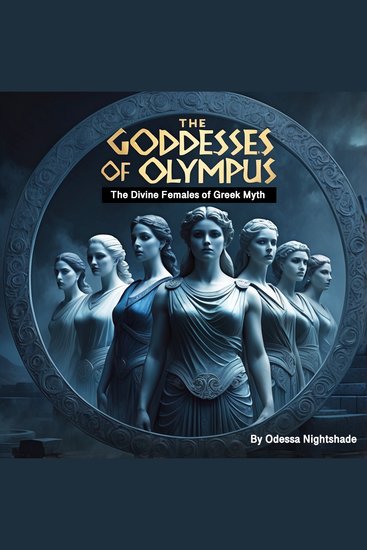
    Greek mythology is filled with powerful deities, but the goddesses of Olympus stand out as figures of immense influence, embodying wisdom, love, war, motherhood, and the natural world. Unlike many other ancient pantheons, the Greek goddesses were not merely passive consorts to male gods; they held dominion over vast aspects of life and fate, shaping the world alongside their male counterparts. Their myths reveal complex personalities, often showcasing both nurturing and vengeful qualities, making them among the most dynamic figures in classical mythology.  
    The Olympian goddesses played a crucial role in the religious and cultural life of the ancient Greeks. Each goddess had her own temples, festivals, and priestesses, emphasizing her importance in daily worship and ritual practice. For example, Athena’s grand temple, the Parthenon, dominated Athens, reflecting her status as the city’s protector. Similarly, Demeter’s worship at Eleusis was central to agricultural and spiritual life, demonstrating the deep connection between divine power and human existence. These deities were not merely symbols; they were revered beings believed to influence everything from war strategies to the fertility of the land.  
    Beyond religion, Greek goddesses also played a major role in storytelling, appearing in epic poetry, drama, and philosophy. Figures like Hera, Athena, and Aphrodite were central to the Trojan War myth, while Persephone’s descent into the underworld explained the changing of the seasons. Their myths often reflected the Greeks’ views on power, femininity, and morality. Unlike the rigid roles imposed on mortal women, the goddesses possessed a wide range of attributes, from Artemis’s independence and warrior spirit to Hestia’s quiet but essential presence as the guardian of the home. Through these divine narratives, the Greeks explored themes of justice, fate, love, and revenge, using their goddesses as symbols of both order and chaos. 
    Ver libro