¡Acompáñanos a viajar por el mundo de los libros!
Añadir este libro a la estantería
Grey
Escribe un nuevo comentario Default profile 50px
Grey
Suscríbete para leer el libro completo o lee las primeras páginas gratis.
All characters reduced
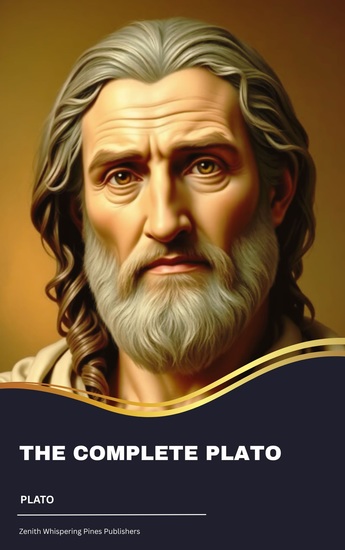
The Complete Plato - cover

The Complete Plato

Plato

Traductor Benjamin Jowett

Editorial: Zenith Whispering Pines Publishers

  • 0
  • 0
  • 0

Sinopsis

"The Safest General Characterization of the European Philosophical Tradition Is That It Consists of a Series of Footnotes to Plato."

Plato did not just write philosophy; he invented the way the Western world thinks. As the prize pupil of Socrates and the teacher of Aristotle, Plato captured the birth of logic, ethics, and metaphysics in the form of dramatic, engaging dialogues. This comprehensive collection brings together his entire body of work, offering a timeless map for anyone seeking to understand justice, beauty, and the nature of reality itself.

Inside this monumental collection, you will explore:

The Socratic Method in Action: Experience the "Elenchus"—the art of the cross-examination—as Socrates systematically dismantles the assumptions of his peers to uncover deeper truths.

The Theory of Forms: Delve into the radical idea that the physical world is merely a shadow of a higher, perfect reality, and learn how to train the mind to "see" beyond the surface.

The Blueprint for the Just Society: Explore profound meditations on governance, the education of the "Philosopher King," and the delicate balance between individual freedom and social order.

Ethics and the Human Soul: Engage with timeless inquiries into the nature of virtue, the immortality of the soul, and the pursuit of the "Good Life."

Plato's writing remains as vital today as it was in the Academy of Athens. His dialogues are not dry lectures, but living debates that challenge the reader to participate in the search for wisdom. This volume is the essential cornerstone for any library of humanities, political science, and classical studies.

Begin your journey toward the light. Buy "The Complete Plato" today and master the art of thinking.
Disponible desde: 23/12/2025.
Longitud de impresión: 547 páginas.
Otros libros que te pueden interesar

  • Why I Became an X Troop Commando - A Life of Colin Anson the German who Fought for Churchill - cover

    Why I Became an X Troop Commando...

    Helen Fry

    • 0
    • 0
    • 0
    A fascinating and moving biography of Colin Anson, the German refugee who became an elite British commando 


    Born in Germany in 1922, Colin Anson's (Claus Ascher) childhood was marked by the trials of Nazism. His father was arrested by the Gestapo in 1937 and transported to Dachau, where he died shortly after. Colin, aged just seventeen, escaped to Britain in the Kindertransport. As soon as he was old enough, Colin volunteered in the Pioneer Corps. Then, in 1942, he was recruited for the elite commando unit X-Troop. 


    Colin took part in the invasions of Sicily and Italy in 1943, where he sustained a near-fatal injury. But just months later, he returned to duty. He fought in the Yugoslav islands, became the first Allied soldier to liberate Corfu, and was stationed in postwar Frankfurt. 


    In this unique biography, Helen Fry traces the remarkable story of Colin's life. Drawing on extensive interviews, Fry recounts his actions in X-Troop and beyond in his own words—and sheds new light on the experience of refugees in the British forces.
    Ver libro
  • The Common Wind - Afro-American Currents in the Age of the Haitian Revolution - cover

    The Common Wind - Afro-American...

    Julius S. Scott, Marcus Rediker

    • 0
    • 0
    • 0
    The Common Wind is a gripping and colorful account of the intercontinental networks that tied together the free and enslaved masses of the New World. Having delved deep into the gray obscurity of official eighteenth-century records in Spanish, English, and French, Julius S. Scott has written a powerful "history from below." Scott follows the spread of "rumors of emancipation" and the people behind them, bringing to life the protagonists in the slave revolution. 


    By tracking the colliding worlds of buccaneers, military deserters, and maroon communards from Venezuela to Virginia, Scott records the transmission of contagious mutinies and insurrections in unparalleled detail, providing listeners with an intellectual history of the enslaved. 


    Though The Common Wind is credited with having "opened up the Black Atlantic with a rigor and a commitment to the power of written words," the manuscript remained unpublished for thirty-two years. Now, after receiving wide acclaim from leading historians of slavery and the New World, it has been published for the first time, with a foreword by the academic and author Marcus Rediker.
    Ver libro
  • A Very Merry Matchup Machine - cover

    A Very Merry Matchup Machine

    Marcus Reed

    • 0
    • 0
    • 0
    A Very Merry Matchup Machine is a sharp, warm look at how holiday rom-coms, small towns, and well-meaning relatives turn December into a matchmaking factory—and what that does to anyone who doesn’t fit the script. Starting from the cozy chaos of a Christmas romance full of pageants, cocoa and “accidental” setups, this book opens the casing of the holiday-love machine to examine the gears underneath: the pressure to be coupled by year’s end, the way communities act like human algorithms, and the quiet shame of spending the season unresolved. 
    Rather than mocking the genre or worshipping it, A Very Merry Matchup Machine shows how these stories can be both comforting and coercive. It offers a more honest version of “merry,” one that makes room for single people who aren’t projects, relationships that begin off-season, and Decembers where the most radical pairing is you with your own life. It’s for anyone who loves holiday movies, feels strange inside them, and wants to carry the glow into January without the algorithm deciding what happiness should look like.
    Ver libro
  • Occupation and Liberation of France during World War II The: The History of the Decisive Campaigns in 1940 and 1944 - cover

    Occupation and Liberation of...

    Editors Charles River

    • 0
    • 0
    • 0
    One of the most famous people in the world came to tour the city of Paris for the first time on June 28, 1940. Over the next three hours, he rode through the city’s streets, stopping to tour L’Opéra Paris. He rode down the Champs-Élysées toward the Trocadero and the Eiffel Tower, where he had his picture taken. After passing through the Arc de Triomphe, he toured the Pantheon and old medieval churches, though he did not manage to see the Louvre or the Palace of Justice. Heading back to the airport, he told his staff, “It was the dream of my life to be permitted to see Paris. I cannot say how happy I am to have that dream fulfilled today.” 
    Four years after his tour, Adolf Hitler would order the city’s garrison commander, General Dietrich von Choltitz, to destroy Paris, warning his subordinate that the city "must not fall into the enemy's hand except lying in complete debris." Of course, Paris was not destroyed before the Allies liberated it, but it would take more than 4 years for them to wrest control of France from Nazi Germany after they took the country by storm in about a month in 1940. That said, it’s widely overlooked today given how history played out that as the power of Nazi Germany grew alarmingly during the 1930s, the French sought means to defend their territory against the rising menace of the Thousand-Year Reich. As architects of the most punitive measures in the Treaty of Versailles following World War I, France was a natural target for Teutonic retribution, so the Maginot Line, a series of interconnected strongpoints and fortifications running along much of France's eastern border, helped allay French fears of invasion. 
    The French had not expected the Germans would be able to move armored units through the Ardennes Forests, a heavily wooded region spanning parts of Belgium, France and the Netherlands. To the Allies’ great surprise, the Germans had no trouble rolling across these lands in the span of weeks.
    Ver libro
  • Technocracy Explained - The Role of Technological Expertise in Government and Policy-Making - cover

    Technocracy Explained - The Role...

    Arlo Holders

    • 0
    • 0
    • 0
    Technocracy is a concept that has evolved over time, yet its core principles remain focused on the idea that governance should be driven by scientific knowledge and technical expertise rather than political ideologies or populist sentiments. The term "technocracy" was first introduced in the early 20th century by engineers and economists who believed that the efficient management of resources and societal development could only be achieved through the application of scientific principles. Technocrats argued that political leaders, often with little to no understanding of complex systems, were ill-equipped to make decisions that could optimize society’s functioning, particularly in times of rapid industrialization and technological advancement. 
    The origins of technocracy can be traced back to the industrial revolution, when technological innovations began reshaping economies and societies. However, the movement gained significant traction in the early 1930s during the Great Depression, a period of economic turmoil that called into question traditional governance models. During this time, scholars like Howard Scott and engineers from the Technocratic Movement in the United States called for the establishment of a technocratic society where engineers, scientists, and other experts would manage the economy based on data-driven decision-making rather than political influence. They believed that such a system would eliminate inefficiencies, social inequalities, and the corruption they associated with political governance.
    Ver libro
  • Frequently Asked White Questions - cover

    Frequently Asked White Questions

    Ajay Parasram, Alex Khasnabish

    • 0
    • 0
    • 0
    Are you a white person with questions about how race affects different situations, but you feel awkward, shy, or afraid to ask the people of colour in your life? Are you a racialized person who is tired of answering the same questions over and over? This book is for you: a basic guide for people learning about racial privilege. In Frequently Asked White Questions, Alex Khasnabish and Ajay Parasram answer ten of the most common questions asked of them by people seeking to understand how race structures our every day. Drawing from their lived experiences as well as live sessions of their monthly YouTube series Safe Space for White Questions, the authors offer concise, accessible answers to questions such as, “Is it possible to be racist against white people?” or “Shouldn’t everyone be treated equally?” With humour and compassion, this book offers relatable advice and a practical entry point into conversations about race.
    Ver libro