Join us on a literary world trip!
Add this book to bookshelf
Grey
Write a new comment Default profile 50px
Grey
Subscribe to read the full book or read the first pages for free!
All characters reduced
The Elements and their Inhabitants - cover

The Elements and their Inhabitants

Manly Palmer Hall

Publisher: Edizioni Aurora Boreale

  • 0
  • 0
  • 0

Summary

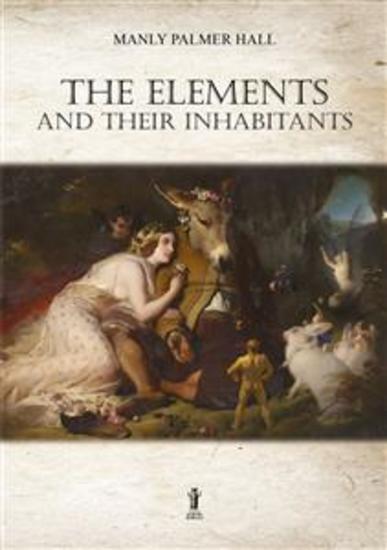
Just as visible Nature is populated by an infinite number of living creatures, so, according to Paracelsus, the invisible, spiritual counterpart of visible Nature (composed of the tenuous principles of the visible elements) is inhabited by a host of peculiar beings, to whom he has given the name elementals, and which have later been termed the Nature spirits. Paracelsus divided these people of the elements into four distinct groups, which he called gnomes, undines, sylphs, and salamanders. He taught that they were really living entities, many resembling human beings in shape, and inhabiting worlds of their own, unknown to man because his undeveloped senses were incapable of functioning beyond the limitations of the grosser elements.The civilizations of Greece, Rome, Egypt, China, and India believed implicitly in satyrs, sprites, and goblins. They peopled the sea with mermaids, the rivers and fountains with nymphs, the air with fairies, the fire with Lares and Penates, and the earth with fauns, dryads, and hamadryads. These Nature spirits were held in the highest esteem, and propitiatory offerings were made to them.Occasionally, as the result of atmospheric conditions or the peculiar sensitiveness of the devotee, they became visible. Many authors wrote concerning them in terms which signify that they had actually beheld these inhabitants of Nature’s finer realms. A number of authorities are of the opinion that many of the Gods worshiped by the pagans were elementals, for some of these invisibles were believed to be of commanding stature and magnificent deportment.The Greeks gave the name dæmon to some of these elementals, especially those of the higher orders, and worshiped them. Probably the most famous of these dæmons is the mysterious spirit which instructed Socrates, and of whom that great philosopher spoke in the highest terms. Those who have devoted much study to the invisible constitution of man realize that it is quite probable the dæmon of Socrates and the angel of Jakob Böhme were in reality not elementals, but the overshadowing divine natures of these philosophers themselves.
Available since: 04/19/2022.

Other books that might interest you

  • Let's Eat With Grandma - cover

    Let's Eat With Grandma

    Kim Mitzo Thompson, Karen Mitzo...

    • 0
    • 0
    • 0
    Kids will love this playful story about a family having dinner together and a grandma that enjoys cooking dinner for her family. Simple sentence structures and repetitive words will encourage young children to fall in love with learning to read.  Kids will enjoy following along word-for-word with the recorded story that features sound effects and professional voices to help children develop vocabulary and improve listening skills.  This reader features adorable art showing diversity to help children form a sense of acceptance and understanding of different races and individual differences.
    Show book
  • Love Nailed To The Doorpost - cover

    Love Nailed To The Doorpost

    Richard Chess

    • 0
    • 0
    • 0
    In Love Nailed to the Doorpost, Richard Chess offers poems and lyrical prose inspired and informed equally by the pleasures and pressures of everyday life and by sacred and secular texts ranging from Torah to Basho to Robert Creeley. This new work transports us from the biblical past to the present, from creation stories to stories of brotherly struggle to meditations on married and family love. 
    Love—that’s the thing, whether spontaneously arising or commanded, as it is, the commandment to love inscribed on parchment, rolled up and tucked into a small case, a mezuzah, and nailed to the doorpost of the house. You shall love: the challenges of fulfilling that commandment, and the joy and transformation one experiences when one does: that’s what Chess’s powerful new work explores.
    Show book
  • Joan of Arc - The Maid of Orleans - cover

    Joan of Arc - The Maid of Orleans

    Harris Ropes

    • 0
    • 0
    • 0
    Joan of Arc was born around January 6, 1412, in the small village of Domrémy, located in northeastern France. She came from a modest family of farmers, with her father, Jacques d’Arc, being a well-respected member of the community. Her mother, Isabelle Romée, was known for her devout religious beliefs, which would greatly influence Joan's early life. Joan was one of five children, and although she lived in relative poverty, her family provided her with a stable and loving environment. 
    Growing up in Domrémy, Joan was surrounded by the rural landscape of Lorraine, a region that was politically unstable at the time. The Hundred Years’ War, which pitted France against England, had caused widespread hardship for many French families. Domrémy, being on the border of French and Burgundian territories, was caught in the middle of this conflict. Joan witnessed firsthand the suffering of the French people, including raids and the destruction of villages, which left a lasting impact on her. 
    Joan was a deeply religious child, often spending time in the local church. It is said that she learned about the lives of saints and felt a special connection to them. Her strong faith became a central part of her identity. By the age of 13, Joan began to experience mystical visions. These visions, which she later described as coming from saints such as Saint Michael, Saint Catherine, and Saint Margaret, were significant in shaping her future. The voices instructed her to help the French crown, specifically to assist Charles VII, the Dauphin, in reclaiming his throne and driving out the English forces from France. Joan took these visions seriously, believing they were divine instructions, and they set her on a path that would change the course of history.
    Show book
  • Not A Real Enemy - The True Story of a Hungarian Jewish Man's Fight for Freedom - cover

    Not A Real Enemy - The True...

    Robert Wolf, Janice Harper

    • 0
    • 0
    • 0
    Hungary, 1944. Almost half a million Jewish Hungarians are deported to Auschwitz. Among the few surviving Hungarian Jews from this era were young men who, like Ervin Wolf, were forced into the brutal Labor Service where they were cut off from the outside world and forced to endure inhumane brutalities and servitude. Once freed, a new oppression took hold as communist rule under Stalin turned friends to foes, enveloped the nation in fear and suspicion, and tested everyone’s character and strength. 
    This is the true story of Ervin Wolf and his family as the fascist tide of Eastern Europe takes hold of Hungary. From the Wolfs’ comfortable upper-class life to imprisonment, daring escapes, tragic deaths, cloak-and-dagger adventures, and Ervin’s final escape to freedom in the dead of night, Not a Real Enemy is a page-turning tale of suspense, tragedy, comedy, and ultimately, triumph.
    Show book
  • I Hate Myself - Overcome Self-Loathing and Realize Why You're Wrong About You - cover

    I Hate Myself - Overcome...

    MD Blaise Aguirre, Jewel

    • 0
    • 0
    • 0
    In I Hate Myself: Overcome Self-Hatred and Realize Why You're Wrong About You, internationally known assistant professor of psychiatry at Harvard Medical School Dr. Blaise Aguirre tackles the pervasive and often ignored issue of self-hatred. This book provides crucial insights into identifying and overcoming this deeply disturbing feeling, explaining why common practices of "self-care" or "self-love" often fall short in cases where self-hatred has become an integral part of a person's identity. 


    The book delves into the roots of self-hatred, associated mental health disorders, and offers practical strategies for overcoming these challenges. 


    In this book, you will: 


    ● Learn to identify the origins and signs of self-hatred 


    ● Understand the connection between self-hatred and suicidal behavior as well as to co-occurring disorders like borderline personality disorder and depression 


    ● Discover effective strategies for transforming self-loathing into self-compassion 


    Perfect for those struggling with self-hatred and their loved ones, as well as mental health professionals, I Hate Myself offers a compassionate and practical approach to achieving self-acceptance.
    Show book
  • Finding Balance: A Guide to Stress Management Through Mindfulness Meditations - cover

    Finding Balance: A Guide to...

    Deepak Bhosle

    • 0
    • 0
    • 0
    Finding balance in life can be a difficult task. With modern living comes greater stressors such as a demanding job, family obligations, and financial concerns. All of this can make it difficult to take time for self-care. Fortunately, there are effective approaches to help gain control over stress through mindfulness meditation. This book will provide readers with the tools they need to reduce feelings of overwhelm and cultivate inner peace. 
    what is finding balance and how can mindfulness help? 
    Finding balance is a term that can mean many different things to many different people. At its core, finding balance is about maintaining a healthy equilibrium across the various aspects of your life. This could include relationships, career, health and fitness, physical environment, finances and spirituality. When you are able to achieve balance in these areas of your life then you will likely feel more contentment as well as improved mental and physical wellbeing. 
    Mindfulness-based techniques can be an invaluable tool in helping you find balance in your life. Mindfulness meditation can help ground you in the present moment so that instead of feeling overwhelmed by all the tasks and obligations on your plate, you can take pleasure from simply being alive.
    Show book