Join us on a literary world trip!
Add this book to bookshelf
Grey
Write a new comment Default profile 50px
Grey
Subscribe to read the full book or read the first pages for free!
All characters reduced
Artificial Intelligence Class 7 - cover

Artificial Intelligence Class 7

Manish Soni

Publisher: Poorav Publications

  • 0
  • 0
  • 0

Summary

As we move deeper into the 21st century, the role of technology in our lives continues to expand at an unprecedented pace. Among the most transformative technologies of our time is Artificial Intelligence (AI), which is increasingly becoming a cornerstone of innovation in virtually every field. From healthcare and education to entertainment and transportation, AI shapes how we live, work, and interact with the world around us. For today’s students, understanding AI is not just an option—it’s a necessity. This textbook, meticulously crafted for Class 7 students under the CBSE curriculum, is an essential guide to navigating the fascinating and rapidly evolving world of Artificial Intelligence.The primary goal of this book is to understand AI, making it accessible and engaging for young learners. With its technical jargon and complex algorithms, AI can often seem intimidating. However, through this textbook, we have endeavoured to present AI in a clear, relatable, and intriguing. Each chapter is carefully designed to introduce fundamental concepts and principles of AI, ensuring that students not only understand the theoretical aspects but also see the practical relevance of AI in their everyday lives. Whether it’s exploring how AI helps power their favourite apps, understanding how it assists doctors in diagnosing diseases, or learning how it’s used to improve transportation systems, students will see first-hand how AI is woven into the fabric of modern society.We have incorporated various interactive elements throughout the book to make the learning experience more engaging and effective. These include hands-on activities, project-based learning opportunities, and thought-provoking exercises that encourage students to apply what they’ve learned creatively and innovatively. By working through these activities, students will deepen their understanding of AI and develop critical thinking, problem-solving, and analytical skills that are vital in the digital age.This textbook is more than just an introduction to AI—it’s a call to action. It invites students to be curious, experiment, ask questions, and explore AI's vast possibilities. By nurturing curiosity and creativity from a young age, we can empower students to become tomorrow's innovators, thinkers, and leaders. The journey into the world of AI is just beginning, and this book is your companion on that journey, guiding you as you discover, learn, and grow.As you embark on this exciting adventure into Artificial Intelligence, we encourage you to approach each chapter with an open mind and a spirit of exploration. Today’s learners are shaping the future, and we are excited to see the incredible things you will achieve as you dive into the world of AI. Remember, the knowledge you gain today is the foundation for the innovations of tomorrow.
Available since: 11/13/2024.
Print length: 116 pages.
Other books that might interest you

  • Bioinformatics Guide - A Comprehensive Guide to Bioinformatics Techniques and Tools - cover

    Bioinformatics Guide - A...

    James Ferry

    • 0
    • 0
    • 0
    "Bioinformatics Guide: A Comprehensive Guide to Bioinformatics Techniques and Tools" is an indispensable resource for students, researchers, and professionals eager to master the rapidly evolving field of bioinformatics. This guide offers an in-depth exploration of the fundamental techniques and cutting-edge tools that are transforming how we analyze and interpret complex biological data. 
    Starting with the basics, the book covers essential concepts in molecular biology, including the central dogma and the structure and function of DNA, RNA, and proteins. It then delves into advanced topics such as genomics, transcriptomics, proteomics, and metabolomics, providing a thorough understanding of these critical areas. 
    Readers will gain valuable insights into sequencing technologies, from traditional Sanger sequencing to the latest advancements in next-generation and third-generation sequencing. The book discusses the advantages and limitations of various sequencing platforms and their applications in research and medicine. 
    The guide also addresses genome assembly and annotation, detailing the algorithms and strategies used to assemble genomes and predict genes, functional elements, and regulatory regions. It explores sequence alignment and homology searching, explaining the algorithms behind these processes and their applications in evolutionary studies. 
    In the realm of structural bioinformatics, readers will learn about protein structure prediction methods, molecular visualization tools, and the resources available in protein structure databases. The book further covers phylogenetics and evolutionary analysis, including methods for constructing phylogenetic trees and the molecular clock hypothesis.
    Show book
  • The Green Soul - Returning to Our Sacred Belonging in Nature - cover

    The Green Soul - Returning to...

    Lucinda M. Vardey

    • 0
    • 0
    • 0
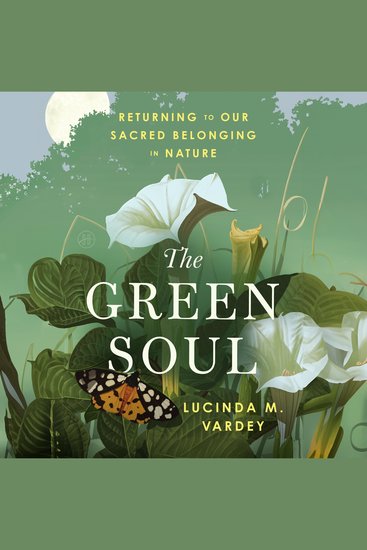
    This capstone work of bestselling spiritual writer Lucinda M. Vardey reveals itself as an unforgettable field guide to the wisdom of the wild, and our place in its superabundance.  
    Nature invites all to receive the grand inheritance of the great outdoors, yet modern life estranges us from many of its greatest gifts: sanctuary, superabundance, peace, and belonging. It’s time to end our exile from true flourishing, and take our place in the wisdom of the wild. 
    Modern mystic and pilgrimage guide Lucinda M. Vardey calls what we hunger for the Green Soul—the active participation of one’s being with the larger, living being of all creation. The greening of the soul promises: 
    the joys of enchantmentpurpose and participation in the world’s deepest alivenessauthentic embodimentand a collective consciousness upon which the healing of our world depends. 
     
    Lucinda’s field notes emerge from her own environment: a 500-year-old farmhouse in an ancient valley in Tuscany, neighboring fields of wildflowers, a mountain stream, and an ancient stone barn now dedicated as a chapel for climate care. Saint Francis of Assisi once walked in this very place, calling the earth Mother and praising all its creation. 
    But you don’t have to live on sacred lands to experience the full gifts of the Green Soul. Drawing upon ecological research, awe-evoking narratives of sacred encounter in nature, and spiritual teachers of the ages, Lucinda reveals the modern problem of our exile from spiritual belonging with the earth, as well as a field map for renewing this sacred contact. 
    Consider this your invitation to walk among the wildflowers, rewilding your spirituality and renewing your life.
    Show book
  • How to be a good engineer - Ten commnadments and 100 top tips - cover

    How to be a good engineer - Ten...

    Santiago Barcon

    • 0
    • 0
    • 0
    Written by Santiago Barcón, who has dedicated his professional life to becoming an ever-improving professional and training others, always sharing his experiences and knowledge with great generosity.
    
    This enjoyable and useful work is destined to become a reference book for engineers and future professionals in this field. It can be applied to all professions, regardless of the discipline in which the individual works; they will dignify them and seek to create a better world where respect for others and for oneself prevails.
    
    The 100 pieces of advice offered in the book can be grouped into the following topics: skills and values, personal and professional development, and professional practice. In addition to explaining them, it presents real-life examples that illustrate the importance of what is stated.
    
    All of these topics highlight the importance of not only having technical knowledge, years of experience, and constant updating, but also developing personal and professional skills on a daily basis. Being open to learning from others, recognizing the work of others, and correcting mistakes, among others, are essential.
    
    The author encourages readers to consistently practice what is taught in the book so that it becomes deeply rooted and becomes a natural habit.
    Show book
  • City Nature - Tales of Ornery Plants Opinionated Birds Gardening Triumphs and Tragedies and Capturing It All Through A Lens - cover

    City Nature - Tales of Ornery...

    Martha Retallick

    • 0
    • 0
    • 0
    In the midst of ongoing news about Southwestern water scarcity, Martha Retallick sees an opportunity. For 20 years, she has been transforming her central Tucson home into an urban oasis. The secret to her success: Water harvesting. Since Retallick purchased her central Tucson home in 2004, she has incorporated two types of water harvesting – passive and active – into her landscape. Passive water harvesting is simply the act of sculpting the landscape to direct the water to where it should be – like plants – and away from where it shouldn’t be – like a home’s foundation. Retallick’s landscape incorporates three passive water harvesting features – basins, berms, and drainage swales. Collectively, these earthworks eliminate the need for landscape irrigation that’s connected to the municipal water supply, which is served by Tucson Water. According to Tucson Water, approximately 40 percent of water use in Tucson is outdoors. This includes residential uses like landscape irrigation and garden watering. Retallick’s irrigation-free landscape also includes two active water harvesting features, a 1,500-gallon cistern that collects rainwater for use in the back-yard vegetable garden, and a laundry-to-landscape greywater harvesting system that diverts wastewater from the washing machine to three fruit trees. City Nature is illustrated with more than 60 of Retallick’s color photographs, which show the wide variety of plant life on her property, the birds she shares it with, and her various do-it-herself projects, the most notable being a kinetic sculpture created from a recycled chandelier. The book also includes a list of suggested resources that encompasses books, websites, organizations, and businesses that can aid readers interested in desert gardening and landscaping, and in water conservation.
    Show book
  • A Fascinating Journey Through Time - Time Measurement Theories and the Unusual - cover

    A Fascinating Journey Through...

    Martin K. Ettington

    • 0
    • 0
    • 0
    Time is a fascinating subject and one which affects our lives in many ways.  
    This book covers a lot of aspects of the subject. 
    First, how did measurements of time like seconds, minutes, hours, and years develop? 
    Next, what is the history of timekeeping mechanisms from ancient water clocks, to mechanical mechanisms, atomic clocks, and much more. 
    Lastly, what are some of the stranger aspects or anomalies of time such as premonitions, how time and space work, and possible time travel stories. 
    And philosophical questions like: Does the future already exist? 
    I wanted this book to be a comprehensive volume on time and so included lots of different stories and understandings about time which indicate we may not fully understand it yet.
    Show book
  • Among the Forest People - cover

    Among the Forest People

    Clara Dillingham Pierson

    • 0
    • 0
    • 0
    Another delightful children's book by Clara Dillingham Pierson about various forest animals - what they do, and what they are like. Each one also giving subtle moral and life lessons to young children. - Summary by Claire Schreuder
    Show book