Join us on a literary world trip!
Add this book to bookshelf
Grey
Write a new comment Default profile 50px
Grey
Subscribe to read the full book or read the first pages for free!
All characters reduced
Advanced Java - cover

Advanced Java

Manish Soni

Publisher: Poorav Publications

  • 0
  • 0
  • 0

Summary

Welcome to "Advanced Java" Java has evolved significantly since its inception, becoming one of the most popular programming languages for a good reason. This book aims to take you beyond the basics of Java, introducing advanced concepts, techniques, and tools to help you become a proficient Java developer. Whether you're new to Java or an experienced developer looking to enhance your skills, this book will be your guide. We will cover a diverse range of topics, from advanced object-oriented programming and concurrency to database connectivity, web development, and modern Java frameworks.Our objective is to do more than just teach you how to write Java code; we want to help you become a Java craftsman or craftswoman, capable of creating complex, efficient, and elegant software solutions. You'll gain the knowledge and practical experience needed to confidently address real-world challenges. The journey begins with advanced object-oriented programming principles and design patterns, where you'll learn to design your software for scalability, maintainability, and flexibility using industry-standard practices.Concurrency is a critical aspect of modern software development, and this book will delve into multithreading, synchronization, and concurrent data structures, providing you with the tools to write high-performance, parallelized applications. Mastering database connectivity is essential for any Java developer. You'll learn to work with databases, including advanced SQL queries, JDBC, and connection pooling, enabling you to build robust, data-driven applications.Web development is another fundamental component of modern Java programming. You'll explore technologies like Servlets, JSP, and Java Server Faces (JSF), and we'll introduce the Spring Framework, a comprehensive toolset for developing enterprise-level applications. Throughout the book, we'll emphasize best practices, coding standards, and design guidelines to help you write not only functional but also maintainable and elegant code. You'll learn how to leverage tools and libraries to enhance your productivity and streamline your development process.As you embark on this journey into "Advanced Java," remember that mastering any craft requires time and practice. Java is a versatile and powerful tool, and with dedication and persistence, you can unlock its full potential. We encourage you to engage with the hands-on exercises and embrace the challenges that advanced Java programming presents. By the end of this book, we hope you'll have expanded not only your technical skills but also your mindset as a software developer.
Available since: 11/13/2025.
Print length: 310 pages.

Other books that might interest you

  • Causal Inference and AI - Bridging Causal Inference and Artificial Intelligence - cover

    Causal Inference and AI -...

    Sam Green

    • 0
    • 0
    • 0
    Artificial intelligence has revolutionized industries by identifying patterns and making predictions from vast amounts of data. However, the true power of AI lies not just in recognizing correlations but in understanding causation—the fundamental "why" behind events and outcomes. 
    Causal Intelligence provides a comprehensive exploration of how causal inference principles can transform AI systems from mere pattern detectors into tools capable of reasoning, decision-making, and ethical intervention. Combining the rigor of causal theory with the practicalities of modern AI, this book bridges the gap between two evolving fields to unlock groundbreaking applications in healthcare, finance, public policy, and beyond. 
    Whether you’re a data scientist, AI practitioner, researcher, or curious technologist, this book will empower you to:Grasp the fundamental differences between correlation and causation.Understand key causal inference frameworks, including Pearl's Causal Hierarchy and Rubin's Causal Model.Discover techniques for identifying causal relationships in complex data.Learn how to integrate causal reasoning into machine learning and AI systems.Explore real-world applications and case studies where causality transforms outcomes.Address fairness and ethics in AI using a causal perspective. 
    Written in an accessible yet rigorous style, Causal Intelligence serves as a roadmap for the next generation of AI systems—ones that don’t just predict the future but understand it, shape it, and improve it. Dive into the emerging world of causal AI and discover how it’s poised to redefine data-driven decision-making for the better.
    Show book
  • In Search Of Sea Dragons - A Fossil Hunter's Odyssey - cover

    In Search Of Sea Dragons - A...

    Matthew Myerscough

    • 0
    • 0
    • 0
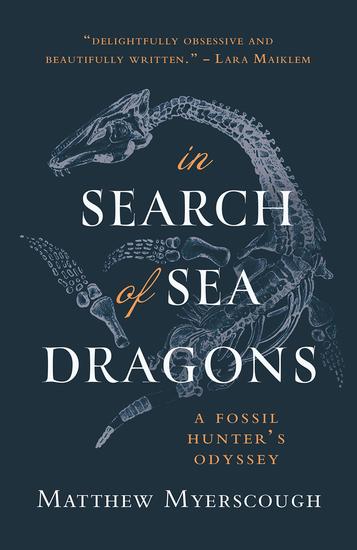
    After surviving a terrifying avalanche on the slopes of Yr Wyddfa (Snowdon), Matthew Myerscough took up a new hobby: fossil hunting. Since then, he has become well-known in the fossil hunting community for finding spectacular marine reptile fossils on the beaches near his home.
    Recounting his journey from novice to expert, In Search of Sea Dragons sees him venturing to a variety of places, including lesser-known sites in South Wales, Somerset and North Yorkshire, where he makes exciting discoveries and searches for his dream find – a complete ichthyosaur. His story is one of personal growth and maturing into adulthood as well as a practical guide for aspiring fossil hunters. As his months-long search for the second half of an ichthyosaur draws to a close, he considers what's more rewarding? The discovery or the things you find along the way.
    Show book
  • The Storytelling Manual for Architects - A heartfelt manifesto for a better way to write and talk about what you do - cover

    The Storytelling Manual for...

    Juliette Mitchell

    • 0
    • 0
    • 0
    Storytelling is one of the most powerful tools we have. But we're not talking about a story as a nice-to-have or an occasional distraction from the real work you do. We’re talking about story as the backbone and the underlying structure, and story as a way of ordering your thoughts and connecting with those around you.
    If you want to make the most of every page on your website, every email to your clients and every conversation on site, this is the guidebook you need. It gives you a simple, flexible structure to tell the stories of your practice, your projects, your process, and your team. And, more than that, it reframes writing not as a chore but as an act of clarity and connection.
    The Storytelling Manual for Architects is a short, practical book with a very human mission – to help you find common ground, convey your worth, and show your clients the difference you can make. It’s a heartfelt manifesto for a better way to write and talk about what you do.
    Juliette Mitchell set up Architypal, a writing consultancy for architects, after many years as an editor at Penguin Books. The Storytelling Manual for Architects is both her step-by-step messaging strategy and her personal act of resistance in the face of AI and things to come.
    
    ‘It’s a great little book – both succinct and spirited!’ Ceri Davies, director at Allford Hall Monaghan Morris
    ‘This book is so good, I don’t want to recommend it to other architects. I want to keep it all to myself.’ Lee Holmes, associate director at Wainwrights
    ‘Joyous, loving, accessible, practical, and just what the doctor ordered.’ Barbara Iddon, co-author of Blueprints for the Soul: Why we need emotion in architecture
    ‘I devoured about 80% of it in the first sitting. Full of good and clear ideas.’ Paul Sheeran, principal at Architexture
    ‘Part guidebook, part pep talk, part love letter to clearer, kinder architectural communication. Practical, readable, and quietly radical.’ Simon Drayson, director at George & James Architects
    Show book
  • Unexpected - Finding Resilience through Functional Medicine Science and Faith - cover

    Unexpected - Finding Resilience...

    Dr. Jill Carnahan

    • 0
    • 0
    • 0
    In Unexpected, Dr. Jill Carnahan shares her story of facing life-altering illness, fighting for her health, and overcoming sickness using both science and faith so that others can learn to live their own transformative stories. Has there ever been a time in your life when you’ve felt alone or unsure where to turn for answers?  It may have come with the diagnosis of a life-threatening illness, loss of a job, a death of a loved one, or any trauma that threatened everything you knew to be true. In Unexpected: Finding Resilience through Functional Medicine, Science, and Faith, Dr. Jill Carnahan introduces a new paradigm for readers who are going through uncertain times. Dr. Jill’s riveting and compassionate exploration of healing through functional medicine demonstrates how to replace darkness and fear with hope and find profound healing, unconditional love, and unexpected miracles in the process. Unexpected reveals practical advice that can be used for conditions like mold and biotoxin illness, cancer, autoimmune disease, Lyme disease, and more. Dr. Jill’s raw and honest account of her own challenges facing breast cancer, living with autoimmunity, and mold toxicity, while working in a medical system that has little tolerance for stepping outside the lines, offers a new path of empowerment for taking control of your health and wellbeing. For the skeptic or the faithful, Unexpected is a valuable guide for living an extraordinary life of love and resilience.
    Show book
  • Your Data Their Wealth - The Price of Human Input to the Al Economy - cover

    Your Data Their Wealth - The...

    James Felton Keith

    • 0
    • 0
    • 0
    AI did not appear from nowhere. It was built from human language, human behavior, human culture, human correction, and human life made legible to machines. 
    In Your Data, Their Wealth, James Felton Keith argues that the modern economy has been fundamentally misdescribed. We still talk as though value comes mainly from labor, capital, and innovation in their familiar forms. But the age of AI has exposed something larger: ordinary people are generating economically useful informational value every day, and firms are capturing that value under ownership terms that leave the public with little claim on the upside. 
    This is not just a book about privacy or technology. It is a book about political economy. It asks what happens when human beings become part of the productive base of intelligent systems while remaining structurally excluded from ownership of the gains. It challenges the language of the “user,” traces how law and economics helped normalize this arrangement, and argues for a new framework of claim, bargaining, and stakeholdership in the AI economy. 
    Provocative, timely, and structurally ambitious, this book insists on a simple truth: if the machine is built from us, the future cannot belong only to those who own the machine.
    Show book
  • Losing Earth - A Recent History - cover

    Losing Earth - A Recent History

    Nathaniel Rich

    • 0
    • 0
    • 0
    "This is an important, infuriating, enlightening, engaging, and engrossing audiobook...Anyone wishing to learn how the world has gotten to the point of almost inevitable climate disaster will be well served by listening to Godfrey's measured but emphatic reading." — AudioFile Magazine   By 1979, we knew nearly everything we understand today about climate change—including how to stop it. Over the next decade, a handful of scientists, politicians, and strategists, led by two unlikely heroes, risked their careers in a desperate, escalating campaign to convince the world to act before it was too late. Losing Earth is their story, and ours.The New York Times Magazine devoted an entire issue to Nathaniel Rich’s groundbreaking chronicle of that decade, which became an instant journalistic phenomenon—the subject of news coverage, editorials, and conversations all over the world. In its emphasis on the lives of the people who grappled with the great existential threat of our age, it made vivid the moral dimensions of our shared plight.Now expanded into book form, Losing Earth tells the human story of climate change in even richer, more intimate terms. It reveals, in previously unreported detail, the birth of climate denialism and the genesis of the fossil fuel industry’s coordinated effort to thwart climate policy through misinformation propaganda and political influence. The audiobook carries the story into the present day, wrestling with the long shadow of our past failures and asking crucial questions about how we make sense of our past, our future, and ourselves. Like John Hersey’s Hiroshima and Jonathan Schell’s The Fate of the Earth, Losing Earth is the rarest of achievements: a riveting work of dramatic history that articulates a moral framework for understanding how we got here, and how we must go forward.
    Show book