Junte-se a nós em uma viagem ao mundo dos livros!
Adicionar este livro à prateleira
Grey
Deixe um novo comentário Default profile 50px
Grey
Assine para ler o livro completo ou leia as primeiras páginas de graça!
All characters reduced
Bush Meat - cover
LER

Bush Meat

Mandy Sutter

Editora: Parthian Books

  • 0
  • 0
  • 0

Sinopse

For Sarah's family, memories of early Sixties Aba in south-eastern Nigeria are scorched onto their hearts. A days-old burial mound exposed as an 'exploded diagram' of bones picked clean by beasts. Adaku the Barbary duck with a 'melted face', who was conscripted into friendship by six-year-old Sarah in the first of a lifetime's unlikely alliances, forged by necessity and relocation. The narcotic puff let out from the freezer in the meat-man's shack off the Ikot Ekpene road, where Maureen, Sarah's lonely mother, gave up aspirations to be a 'proper oil company wife' to Jim, and risked buying 'bush meat'. The dry 'snakeskin' bark of the old iroko tree on the bend of the town's river, under whose shade Jim sought sanctuary from people, and whose 'two long white catkins the tree one day bestowed onto his head like confetti.'
Back home, Jim swaps adventure and agency for woodwork and more whisky. Maureen, denying her love of Igbo crafts and cloth, considers reinventing herself as an Oxfam shop assistant. In the days before her grandmother's funeral, Sarah finds the platitudes of her father evasive compared to the wisdom and ritual taught by servant Chidike while burying the household monkey. Sarah's hard-won Nigerian barter goods, a silver thumb-ring and a dare taken to eat fried-fat market 'snack', become devalued. At Aba's Sancta Maria, unaccustomed food was a cone of hot roast groundnuts paid for by a penny with a hole. In Britain, 'unaccustomed' means milk with a 'thickened band of yellow'. Now, the currency is a dare Sarah first honours, then refuses.
As people of that time and place are scattered like those bleached bones, Aba acts as centripetal force on their imagination. Today's city was a small town the like of which Tim Winton gnaws at from different angles in The Turning. Mandy Sutter's approach is similarly innovative. Her themes are substitution, racism, and whether the spirit can ever survive transaction.
Disponível desde: 01/08/2024.
Comprimento de impressão: 228 páginas.

Outros livros que poderiam interessá-lo

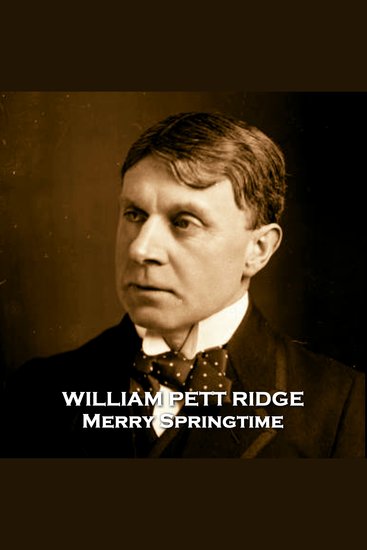
  • Merry Springtime - From their pens to your ears genius in every story - cover

    Merry Springtime - From their...

    William Pett Ridge

    • 0
    • 0
    • 0
    William Pett Ridge was born at Chartham, near Canterbury, Kent, on 22nd April 1859. 
    His family’s resources were certainly limited. His father was a railway porter, and the young Pett Ridge, after schooling in Marden, Kent became a clerk in a railway clearing-house. The hours were long and arduous, but self-improvement was Pett Ridge’s goal.  After working from nine until seven o’clock he would attend evening classes at Birkbeck Literary and Scientific Institute and then to follow his passion; the ambition to write.  He was heavily influenced by Dickens and several critics thought he had the capability to be his successor. 
    From 1891 many of his humourous sketches were published in the St James's Gazette, the Idler, Windsor Magazine and other literary periodicals of the day. 
    Pett Ridge published his first novel in 1895, A Clever Wife. By the advent of his fifth novel, Mord Em'ly, a mere three years later in 1898, his success was obvious.  His writing was written from the perspective of those born with no privilege and relied on his great talent to find humour and sympathy in his portrayal of working class life. 
    Today Pett Ridge and other East End novelists including Arthur Nevinson, Arthur Morrison and Edwin Pugh are being grouped together as the Cockney Novelists.   
    In 1924, Pugh set out his recollections of Pett Ridge from the 1890s: “I see him most clearly, as he was in those days, through a blue haze of tobacco smoke. We used sometimes to travel together from Waterloo to Worcester Park on our way to spend a Saturday afternoon and evening with H. G. Wells. Pett Ridge does not know it, but it was through watching him fill his pipe, as he sat opposite me in a stuffy little railway compartment, that I completed my own education as a smoker... Pett Ridge had a small, dark, rather spiky moustache in those days, and thick, dark, sleek hair which is perhaps not quite so thick or dark, though hardly less sleek nowadays than it was then”. 
    With his success, on the back of his prolific output and commercial success, Pett Ridge gave generously of both time and money to charity. In 1907 he founded the Babies Home at Hoxton.  This was one of several organisations that he supported that had the welfare of children as their mission.  
    His circle considered Pett Ridge to be one of life's natural bachelors. In 1909 they were rather surprised therefore when he married Olga Hentschel.  
    As the 1920’s arrived Pett Ridge added to his popularity with the movies. Four of his books were adapted into films.  
    Pett Ridge now found the peak of his fame had passed. Although he still managed to produce a book a year he was falling out of fashion and favour with the reading public and his popularity declined rapidly.  His canon runs to over sixty novels and short-story collections as well as many pieces for magazines and periodicals. 
    William Pett Ridge died, on 29th September 1930, at his home, Ampthill, Willow Grove, Chislehurst, at the age of 71. 
    He was cremated at West Norwood on 2nd October 1930.
    Ver livro
  • Blood - From their pens to your ears genius in every story - cover

    Blood - From their pens to your...

    Hanns Heinz Ewers

    • 0
    • 0
    • 0
    Hanns Heinz Ewers was born on 3rd November 1871 in Düsseldorf, Germany. 
    His first published poem was at 17 on the death, after a reign of only 99 days, of the German Emperor Frederick III. 
    A stint in the German military was cut short after only 44 days because of his myopia.  Writing was to be the way forward for him with a book of satiric verse published in 1901. At the same time he co-founded a literary vaudeville troupe that toured central and eastern Europe before censors and expenses forced its closure.  An inveterate traveller he was in South America when the Great War enveloped Europe and he relocated to New York. 
    From here his story darkens. Although by now a successful and admired author he was arrested in the U S in 1918 as a German Agent on the pretext of his travels and a falsified Swiss passport. Interned, he was released in 1921 and returned to Germany.  He claimed only to be raising money for the German Red Cross. 
    His literary fame is decidedly easier to clarify. His novels beginning with ‘The Sorcerer’s Apprentice’ in 1910 are dark, they bristle with evil intent and are littered with characters who have a dubious moral compass and yet, along with his short stories, are brazen, brilliant feats of literary narrative. 
    He also wrote and published plays, fairy tales, opera librettos, critical essays and lectured for many years on ‘The Religion of Satan’ and was one of the first to write scripts for the cinema, which he considered a legitimate art form. 
    As the Weimar republic began its chaotic death throes Ewers became attracted to the rising Nazi Party.  At first he was warmly received despite disagreeing with its anti-semitism (his most famed literary character had a Jewish mistress) and he was even commissioned by Hitler to write a biography of the Nazi martyr Horst Wessel.  This together with his own homosexuality culminated with his works being banned in 1934 and his assets and property seized.  It took him many years to have the ban lifted.  This association rightfully clouds his personal reputation but has meant his literary contributions are also overlooked and neglected. 
    Hanns Heinz Ewers died of tuberculosis on 12th June 1943 in his Berlin apartment.
    Ver livro
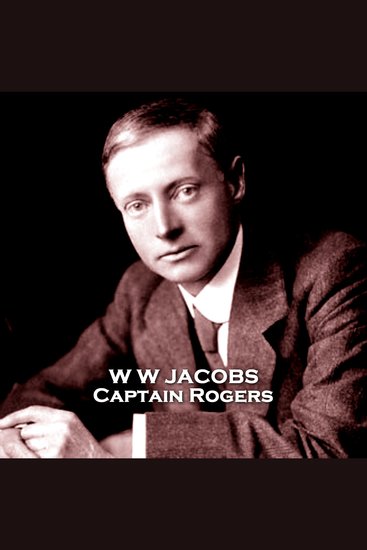
  • Captain Rogers - From their pens to your ears genius in every story - cover

    Captain Rogers - From their pens...

    WW Jacobs

    • 0
    • 0
    • 0
    William Wymark Jacobs was born on 8th September 1863 in Wapping, East London.  
    He was educated at a private school and then Birkbeck Literary and Scientific Institution, now part of the University of London. 
    In 1879, Jacobs began work as a clerk in the civil service, in the Post Office Savings Bank.  In 1885 his first short story was published but it was not until almost the turn of the century that he would abandon his post office career to that as a full-time writer. By then he was a very popular author, his collections selling extremely well and with an excellent income. 
    His best-known work is the macabre ‘The Monkey's Paw’ and he is also highly regarded for his ghost stories although much of his remaining short story output is streaked with humour.  His characters are immediately identifiable and we all know that life will take chunks out of them in no time at all.  
    Jacobs married the noted suffragette Agnes Eleanor Williams in 1900 at West Ham, Essex. They went on to have two daughters and three sons as they settled down to life.  
    By the outbreak of the First World War his literary output had declined and he now mainly spent his time rewriting his earlier stories for the stage.  In all he wrote 18 plays. 
    W W Jacobs died on 1st September 1943 at Hornsey Lane, Islington in London. He was 79.
    Ver livro
  • Thrilled to Death - Selected Stories - cover

    Thrilled to Death - Selected...

    Lynne Tillman, Lucy Sante,...

    • 0
    • 0
    • 0
    From award-winning novelist and cultural critic Lynne Tillman, Thrilled to Death is a collection of selected stories across the career of America's most audacious writer 


    Among the vanguard of American literary writers, Lynne Tillman's work has defied categorization throughout her legendary career—a singular body of work that both redefined and reimagined the short story form entirely. 


    Curated by the author, Thrilled to Death is the definitive entry point for both established fans and new readers alike. These selected stories collect a bold, playful, and eclectic ensemble of Tillman's Borgesian fictions that span decades and traverse themes of sex, death, memory, and anxiety. 


    With argumentative wit, Tillman's meditations and reflections on art, politics, and culture are animated by deliciously paradoxical characters who desire and fret in turn, and who are imbued with searing intelligence and dolorous ambivalence. Describing Tillman's writing, Colm Tóibín says: "Her style has both tone and undertone; it attempts to register the impossibility of saying very much, but it insists on the right to say a little. So what is essential is the voice itself, its ways of knowing and unknowing."
    Ver livro
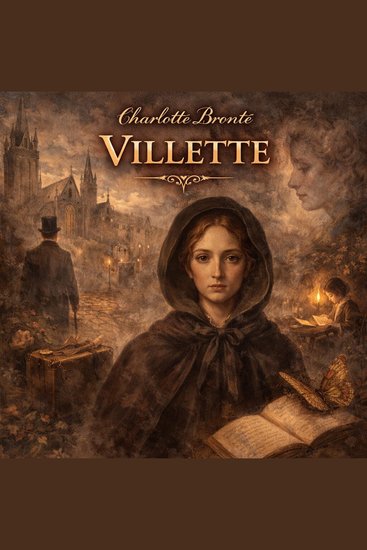
  • Villette - cover

    Villette

    Charlotte Brontë

    • 0
    • 0
    • 0
    Villette is a deeply emotional and psychologically rich novel that follows Lucy Snowe, a reserved and observant young woman who travels alone to a foreign city to work as a teacher. In the mysterious town of Villette, she faces loneliness, cultural isolation, and unspoken love.As Lucy navigates complex relationships and inner struggles, her journey becomes one of self-discovery and emotional endurance. With its gothic undertones, subtle romance, and introspective narrative, Villette is often considered Charlotte Brontë's most mature and profound work.This audiobook is perfect for listeners who appreciate introspective storytelling, strong inner narratives, and classic literary fiction.
    Ver livro
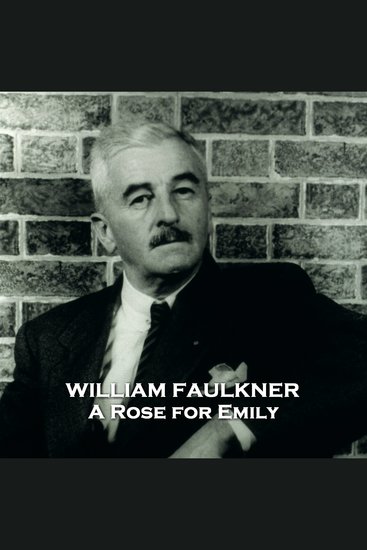
  • A Rose For Emily - From their pens to your ears genius in every story - cover

    A Rose For Emily - From their...

    William Faulkner

    • 0
    • 0
    • 0
    William Cuthbert Faulkner was born on the 25th September 1897 in New Albany, Mississippi. 
    Faulkner never graduated from high school and also dropped out of the University of Mississippi.  Despite this seeming lack of application, he would go on to become one of the literary leviathans of American Modernism.  He won the Nobel Prize in Literature in 1949 as well as two Pulitizer prizes and was a prolific Hollywood screenwriter.   
    With classics such as ‘The Sound and the Fury’ and ‘As I Lay Dying’, together with his complex sentence structures his work with Southern Gothic remains an enduring legacy. 
    William Faulkner died on the 6th July 1962 in Byhalia, Mississippi.  He was 64.
    Ver livro