Join us on a literary world trip!
Add this book to bookshelf
Grey
Write a new comment Default profile 50px
Grey
Subscribe to read the full book or read the first pages for free!
All characters reduced
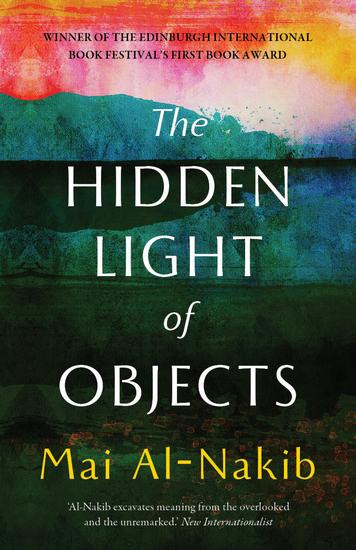
The Hidden Light of Objects - cover

The Hidden Light of Objects

Mai Al-Nakib

Publisher: Saqi Books

  • 0
  • 2
  • 0

Summary

A young girl, renamed Amerika in honour of the US role in the liberation of Kuwait, finds her name has become a barometer of her country's growing hostility towards the West. A self-conscious Palestinian teenager is drawn into a botched suicide bombing by two belligerent classmates. A middle-aged man dying from cancer looks back on his extramarital affairs and the abiding forgiveness of his wife. A Kuwaiti woman returns to her family after being held captive in Iraq for a decade.

The headlines tell of war, unrest and religious clashes. But if you look beyond them you will see life in the Middle East as it is really lived – adolescent love, the fragility of marriage, pain of the most quotidian kind. Mai Al-Nakib's luminous stories unveil the lives of ordinary people – and the power of objects to hold extraordinary memories.
Available since: 06/05/2025.
Print length: 256 pages.

Other books that might interest you

  • The Girl Who Cried Diamonds & Other Stories - cover

    The Girl Who Cried Diamonds &...

    Rebecca Hirsch Garcia

    • 0
    • 8
    • 0
    “Bridging tenderness and violence, and brimming with danger and magic, The Girl Who Cried Diamonds will leave you breathless.” — Anuja Varghese, author of Chrysalis
    		 
    “In these 14 hard-edged and unapologetic stories, debut author Garcia tackles topics ranging from human trafficking and drug abuse to eating disorders and middle-age angst, and in no-frills prose, carves out bizarre and palpable realities, breathing strange life into a horde of depressed, deprived, and abused characters.” — Publishers Weekly
    		 
    The boundaries between realist and fabulist, literary and speculative, are shattered in this remarkable debut collection for readers of Carmen Maria Machado, André Alexis, and Angélique Lalonde 
    A girl born in a small, unnamed pueblo is blessed—or cursed—with the ability to produce valuable gems from her bodily fluids. A tired wife and mother escapes the confines of her oppressive life and body by shapeshifting into a cloud. A girl reckons with the death of her father and her changing familial dynamics while slowly, mysteriously losing her physical senses.
    		 
    Infused with keen insight and presented in startling prose, the stories in this dark, magnetic collection by newcomer Rebecca Hirsch Garcia invite the reader into an uncanny world out of step with reality while exploring the personal and interpersonal in a way that is undeniably, distinctly human.
    Show book
  • The Dunwich Horror — Part 1 of 10 - cover

    The Dunwich Horror — Part 1 of 10

    H. P. Lovecraft

    • 0
    • 0
    • 0
    Title: The Dunwich Horror — Part 1 of 10 
    Author: H. P. Lovecraft 
    Narrator: Jonathan Dunne 
    Original Publication: 1929 
    Public Domain: Yes 
    Series Placement: Timeless Terrors No. 62 — Part 1 of 10 
    Description: 
    Welcome to Timeless Terrors No. 62, featuring one of H. P. Lovecraft’s most infamous works of cosmic dread: The Dunwich Horror. 
    In the remote Massachusetts village of Dunwich, something is terribly wrong. The Whateley family — feared, shunned, whispered about — has welcomed a child into the world… but Wilbur Whateley is no ordinary boy. He grows unnaturally fast, speaks strange languages, and seeks forbidden knowledge from the Necronomicon itself. 
    Locked away in their decaying farmhouse, Wilbur and his occult-obsessed grandfather nurture a monstrous secret — a presence too large, too hungry, and too alien to remain hidden much longer. 
    As livestock vanish, the hills tremble, and the air fills with unholy sounds, the truth becomes undeniable: 
    an unseen horror is waiting to break free. 
    Narrated by Amazon-bestselling horror author Jonathan Dunne, this fresh performance resurrects a groundbreaking tale of ancient gods, corrupted bloodlines, and the terrifying thinness of reality. 
    This is Part 1 of a 10-part complete audiobook. Stay tuned — the nightmare has only begun.
    Show book
  • Inspiration An - From their pens to your ears genius in every story - cover

    Inspiration An - From their pens...

    George Gissing

    • 0
    • 0
    • 0
    George Robert Gissing was born on November 22nd, 1857 in Wakefield, Yorkshire.  
    He was educated at Back Lane School in Wakefield. Gissing loved school. He was enthusiastic with a thirst for learning and always diligent.  By the age of ten he was reading Dickens, a lifelong hero. 
    In 1872 Gissing won a scholarship to Owens College. Whilst there Gissing worked hard but remained solitary. Unfortunately, he had run short of funds and stole from his fellow students. He was arrested, prosecuted, found guilty, expelled and sentenced to a month's hard labour in 1876. 
    On release he decided to start over.  In September 1876 he travelled to the United States. Here he wrote short stories for the Chicago Tribune and other newspapers. On his return home he was ready for novels. 
    Gissing self-published his first novel but it failed to sell.  His second was acquired but never published. His writing career was static.  Something had to change.  And it did. 
    By 1884 The Unclassed was published.  Now everything he wrote was published. Both Isabel Claren-don and Demos appeared in 1886. He mined the lives of the working class as diligently as any capitalist. 
    In 1889 Gissing used the proceeds from the sale of The Nether World to go to Italy. This trip formed the basis for his 1890 work The Emancipated. 
    Gissing's works began to command higher payments. New Grub Street (1891) brought a fee of £250.  
    Short stories followed and in 1895, three novellas were published; Eve's Ransom, The Paying Guest and Sleeping Fires. Gissing was careful to keep up with the changing attitudes of his audience.  
    Unfortunately, he was also diagnosed as suffering from emphysema. The last years of his life were spent as a semi-invalid in France but he continued to write. 1899; The Crown of Life. Our Friend the Charlatan appeared in 1901, followed two years later by The Private Papers of Henry Ryecroft. 
    George Robert Gissing died aged 46 on December 28th, 1903 after catching a chill on a winter walk.
    Show book
  • Prospector's Special - cover

    Prospector's Special

    Robert Sheckley

    • 0
    • 0
    • 0
    In the scorching sands of Venus’s Scorpion Desert, one man’s dream of striking it rich becomes a desperate fight for survival. “Prospector’s Special” by Robert Sheckley is a gripping sci-fi adventure that blends biting satire with raw human determination. When Tom Morrison’s sandcar fails and his supplies dwindle, he must face Venus’s deadly terrain—and his own ambition—armed with nothing but grit and a bizarre robotic mailman. A tense, ironic, and ultimately thought-provoking tale of fortune, failure, and what really matters in the end.
    Show book
  • The Moaning Lily - From their pens to your ears genius in every story - cover

    The Moaning Lily - From their...

    Emma Vane

    • 0
    • 0
    • 0
    The bookshelves of American literature are incredible collections that have gathered together centuries of very talented authors.  From this continent their fame spread and whilst among their number many are now forgotten or neglected their talents endure.  Among them is Emma Vane.
    Show book
  • Blood - From their pens to your ears genius in every story - cover

    Blood - From their pens to your...

    Hanns Heinz Ewers

    • 0
    • 0
    • 0
    Hanns Heinz Ewers was born on 3rd November 1871 in Düsseldorf, Germany. 
    His first published poem was at 17 on the death, after a reign of only 99 days, of the German Emperor Frederick III. 
    A stint in the German military was cut short after only 44 days because of his myopia.  Writing was to be the way forward for him with a book of satiric verse published in 1901. At the same time he co-founded a literary vaudeville troupe that toured central and eastern Europe before censors and expenses forced its closure.  An inveterate traveller he was in South America when the Great War enveloped Europe and he relocated to New York. 
    From here his story darkens. Although by now a successful and admired author he was arrested in the U S in 1918 as a German Agent on the pretext of his travels and a falsified Swiss passport. Interned, he was released in 1921 and returned to Germany.  He claimed only to be raising money for the German Red Cross. 
    His literary fame is decidedly easier to clarify. His novels beginning with ‘The Sorcerer’s Apprentice’ in 1910 are dark, they bristle with evil intent and are littered with characters who have a dubious moral compass and yet, along with his short stories, are brazen, brilliant feats of literary narrative. 
    He also wrote and published plays, fairy tales, opera librettos, critical essays and lectured for many years on ‘The Religion of Satan’ and was one of the first to write scripts for the cinema, which he considered a legitimate art form. 
    As the Weimar republic began its chaotic death throes Ewers became attracted to the rising Nazi Party.  At first he was warmly received despite disagreeing with its anti-semitism (his most famed literary character had a Jewish mistress) and he was even commissioned by Hitler to write a biography of the Nazi martyr Horst Wessel.  This together with his own homosexuality culminated with his works being banned in 1934 and his assets and property seized.  It took him many years to have the ban lifted.  This association rightfully clouds his personal reputation but has meant his literary contributions are also overlooked and neglected. 
    Hanns Heinz Ewers died of tuberculosis on 12th June 1943 in his Berlin apartment.
    Show book