Join us on a literary world trip!
Add this book to bookshelf
Grey
Write a new comment Default profile 50px
Grey
Subscribe to read the full book or read the first pages for free!
All characters reduced
The Conquest of a Continent: Expansion of Races in America - Enriched edition - cover

The Conquest of a Continent: Expansion of Races in America - Enriched edition

Madison Grant

Publisher: Musaicum Books

  • 0
  • 0
  • 0

Summary

In 'The Conquest of a Continent: Expansion of Races in America,' Madison Grant delves into the intricate history of race and colonization in America. Grant's literary style is both eloquent and informative, offering readers a thorough examination of how different races have shaped the continent over time. The book provides a critical analysis of colonial expansion and its impact on indigenous populations, shedding light on the complex dynamics of race relations in America. Grant's writing is enriched with historical context, making it an essential read for those interested in understanding the roots of racial inequality in the country. His detailed research and compelling narratives make the book a valuable contribution to the field of American history and race studies. Grant's expertise on the topic is evident throughout the book, showcasing his deep understanding of the subject matter. 'The Conquest of a Continent' is a must-read for anyone looking to explore the complex history of race and colonization in America.

In this enriched edition, we have carefully created added value for your reading experience:
- A succinct Introduction situates the work's timeless appeal and themes.
- The Synopsis outlines the central plot, highlighting key developments without spoiling critical twists.
- A detailed Historical Context immerses you in the era's events and influences that shaped the writing.
- A thorough Analysis dissects symbols, motifs, and character arcs to unearth underlying meanings.
- Reflection questions prompt you to engage personally with the work's messages, connecting them to modern life.
- Hand‐picked Memorable Quotes shine a spotlight on moments of literary brilliance.
- Interactive footnotes clarify unusual references, historical allusions, and archaic phrases for an effortless, more informed read.
Available since: 12/18/2019.
Print length: 225 pages.
Other books that might interest you

  • How History Keeps Repeating Itself - cover

    How History Keeps Repeating Itself

    Owen Blackwood

    • 0
    • 0
    • 0
    This audiobook is narrated by an AI Voice.   
    Unravel the mysterious patterns governing human civilization across millennia. This mind-expanding journey explores how historical events repeat in predictable cycles that seem impossible to break. From information revolutions to civilizational collapse, discover why humanity seems trapped in eternal loops of rise and fall. Learn from ancient philosophers who understood eternal return, modern historians who identified patterns in twenty-one civilizations, and consciousness researchers exploring how awareness itself might be cyclical. Discover the Library of Alexandria burning then and burning now through digital fragmentation. Understand Arnold Toynbee's creative minorities, Nietzsche's eternal return, and Pierre Teilhard de Chardin's noosphere. This exploration suggests we're not doomed to repetition but invited to consciously participate in evolution's next phase through awareness of the patterns themselves.
    Show book
  • A Rare Recording of Mildred Gillars "Axis Sally" - cover

    A Rare Recording of Mildred...

    "Axis Sally" Mildred Gillars

    • 0
    • 0
    • 0
    Mildred Gillars, nicknamed "Axis Sally," was an American broadcaster employed by Nazi Germany to disseminate propaganda during World War II. Following her capture after the war, she became the first woman to be convicted of treason against the United States. In March 1949, she was sentenced to ten to thirty years' imprisonment. She was released early in 1961. After being granted probation, Mildred converted to the Catholic faith and lived at the Our Lady Of Bethlehem Abbey in Columbus Ohio for several years.
    Show book
  • Superbook - The World of Superhero Movies According to Smersh Pod - cover

    Superbook - The World of...

    John Rain

    • 0
    • 0
    • 0
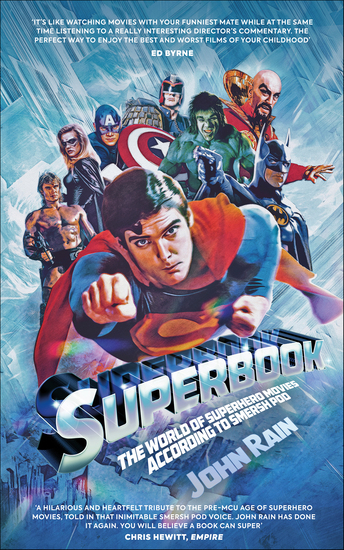
    If you mention the word ‘superhero’ these days, everyone and their mum can tell you a potted history of it all, because they’ve sat through numerous phases, extended TV series, and animated side-specials of expansive character-development, culminating in extraordinary final chapters, with the screen literally stacked full of characters battling one another while your eyes bleed with excitement and spectacle.
    
    But before 1997, people would generally only think of a few things: Christopher Reeve smiling as he keeps a watchful eye over Earth’s atmosphere, Michael Keaton running around Gotham while dressed in molded rubber. Nicholas Hammond's Spider-Man being hauled up a wall on a rope, pretending to grip it, while also being a foot away from it. Bill Bixby trying not to get angry, Flash Gordon arriving in another galaxy, that was essentially a soft porn film, Dolph Lundgren mumbling in broken English while Frank Langella hammed behind a mask, and how Michael Crawford dressed like a bird was the closest thing Disney had to a cinematic universe.
    
    Despite starting on a high in 1978, by 1997 there could be no doubt that the genre was dead. Out was the sheen of verisimilitude, and in were Bat-credit-cards, ugly CGI, slashed budgets, rubber nipples and Martin Sheen in a girdle.
    
    So, whatever happened to the heroes? Join John Rain as he walks through every film of note from 1978 to 1997, and examines just what went wrong, and how. Is it a bird? Is it a plane? No, it’s SUPERBOOK.
    Show book
  • Folk Myths and Legends - Exploring the Realms of the Dead - cover

    Folk Myths and Legends -...

    Odessa Nightshade

    • 0
    • 0
    • 0
    Since the dawn of civilization, storytelling has been an essential part of human culture. Long before written language, myths and legends were passed down through generations, shaping societies, preserving history, and explaining the mysteries of the world. These tales, often woven with elements of the supernatural, serve not only as entertainment but also as a means of teaching values, reinforcing traditions, and connecting people to their heritage. Whether told around a fire, painted on cave walls, or transcribed into sacred texts, myths and legends offer profound insights into the beliefs and customs of different cultures.  
    One of the most remarkable aspects of folklore is its universality. While each culture has its own unique stories, striking similarities emerge when comparing myths from different parts of the world. Themes of creation, heroism, trickery, love, and the afterlife appear across civilizations, suggesting a shared human experience. The flood myth, for example, exists in various forms in Mesopotamian, biblical, Hindu, and Indigenous traditions, each with its own interpretation but conveying a common theme of destruction and renewal. These recurring motifs highlight how storytelling transcends time and geography, reinforcing the idea that despite cultural differences, people everywhere grapple with similar questions about existence, morality, and destiny.  
    Myths and legends also serve as powerful tools for shaping identity and societal values. Many of history’s greatest civilizations—Greek, Norse, Egyptian, and Chinese, among others—built their cultural foundations upon stories of gods, heroes, and mythical creatures. These tales not only provided explanations for natural phenomena but also established codes of behavior, demonstrating the rewards of courage, loyalty, and wisdom while warning against greed, deceit, and hubris.
    Show book
  • A Rare Recording of Neurobiologist Rita Levi-Montalcini - cover

    A Rare Recording of...

    Rita Levi-Montalcini

    • 0
    • 0
    • 0
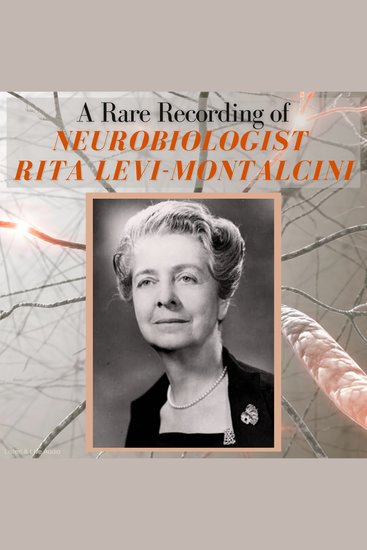
    Rita Levi-Montalcini (April 22, 1909 - December 30, 2012) was an Italian Nobel laureate, honored for her work in neurobiology. She was awarded the 1986 Nobel Prize in Physiology or Medicine jointly with colleague Stanley Cohen for the discovery of nerve growth factor (NGF), the protein that causes cell growth due to stimulated nerve tissue.
    Show book
  • Ghost signs - cover

    Ghost signs

    Stu Hennigan

    • 0
    • 0
    • 0
    GHOST SIGNS is a blistering portrait, an eyewitness account of delivering essential food and medicines to the most deprived communities during the first months of the pandemic. This visceral piece of reportage is an essential document into the effects of COVID-19 and how it ripped apart the social fabric of this country after ten years of Austerity
    Show book