Junte-se a nós em uma viagem ao mundo dos livros!
Adicionar este livro à prateleira
Grey
Deixe um novo comentário Default profile 50px
Grey
Assine para ler o livro completo ou leia as primeiras páginas de graça!
All characters reduced
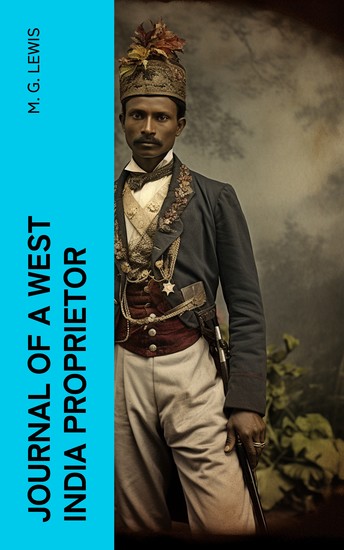
Journal of a West India Proprietor - Kept During a Residence in the Island of Jamaica - cover
LER

Journal of a West India Proprietor - Kept During a Residence in the Island of Jamaica

M. G. Lewis

Editora: e-artnow

  • 0
  • 0
  • 0

Sinopse

This work provides a valuable insight into plantation life in Jamaica in the early 1800s. Englishman Matthew Gregory Lewis wrote it during his first journey to his plantations in Jamaica in 1817. It was not published in London until 1834, nearly two decades after being written, during the peak of the international abolitionist movement. Lewis was a slave-owner who took over two large plantations owned by his family, and he would visit it twice. During this trip, he examined the living and working circumstances of the enslaved people on his plantations. His informal record, the Journal of a West India Proprietor, offers a vivid report on plantation life from the standpoint of a 'liberal' enslaver. He was an acute observer of everything he saw, and nothing escaped his watch. He has also included a few folk tales told by the enslaved ones. In addition to this work, he was a novelist and best known as the author of the famous gothic novel The Monk.
Disponível desde: 23/11/2023.
Comprimento de impressão: 535 páginas.

Outros livros que poderiam interessá-lo

  • Debating Gender - A Study of Medieval and Contemporary Discussion in Islam - cover

    Debating Gender - A Study of...

    Nadia Harhash

    • 0
    • 0
    • 0
    This work is an in-depth examination of medieval and contemporary discussions of gender in Islam, focusing in particular on views of women.
    Ms. Harhash wisely introduces the discussion by clarifying the legal status of women in medieval Islam, which provides a useful framework for her discussion.
    While her sympathy clearly lies with Averroes, I was particularly impressed by the chapter on al Ghazali, which traces a nuanced picture of al Ghazali's approach to women, highlighting striking differences in his various works and connecting his (to the modern ear) unpalatable claims about women- to his embracement of Sufism.
    While Ms. Harhash is attracted to the "progressive" view of Averroes, she offers a lucid analysis of his core egalitarian statements in the commentary on the Republic without omitting to point out that his philosophical position is in some tension with the more traditional position in forming his legal decisions.
    Ibn Taymiyyah is probably the biggest villain in Ms. Harhash's narrative and is portrayed as a kind of antipode to Averroes.
    With respect to modern discussion, she focuses on Nawal El Saadawi and Fatima Mernissi, where she situates the modern discussion vis a vis its medieval counterpart and highlights differences and commonalities.
    Ms. Harhash does a good job showing how the critique of the oppression of women in modern days leads to the same question that she had already addressed in Averroes, namely whether a critique of unjust structures in contemporary Islamic societies can be separated from a critique of Islam itself.
    Overall, the thesis is a remarkable achievement. Ms. Harhash reconstructs the medieval and modern discussion with intellectual confidence and independence and brings out similarities and differences that are genuinely illuminating.
    Ver livro
  • Anxiety hacks - proven techniques tools and tips to calmness - cover

    Anxiety hacks - proven...

    Kate Hudson-Hall

    • 0
    • 0
    • 0
    Are you exhausted by constantly feeling anxious or worried? 
      
    Are you looking for easy strategies to help you overcome your explosive anxiety? 
      
    In this conversational and life-changing book, anxiety psychotherapist Kate Hudson-Hall will teach you step by step the techniques, tools, and tips taught to thousands of her anxiety clients. 
      
    You will learn how to: 
      
    • Take yourself from being completely overwhelmed by your anxiety to showing you easy ways you can learn to cope with your anxiety behaviors and instantly calm yourself, some in less than 90 seconds. 
    • Use the globally recognized and proven successful "C.A.L.M. Your Alarm" technique to reduce your anxiety instantly. 
    • Improve your life with the support of the FREE companion course containing downloadable worksheets and bonus videos of Kate demonstrating each powerful strategy revealed throughout the book. 
    By the end of Anxiety Hacks, you'll understand why YOU have these challenging anxiety behaviors and HOW you can break through these to a calmer new you. 
    If you are looking for empowering tools to unlock your anxiety and change these painful behaviors then take a read. 
      
    About Kate Hudson-Hall, Dip. AdvHYP (N-SHAP) 
    Personally having suffered from anxiety since age 5, Kate has been an anxiety therapist for the last 22 years. She believes you can reduce and overcome your anxiety with the right tools.
    Ver livro
  • The Red and the Black - cover

    The Red and the Black

    Anônimo

    • 0
    • 0
    • 0
    He wants power. He wants love. Society gives him neither without a price.
    Julien Sorel, brilliant and fiercely ambitious, rises from humble origins into a world ruled by class, hypocrisy, and political intrigue. Torn between faith and ambition, desire and pride, he navigates dangerous romances and ruthless social games—each choice pulling him closer to triumph or ruin.
    
    Celebrated as "one of the first great psychological novels," Stendhal's masterpiece dissects vanity, hypocrisy, and the hunger for status with startling clarity. Its portrait of a young man fighting society—and himself—remains timeless and unsettlingly modern.
    
    If you love sharp character studies, political tension, and classics that expose the cost of ambition, this novel is unforgettable.
    
    Open the book—and witness how desire and destiny collide.
    Ver livro
  • The Nature of the Beast - cover

    The Nature of the Beast

    David J. Anderson

    • 0
    • 0
    • 0
    Does your dog get sad when you leave for the day? Does your cat purr because she loves you? Do bears attack when they’re angry? You can’t very well ask them.  
     
    In fact, scientists haven’t been able to reach a consensus on whether animals even have emotions like humans do, let alone how to study them. Yet studies of animal emotion are critical for understanding human emotion and mental illness. 
     
    In The Nature of the Beast, pioneering neuroscientist David J. Anderson describes a new approach to solving this problem. He and his colleagues have figured out how to study the brain activity of animals as they navigate real-life scenarios, like  
    fleeing a predator or competing for a mate. His research has revolutionized what we know about animal fear and aggression. Here, he explains what studying emotions and related internal brain states in animals can teach us about human  
    behavior, offering new insights into why isolation makes us more aggressive, how sex and violence connect, and whether there’s a link between aggression and mental illness. 
     
    Full of fascinating stories, The Nature of the Beast reconceptualizes how the brain regulates emotions—and explains why we have them at all.
    Ver livro
  • Modernization of American Guns The: The History of the Gunsmiths and Weapons that Revolutionized the Country’s Firearms - cover

    Modernization of American Guns...

    Charles River Editors

    • 0
    • 0
    • 0
    The Industrial Revolution that unfolded in Western societies at the dawn of the 19th century altered daily life as a rapidly developing paradigm. One historian suggests that in Europe and America, the highest known form of technology was the pipe organ before the rise of factories, steam drive combustion, and railway and communication breakthroughs built upon the mastery of electricity and transformed the standard processes of society. Such a rapid alteration of the prevailing world seemingly took place in a historical instant that propelled technology all the way to the age of powered flight.  
    	No less affected were the technological accomplishments that cast their influence over the wars so rampant in Europe through the past centuries. Military weapons benefited from various upgrades and innovations, even as the soldiers and generals remained confined within Napoleonic tactics while struggling to learn about the new principles of physics and engineering. 
    	For Americans who were recently embroiled in the Revolution and were obsessed with ownership and development of the West, the search for a major shift in military weaponry was the same. Whatever the refinements, the state of national arms lay within the confines of single-shot firearms and lumbering artillery pieces, and with no standardization in the building of portable arms, reliability was forever a battle liability. While America continued to fight multiple enemies, including Europeans, Mexicans, and indigenous natives intent on preserving their lands, other military tides were on the rise. The Chinese, inventors of gunpowder, spread through Asia, and the Ottoman Empire reached the gates of Vienna. In subsequent years, non-Western powers such as India began to hold their own against would be occupiers. Established and emerging powers around the world craved a technological advantage as the globe began to obtain parity. 
    Ver livro
  • End of World War II The: The History of the Battles that Ended the Fighting in Europe and the Pacific - cover

    End of World War II The: The...

    Editors Charles River

    • 0
    • 0
    • 0
    After the successful amphibious invasion on D-Day in June 1944, the Allies began racing east toward Germany and liberating France along the way. The Allies had landed along a 50 mile stretch of French coast, and despite suffering 8,000 casualties on D-Day, over 100,000 still began the march across the western portion of the continent. By the end of August 1944, the German Army in France was shattered, with 200,000 killed or wounded and a further 200,000 captured. However, Adolf Hitler reacted to the news of invasion with glee, figuring it would give the Germans a chance to destroy the Allied armies that had water to their backs. As he put it, “The news couldn’t be better. We have them where we can destroy them.” While that sounds delusional in retrospect, it was Hitler’s belief that by splitting the Allied march across Europe in their drive toward Germany, he could cause the collapse of the enemy armies and cut off their supply lines.  
    Near the end of 1944, as Allied forces were pushing across the Pacific and edging ever closer to Japan, plans were drawn up to invade the Ryuku islands, the most prominent of them being Okinawa. Military planners anticipated that an amphibious campaign would last a week, but instead of facing 60,000 Japanese defenders as estimated, there were closer to 120,000 on the island at the beginning of the campaign in April 1945. The Battle of Okinawa was the largest amphibious operation in the Pacific theater, and it would last nearly 3 months and wind up being the fiercest in the Pacific theater during the war, with nearly 60,000 American casualties and over 100,000 Japanese soldiers killed. In addition, the battle resulted in an estimated 40,000-150,000 Japanese civilian casualties.
    Ver livro