¡Acompáñanos a viajar por el mundo de los libros!
Añadir este libro a la estantería
Grey
Escribe un nuevo comentario Default profile 50px
Grey
Suscríbete para leer el libro completo o lee las primeras páginas gratis.
All characters reduced
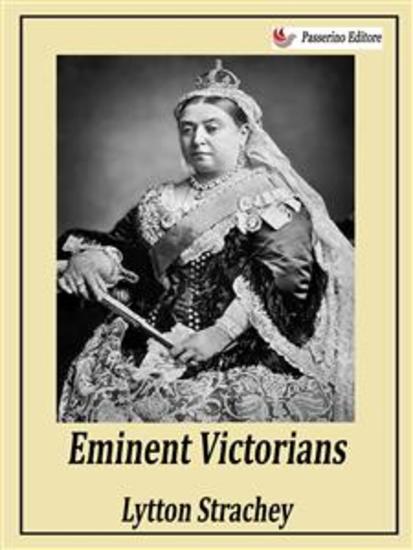
Eminent Victorians - cover

Eminent Victorians

Lytton Strachey

Editorial: Passerino

  • 0
  • 0
  • 0

Sinopsis

Eminent Victorians is a book by Lytton Strachey (one of the older members of the Bloomsbury Group), first published in 1918, and consisting of biographies of four leading figures from the Victorian era. Its fame rests on the irreverence and wit Strachey brought to bear on three men and a woman who had, until then, been regarded as heroes: Cardinal Manning, Florence Nightingale, Thomas Arnold and General Charles Gordon. While Nightingale is actually praised and her reputation enhanced, the book shows its other subjects in a less-than-flattering light, for instance, the intrigues of Cardinal Manning against Cardinal Newman. The book made Strachey's name and placed him firmly in the top rank of biographers.

Giles Lytton Strachey (1 March 1880 – 21 January 1932) was an English writer and critic. A founding member of the Bloomsbury Group and author of Eminent Victorians, he is best known for establishing a new form of biography in which psychological insight and sympathy are combined with irreverence and wit. His biography Queen Victoria (1921) was awarded the James Tait Black Memorial Prize.
Disponible desde: 18/07/2022.
Otros libros que te pueden interesar

  • Peacemaker - U Thant and the Forgotten Quest for a Just World - cover

    Peacemaker - U Thant and the...

    Thant Myint-U

    • 0
    • 0
    • 0
    In the early 1960s, a peaceful world was an imaginable goal. The United Nations was widely respected and regarded as humankind's best hope for resolving global conflicts. African and Asian nations, having recently won their freedom from colonial domination, sought dignity and influence on the world stage. At the helm of their efforts was U Thant, a practicing Buddhist from a remote town in Burma who, as the UN's first non-Western secretary-general, became the Cold War era's preeminent ambassador of peace. From the moment of his predecessor's death in 1961, Thant faced a deluge of violent conflicts. Crucially, during the Cuban Missile Crisis, he played an indispensable role in defusing tensions and helping both superpowers find a way back from nuclear confrontation. For years Thant also challenged Washington over its war in Vietnam, identifying paths to peace that could have saved the lives of millions. 
      
    Drawing on newly declassified documents, Thant's grandson, historian Thant Myint-U, gives a riveting account of how his grandfather's gentle yet willful disposition shaped his determination to avoid a third world war, give voice to the newly decolonized world, create a fairer international economy, and safeguard the environment. Rather than a vestige of an idealistic past, U Thant's fight for peace is central to a fresh understanding of our world today.
    Ver libro
  • Path of the Devil: Camino del Diablo - Based on True Events of a DEA Agent and Two Private Investigators - cover

    Path of the Devil: Camino del...

    Dianne DeMille PhD, Larry...

    • 0
    • 0
    • 0
    Path of the Devil: Camino del Diablo is a story of true events that occurred 1991-1996. DEA Agent Larry Hardin and two private investigators, Jeff Pearce and Randy Torgerson, were determined to bring down the Meraz organization along the southwestern border. For five years the three men spearheaded two separate, and simultaneous investigations in different locations that eventually merged. 
    Jeff and Randy provided information to Larry to build his case when they found the Meraz’s were working with corrupt employees of their California client. The Meraz’s attempted to murder two DEA agents (1970s) and were connected to the murders of Kiki Camerena, George Montoya, Paul Seema, Jose Montoya, Dan Elkins, and Michael Crowe. Larry was determined to indict the Meraz’s.
    Ver libro
  • Saddam Hussein - Warmonger Invader Dictator and Oil Trader - cover

    Saddam Hussein - Warmonger...

    Kelly Mass

    • 0
    • 0
    • 0
    Saddam Hussein, the sixth president of Iraq, held power from July 16, 1979, until his downfall on April 9, 2003. A central figure in Iraq's political history, Saddam was a founding member of the Arab Socialist Ba'ath Party, which advocated for a fusion of Arab nationalism and socialism, known as Ba'athism. The party's rise to power in Iraq was marked by the 1968 coup, often referred to as the 17 July Revolution, which saw the Ba'ath Party assume control. Saddam, a key figure in the party, was instrumental in establishing its dominance in Iraq. 
    Saddam's path to the presidency was shaped by his political astuteness and ruthless consolidation of power. He became vice president under General Ahmed Hassan al-Bakr, who was severely weakened by ill health. At a time when numerous factions within the country threatened to destabilize the government, Saddam focused on building and strengthening the security forces that would enable him to suppress dissent. He carefully navigated the complexities of power struggles between the administration and the military, ensuring his influence over both the party and the state apparatus. His careful maneuvering eventually led to his formal assumption of power in 1979, though he had already been Iraq's de facto leader for several years. 
    In the early 1970s, Saddam took aggressive steps to nationalize Iraq's most important industries, including the Iraq Petroleum Company and various independent banks. This move, though initially successful in securing Iraq's economic independence, led to long-term financial instability. The nationalization policies, combined with inflation and a series of bad loans, contributed to the eventual collapse of Iraq's financial sector. Nevertheless, Saddam's regime was buoyed by the economic boom fueled by Iraq's oil exports, which provided the government with significant wealth and the ability to fund state projects.
    Ver libro
  • Rich Mullins (25th Anniversary Edition) - An Arrow Pointing to Heaven - cover

    Rich Mullins (25th Anniversary...

    James Bryan Smith, Brennan Manning

    • 0
    • 0
    • 0
    Experience Rich Mullins's Legacy of Joy and Real Compassion 


    Beloved contemporary Christian musician Rich Mullins lived his life with abandon for God, leaving the spotlight to teach music among a Navajo community. An accident cut his life short in 1997, but his songs and ragamuffin spirit continue to teach many. 


    In honor of the twenty-fifth anniversary of Rich's homegoing, this edition of Rich Mullins: An Arrow Pointing to Heaven delivers an intimate look at the experiences that sparked praise hits and the values behind his Christ-like candor. James Bryan Smith captures just what Rich wished for when he said, "I hope I would leave a legacy of joy—a legacy of real compassion." 


    See the layers of his story through reflections from friends and family, an afterword by Rich's brother David Mullins, and Smith's own bond with him. And in remembrance, be inspired to enjoy God's world as Rich did.
    Ver libro
  • Winston Churchill’s Great Escapes: The Story of the British Bulldog’s Death-Defying Life Before He Became Prime Minister - cover

    Winston Churchill’s Great...

    Editors Charles River

    • 0
    • 0
    • 0
    When Winston Churchill died at the age of 90 in 1965, one of the most important figures in modern history had left the stage. From providing some of the 20th century’s greatest soundbites to successfully navigating Great Britain to victory in World War II against great odds, Churchill was at the forefront of events for decades, becoming one of the most influential Britons in history. In 2002, he was named the Greatest Briton of All Time, and 40 years earlier he was the first person to be made an Honorary Citizen of the United States. 
    Churchill will forever be most associated with World War II, but his life was far more adventurous and complex than that, and these other aspects of the man are often overlooked and overshadowed. He came from an aristocratic family, but his father, Lord Randolph Churchill, was not the firstborn son. That was important because the family estate was entailed, meaning the oldest son inherited the title of duke along with the land and the wealth. Thus, while Churchill grew up in Blenheim Palace, he did not inherit his family’s wealth, and that is one reason he became a correspondent and negotiated high rates of pay: he needed the income. The family’s aristocratic connections greatly facilitated his career, but it was his own courage, determination, and ability that led to his fame and historical importance, along with some phenomenal luck. 
    Before politics, Churchill was an officer in a cavalry regiment and a war correspondent, which took him to conflicts on four continents, and he escaped death more than once. His greatest escape was from a South African prison camp, which made him a national hero and greatly facilitated his election to Parliament.
    Ver libro
  • Life Outside The Land of My Birth - cover

    Life Outside The Land of My Birth

    Gideon M. Mahlangu

    • 0
    • 0
    • 0
    Wounds that cannot be seen are the most of severe pain, compared to those of an eye witness, as it is not easy for one to realise that they need medical treatment to cure. This book is based on a true life story of Samson Olayiwola Kolawoles who long-held the belief that there are better and brighter future prospects ahead of him in South Africa, the land that was not of his birth. His believe on his future prospects analysis relied mainly on his commitment, dedication, but above all on the Creator  the universe. The genesis of his long-held belief emanates from the principle: A good head and a good heart are at all times of life a powerful and formidable conquering force.The publications narration of a life journey provides human intelligence with an insight that as human beings, through the unavoidable natural process of life, one inadvertently incurs many obligations.The truth is that naturally as human beings irrespective of the land of our birth, we are born in possession of life obligations and as one grows, they accumulate. Hence, it is important for human beings including Africans to have tranquil relations so that no one can say, African parents have committed the biggest debt or sin for giving birth to any African soul.The strong belief in African morals, values, convictions and principles played a great role in the writing of this book. One of the principles is that there are many things that one can do to build and take care of planet earth - of Africa in particular, in this instance. Whether we know it or not, there are human beings on planet earth who have the potential to destroy it. The life journey of the main character motivated the author to feel responsible for doing what is humanly correct and compelling morally, which was to devise a means of contributing in reducing the potential of those who are highly committed to destroying the African motherlandAbove all, the trials, tribulations and triumphs of the main character inspired the author to write this book. The primary aim of the author is to see him-self playing a pivotal role in educating, imparting and sharing knowledge and information amongst African humanity and the entire world as a part of the contribution to saving the other part of planet earth, namely Africa, which is important.The events of the life journey of the main character have undoubtedly proved how the African world could be destroyed to the point where ultimately there would be no tolerance and no support to each other socially, politically or economically as Africans. Certainly, there is and there will be no other relevant time for Africans to ask that to one another when such happens. The underlying question becomes, why should we as Africans always allow ourselves to be viewed by the outside world as the people who are incapable of caring of their rich soil and for themselves? Is this a curse and you believing so, then Africans just accept that you do not belong to Africa but where they belong is nowhere. Africans, your appearance does not occur to yourselves as being individuals from various African countries but it presents a collective African picture. That is why it is imperative to have a good picture about Africa and its people collectively. Realise that as people we are viewed in comparison to the behaviour and appearance of others. Africans, you need to be worthy of trust to one another. If there is no confidence and reliability to one another, then, Africa, you are at risk of collapsing. The end result is that you will become the advocates and champions of the African pessimism and colonial system of special type agenda.
    Ver libro