Join us on a literary world trip!
Add this book to bookshelf
Grey
Write a new comment Default profile 50px
Grey
Subscribe to read the full book or read the first pages for free!
All characters reduced
Meditate - Your Plain & Simple Guide to Calming the Mind and De-stressing Your Life - cover

Meditate - Your Plain & Simple Guide to Calming the Mind and De-stressing Your Life

Lynne Lauren

Publisher: Hampton Roads Publishing

  • 0
  • 0
  • 0

Summary

This Plain & Simple guide will help you be more mindful, relieve daily stress, and find clarity. Headspace for happiness is a few quiet moments away.   Meditation is a practice that calms the mind and the body in a natural way. Its aim is to quiet or still the mind, which leads to calm awareness without the interference of troublesome thoughts. Meditation can help you focus, relax, and cope with life’s twists and turns.  Meditation is a wise and helpful primer for this popular practice. Lynne Lauren not only explains why it is important to meditate but also demonstrates how simple meditation can be for the average person. It can be done anywhere by anyone, and you don’t have to sit on the floor or stand on your head. In addition, she provides a brief overview of the different types of meditation, along with more than fifty guided meditations and visualizations that can be used in different circumstances to reach particular goals. Covered are topics such as:  Why you should meditate  How to clear negativity and baggage from your mind  How to make your meditation practice a habit you enjoy  Meditating with nature Meditation is a lovely introduction for anyone who wishes to slow down, de-stress, and discover how rich life can be! This book was previously published as Meditation Plain & Simple.
Available since: 06/02/2025.
Print length: 160 pages.

Other books that might interest you

  • The Best of Robert Service - cover

    The Best of Robert Service

    Robert Service, Harriett Shlossberg

    • 0
    • 0
    • 0
    This new and revised edition of poems about the men and women of the North features the most loved ballads by Robert Service, and is narrated by Michael Puttonen. While living in Whitehorse, Robert Service wrote The Cremation of Sam McGee, and other well-known poems. He wrote and published into his mid-eighties. He was quoted as saying, I just go for a walk and come back with a poem in my pocket.Gaiety, humor, nostalgia, and pathos fill every page, along with the genuine Service ring of virility which has made his verse loved throughout the English reading world.
    Show book
  • The Simpler Side of Buddhist Doctrine - cover

    The Simpler Side of Buddhist...

    Kassapa Thera

    • 0
    • 0
    • 0
    This is an audiobook of Bodhi Leaves No. 2 by Kassapa Thera, The Simpler Side of Buddhist Doctrine narrated by Jim Swift. The print edition can be found in the Pariyatti Edition of Collected Bodhi Leaves Vol. 1. The eBook of Bodhi Leaves No. 2 can be downloaded from the BPS website.
     
    Excerpt:
     
    In the Holy Books are many sermons, long and short, full of advice to the average layman. Notable amongst these is the Sigālovāda Suttanta, known as “the Layman’s Vinaya” which details correct behaviour for the good layman. Excellent though all such sermons are, none can surpass the brief simple appeal of the words to Nakula’s parents, which advise the cultivation of four things: Saddhā, Virtue, Generosity and Wisdom.
     
    A striking thing in the Buddha-dhamma is that here we find naught of “Thou shalt” or “Thou shalt not.” When once it is realized that selfishness and self-indulgence cause all our woe, then a wise one strives for self mastery. Sīla is the mastery of speech and action. Of his own free will, the Buddhist “pledges to observe” this precept of virtue, and that. The minimum number of such precepts of virtue that the good Buddhist should observe is five: (1) I undertake to observe the precept to abstain from destroying the life of beings; (2) from taking things not given; (3) from sexual misconduct; (4) from false speech, and (5) from liquor that causes intoxication and heedlessness.


    The Buddhist has no impossible postulates; he tries to see, as his teacher taught, “things as they really are.” He looks at the world around him and sees that all, all is transitory there. He sees that what is transitory is bound to be sad. All that we love is passing away, and such parting from the loved is suffering.  ..."
    Show book
  • Xia Dynasty - The Myth and Mystery of China's First Dynasty - cover

    Xia Dynasty - The Myth and...

    Rolf Hedger

    • 0
    • 0
    • 0
    The Xia Dynasty is often considered the first dynasty of China, marking the transition from a prehistoric era dominated by tribal alliances to a structured monarchy. However, much of what is known about the Xia comes from ancient texts written centuries later, blurring the line between history and legend. At the heart of this foundation myth is Yu the Great, a figure credited with taming the catastrophic floods that once plagued the Yellow River region. 
    According to traditional accounts, China before the Xia was ruled by the Five Emperors, semi-mythical sages who brought order and knowledge to early societies. The final ruler of this period, Emperor Shun, recognized Yu for his brilliance and appointed him to control the devastating floods that had threatened agricultural settlements for generations. Unlike his predecessors, who attempted to block or divert the waters, Yu devised a system of dredging and canal-building that allowed the floodwaters to drain naturally into rivers and the sea. His efforts reportedly took over a decade, during which he traveled across the land, surveying the terrain and directing large-scale labor projects. His selfless dedication won him the admiration of the people, and his success in flood control cemented his reputation as a leader with the Mandate of Heaven. 
    The concept of the Mandate of Heaven, though later fully developed under the Zhou Dynasty, has its roots in the Xia period. It suggested that rulers were chosen by divine will and that their legitimacy depended on their ability to maintain order and prosperity. Yu's ability to tame the floods demonstrated both his virtue and his right to rule. Upon Emperor Shun’s abdication, Yu became the first king of the Xia Dynasty, establishing a hereditary monarchy that would continue for generations.
    Show book
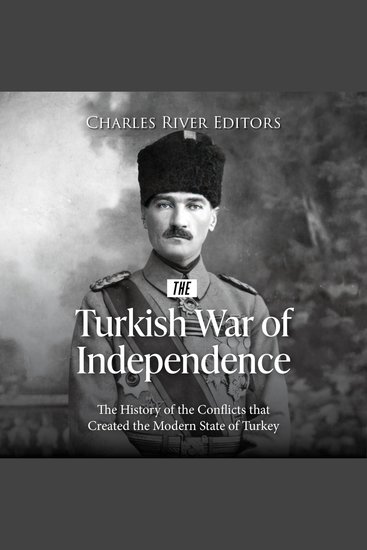
  • Turkish War of Independence The: The History of the Conflicts that Created the Modern State of Turkey - cover

    Turkish War of Independence The:...

    Editors Charles River

    • 0
    • 0
    • 0
    The fall of the Ottoman Empire set the political and geostrategic scene of the new Middle East. In 1920, two years after the end of the war, the region was already experiencing growing instability. The issues and trends that would plague the region until today were growing. On April 4, Arab riots broke out in Jerusalem, fueled by the growing hostility against the Zionist movement. The British passivity would convince one of the Jewish leaders, Vladimir Jabotinsky (the future founder of the Israeli right-wing), of the strategic necessity of a strong Jewish military as the core of the future state.  
    	Just two weeks later in Turkey, the Grand National Assembly in Ankara set the foundation of the Turkish state, opening the way for several years of reforms. In Iraq, a Shiite revolt broke out in the south, as locals demanded the creation of an Islamic state. The British compromise was to place Faisal, the son of Sharif Hussein and a Sunni, on the throne. His father, meanwhile, was embroiled in a conflict with a local tribe, the Ibn Saud, that sought to carve a new kingdom in the Arabian Peninsula. 
    	As this makes clear, the collapse of the Ottoman Empire entirely altered the imperial complexion of the world, leaving a vacuum in the midst of which the surviving imperial powers felt obligated to secure and protect their strategic interests. More broadly, the long decline of the “sick man of Europe” fostered the emergence of nationalistic and ideological movements that are still key to any understanding of the Middle East today. The compatibility between the Islamic religion and culture and Western reforms were first discussed within the Ottoman Empire, and they are still up for debate today. Abdul Hamid’s pan-Islamism, while its results at the time remain limited, still resonates within the Muslim world and can still be seen as a viable rival to the region’s various nationalistic aspirations. 
    Show book
  • Listen to HSK4 (I) - Unlock HSK 4 Success with Core Vocabulary: Volume I - cover

    Listen to HSK4 (I) - Unlock HSK...

    Letitia Wu

    • 0
    • 0
    • 0
    “Listen to HSK4 (I)” is the first volume of a two-part audiobook series designed to help you master HSK4 vocabulary. This volume features the first 300 essential words needed for HSK4 success. Across the entire series, you’ll be guided through a total of 625 keywords, building a comprehensive foundation in Mandarin Chinese.The audiobook provides not just words but also carefully crafted example sentences for each term. To ensure clear understanding and improved listening skills, each example sentence is read three times: first, slowly for clear pronunciation and easier learning, and then twice at regular speed to mirror real-world Chinese conversation. This method helps reinforce both comprehension and pronunciation.Ideal for learners preparing for the HSK4 exam, this series offers an engaging and structured way to solidify your Mandarin skills. Whether you’re looking to expand your vocabulary or achieve higher proficiency, “Listen to HSK4 (I)” is your perfect companion.Start your journey to HSK4 mastery with Letitia Wu’s expertly curated content and clear audio instructions!
    Show book
  • Adolescent Configuration Styles Parenting and Psychotherapy - A Relational Perspective - cover

    Adolescent Configuration Styles...

    Bronagh Starrs

    • 0
    • 0
    • 0
    Mental health has become the principal concern as adolescents struggle with a host of issues. This book provides psychotherapists with a clear theoretical understanding and practical application for navigating the increasingly complex adolescent experience as young people adjust and respond to the present day world. 


    Starrs presents a contemporary understanding of adolescence, identifying three principal character styles and offering experience near descriptions of the modern day adolescent. The author demonstrates how each configuration style in adolescence elicits a predictable response in parents and examines the challenges and dilemmas facing parents in today's world, highlighting the patterns and pitfalls which often render parental interventions ineffective. Developmentally attuned parenting strategies are outlined, pertaining to each configuration style. The in depth analysis of adolescent process and parental response has implications for the therapeutic encounter. Intervention focuses both on one- to-one work with the adolescent and parental involvement. The complexity of working with adolescents and parents who demonstrate psychological entrenchment is also outlined. 


    This highly listenable, original, and exceptional contribution is suitable for psychotherapists, allied professionals, and parents alike.
    Show book