Join us on a literary world trip!
Add this book to bookshelf
Grey
Write a new comment Default profile 50px
Grey
Subscribe to read the full book or read the first pages for free!
All characters reduced
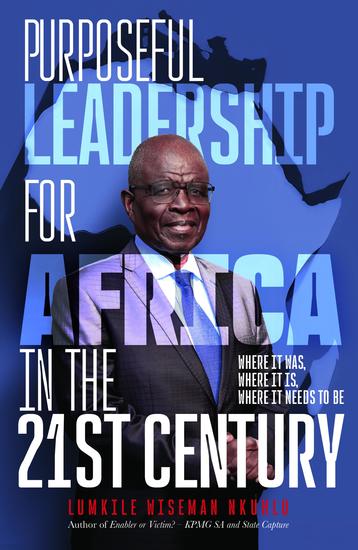
Purposeful Leadership for Africa in the 21st Century - Where it was where it is where it needs to be - cover

Purposeful Leadership for Africa in the 21st Century - Where it was where it is where it needs to be

Lumkile Wiseman Nkuhlu

Publisher: Tracey McDonald Publishers

  • 0
  • 0
  • 0

Summary

Leaders of the African liberation movements proclaimed ambitious objectives and promised swift dismantling of colonial policies and practices. It was believed that poverty and underdevelopment were consequences of the exploitative policies of the colonial masters, who had no interest in improving living conditions for local communities. Independence and freedom were anticipated to eradicate poverty, ignorance and disease, and the new leadership would accelerate economic development and prosperity.
However, after more than 50 years of independence, most African countries are still poor and underdeveloped and this poses a few questions:
Have African leaders abandoned their ambitions?
Are African challenges more complex than in other regions?
Has the political leadership failed to rise to the challenge?
In his relentless pursuit of African excellence and development, Professor Lumkile Wiseman Nkuhlu offers profound insights and solutions to the challenges Africa has faced and continues to encounter. He wrestles with the vexing question of how a continent with such a rich history and heritage, as well as potential, remains an underperforming region of the world and offers insights into potential pathways and strategies for breaking free from the vicious cycle of underdevelopment.
Africa can become the world's production powerhouse in the second half of this century, provided that intentional and purposeful leadership emerges. Purposeful Leadership for Africa in the 21st Century delves into the leadership strategies, qualities and policies needed for an African renewal, aiming to reposition the continent as a strategic and competitive global player.
Available since: 09/16/2024.
Print length: 272 pages.
Other books that might interest you

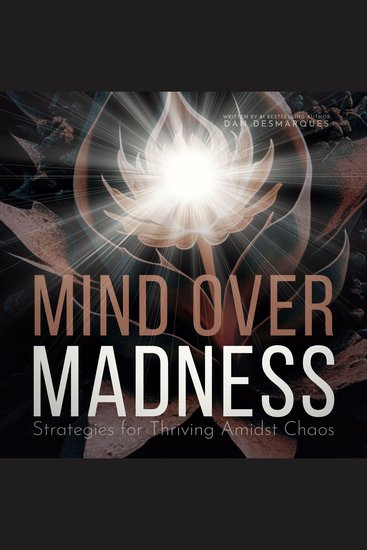
  • Mind Over Madness - Strategies for Thriving Amidst Chaos - cover

    Mind Over Madness - Strategies...

    Dan Desmarques

    • 0
    • 0
    • 0
    In a world where intelligence is overshadowed by ignorance, where success is met with envy and hatred, and where the pursuit of knowledge is often misunderstood, one individual navigates the complexities of life with resilience and determination. "Mind Over Madness: Strategies for Thriving Amidst Chaos" delves into the personal journey of an author who faces the challenges of living a life that many secretly desire but few truly understand. Through encounters with haters, manipulative personalities, and the limitations of the average mind, the protagonist discovers the true value of intellect, perseverance, and self-esteem. 
    As the story unfolds, readers are invited to explore themes of resilience, self-discovery, and the pursuit of truth in a world filled with illusions and misconceptions. From confronting betrayal and psychological abuse to finding solace in solitude and contemplation, the protagonist's experiences offer profound insights into the complexity of human nature and the power of individual growth. 
    "Mind Over Madness: Strategies for Thriving Amidst Chaos" is a compelling exploration of the human experience that challenges perceptions and invites readers to reflect on the dynamics of success, intelligence, and personal fulfillment.
    Show book
  • The Global in the Local - A Century of War Commerce and Technology in China - cover

    The Global in the Local - A...

    Xin Zhang

    • 0
    • 0
    • 0
    Fear swept Zhenjiang as British soldiers gathered outside the city walls in the summer of 1842. Already suspicious of foreigners, locals had also heard of the suffering the British inflicted two months earlier, in Zhapu. A wave of suicides and mercy killings ensued: rather than leave their families to the invaders, hundreds of women killed themselves and their children or died at the hands of male family members. British observers decried an "Asian culture" of ritual suicide. In reality, the event was sui generis—a tragic result of colliding local and global forces in nineteenth-century China. 


    Xin Zhang's groundbreaking history examines the intense negotiations between local societies and global changes that created modern China. In the nineteenth and early twentieth centuries, world-historic political, economic, and technological developments transformed the textures of everyday life in places like Zhenjiang, a midsize river town in China's prosperous Lower Yangzi region. Drawing on rare primary sources, including handwritten diaries and other personal writings, Zhang offers a ground-level view of globalization in the city. 


    Far from passive recipients, the Chinese leveraged, resisted, and made change for themselves. The Global in the Local argues that globalization is inevitably refracted through local particularities.
    Show book
  • The Holodomor - Stalin's Famine Genocide - cover

    The Holodomor - Stalin's Famine...

    Sarah Willards

    • 0
    • 0
    • 0
    The Holodomor, one of the most tragic events in Ukrainian history, refers to the man-made famine that devastated Ukraine from 1932 to 1933. The name "Holodomor" itself is derived from two Ukrainian words: "holod," meaning hunger, and "moryty," meaning extermination. This term emphasizes the belief that the famine was deliberately engineered by Joseph Stalin's Soviet government as part of a broader effort to suppress Ukrainian nationalism and enforce Soviet control. 
    The historical context of the Holodomor is deeply intertwined with the policies of Soviet Russia during the early 20th century. Under Stalin’s rule, the Soviet Union sought rapid industrialization and forced collectivization of agriculture, a process that involved the consolidation of individual farms into large collective ones. These policies were highly disruptive and led to widespread resistance, especially in Ukraine, where peasants valued their land and traditional agricultural practices. 
    In response to this resistance, Stalin imposed harsh measures on Ukraine, including the confiscation of grain, livestock, and other foodstuffs, which were sent to feed other parts of the Soviet Union. This created a devastating shortage of food in Ukraine, which was compounded by the harsh climate and poor harvests. Despite the widespread suffering and starvation, the Soviet government did little to alleviate the crisis and instead imposed strict controls on food distribution. In some cases, officials even enforced internal borders, preventing starving people from fleeing to neighboring regions in search of food.
    Show book
  • On the Genealogy of Morality - cover

    On the Genealogy of Morality

    Friedrich Nietzsche

    • 0
    • 0
    • 0
    “Without music, life would be a mistake.”“It is not a lack of love, but a lack of friendship that makes unhappy marriages.” ...“That which does not kill us makes us stronger.”“I'm not upset that you lied to me, I'm upset that from now on I can't believe you.”NietzscheIn 1887, with the view of amplifying and completing certain new doctrines which he had merely sketched in Beyond Good and Evil (see especially Aphorism 260), Nietzsche published The Genealogy of Morals. This work is perhaps the least aphoristic, in form, of all Nietzsche's productions. For analytical power, more especially in those parts where Nietzsche examines the ascetic ideal, The Genealogy of Morals is unequalled by any other of his works; and, in the light which it throws upon the attitude of the ecclesiast to the man of resentment and misfortune, it is one of the most valuable contributions to sacerdotal psychologyFriedrich Wilhelm Nietzsche was a German philosopher, cultural critic and philologist whose work has exerted a profound influence on modern intellectual history. He began his career as a classical philologist before turning to philosophy.
    Show book
  • Grit & Magic - A Mother's Story of Modern Adoption - cover

    Grit & Magic - A Mother's Story...

    Melanie Herz Promecene

    • 0
    • 0
    • 0
    Is it possible to stay hopeful - and to keep a sense of humor - while your deepest desire is threatened? When you're falsely accused? When people you trust advise you to hide your heritage? 
    Melanie Herz Promecene, who faced each of those challenges while trying to adopt a child, is walking proof that the answer is yes. 
    In this staggeringly honest, often hilarious, always hopeful memoir, Promecene takes readers with her through the terror of 9/11 in New York, the floods of Hurricane Harvey in Houston, the winding streets of Beijing, and a beautiful day in Florence. And, of course, readers join her as she overcomes seemingly impossible obstacles of bureaucracy and biology. 
    Her account of heartbreaking decisions, innocent misunderstandings that threaten to have devastating results, and the quirks and joy of her own large family are compelling and ultimately heartwarming. 
    Along the way, she realizes that she and her husband aren't choosing their son: He is choosing them. You'll never look at rainbows the same way.
    Show book
  • Where in the World is God? - Humanity as Mirror - cover

    Where in the World is God? -...

    Hope Raymond

    • 0
    • 0
    • 0
       Humanity has been given the unique capacity for developing higher consciousness. In “Where in the World is God”, I observe the life of humanity in the culture of today’s world, and assess the most energetic movements of the Universe being lived out through humanity. These movements reflect the current consciousness of humanity. 
        The book is compiled of three parts. Part 1 traces the development of religion, its encounter with science, and the later merging of both with psychology at the point of consciousness. Part 2 examines the most energetic movements of the Universe being lived out through humanity today. Part 3 draws together the findings explored in Part 2, teasing out the main “living ideas” that appear throughout the chapters. This section is more philosophical, reflecting on deeper movements within the ideas, choices, actions and processes of humanity as a whole.
    Show book