Begleiten Sie uns auf eine literarische Weltreise!
Buch zum Bücherregal hinzufügen
Grey
Einen neuen Kommentar schreiben Default profile 50px
Grey
Jetzt das ganze Buch im Abo oder die ersten Seiten gratis lesen!
All characters reduced
Splinter & Shard - Stories - cover

Splinter & Shard - Stories

Lulu Keating

Verlag: ECW Press

  • 1
  • 3
  • 0

Beschreibung

A smashing debut collection from award-winning filmmaker Lulu Keating
		 
Splinter & Shard is the debut story collection by acclaimed filmmaker-turned-writer Lulu Keating. Vivid and precise, the stories in this collection offer an uncompromising journey into what it means to be human.
		 
Keating catches her characters at their pivotal moments of discovery, self-reckoning, and change. A dutiful mother of grown children learns a life-shattering secret about two of her children that upends her life. A macho man in mid-life must reconcile himself to his new role as a cosmetics consultant. A young woman, pregnant and unhappy, travels to the Yukon to bury her husband. An old woman turns away from her family to bond with the convicts of the small jail next door. An orphaned girl stumbles onto an unexpected connection with a stranger.
		 
In these stories, flaws and strengths are writ large as characters fumble toward redemption.
		 
From flash fiction to deep-dive character studies, Splinter & Shard turns over the rocks of everyday experience to reveal the psychological and philosophical truths underneath. The stories range back and forth in time, from Nova Scotia to the Yukon (with a side trip to Florida), and explore universal themes — loss, infidelity, faith, mortality, and love.
Verfügbar seit: 21.05.2024.
Drucklänge: 192 Seiten.

Weitere Bücher, die Sie mögen werden

  • The Best of Bova Vol 1 - cover

    The Best of Bova Vol 1

    Ben Bova

    • 0
    • 0
    • 0
    The first volume in a sterling collection of stories from legendary hard science fiction master Ben Bova 
    These are selected stories from Bova’s amazing career at the center of science fiction and space advocacy. He is the creator of the New York Times bestselling Grand Tour series, a six-time Hugo Award winner, and past president of the National Space Society. The very best of Ben Bova, these stories span the five decades of Bova’s incandescent career. 
    Here are tales of star-faring adventure, peril, and drama. Here are journeys into the mind-bending landscapes of virtual worlds and alternate realities. Here you’ll also find stories of humanity’s astounding future on Earth, on Mars, and in the solar system beyond—stories that always get the science right. And Bova’s gathering of deeply realized, totally human characters are the heroic, brave, tricky, sometimes dastardly engineers, astronauts, corporate magnates, politicians, and scientists who will make these futures possible—and those who often find that the problems of tomorrow are always linked to human values and human failings which are as timeless as the stars.
    Zum Buch
  • Melodrama A - The Union - From their pens to your ears genius in every story - cover

    Melodrama A - The Union - From...

    T Baron Russell

    • 0
    • 0
    • 0
    The bookshelves of British literature are incredible collections that have gathered together centuries of very talented authors.  From these Isles their fame spread and whilst among their number many are now forgotten or neglected their talents endure.  Among them is T Baron Russell.
    Zum Buch
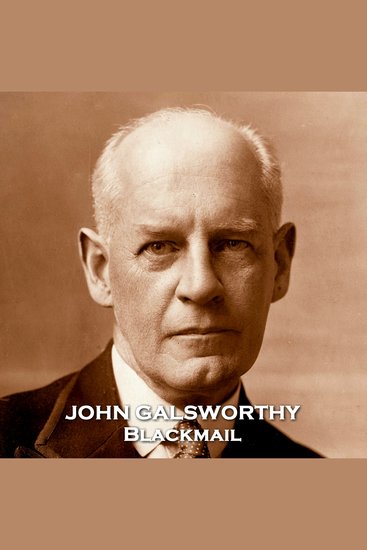
  • Blackmail - From their pens to your ears genius in every story - cover

    Blackmail - From their pens to...

    John Galsworthy

    • 0
    • 0
    • 0
    John Galsworthy was born on the 14th August 1867 on the family estate, Parkfield, in Kingston-upon-Thames.  His family’s wealth came from the shipping industry 
    At age nine he began his education at Saugeen, a Bournemouth preparatory school, before moving to Harrow school in 1881, distinguishing himself as an athlete.  
    Galsworthy attended New College, Oxford to read law and left with a second-class degree with honours in 1889. The bar called him in 1890 but Galsworthy decided he would rather run the family’s shipping business. This also meant travelling to destinations such as Vancouver, South Africa and Australia. 
    In 1895 Galsworthy began a decade long affair with Ada Nemesis Pearson Cooper, the wife of his first cousin. It was only when, in 1905, she divorced and married Galsworthy that their affair became known. 
    His literary career began in 1897 with a short story volume, ‘From the Four Winds’, with the pseudonym John Sinjohn as were three further works. Under his own name, in 1904, came ‘The Island Pharisees’, a novel of social observation, seasoned with flashes of satire and propaganda. He also switched from small, independent publishers to the larger Heinemann and to whom he remained for the duration of his career. 
    1906 saw first major play, ‘The Silver Box’, and the novel ‘The Man of Property’. Each to considerable acclaim. The latter was the first in ‘The Forsyte Saga’ trilogy written between 1906 and 1921. It dealt with the questions of status, class and materialism through Soames Forsyte, who is acutely aware of his ‘new money’ status. Jealous of his wife, his machinations drive her into the arms of another. Soames engages in a terrible revenge with terrible consequences.  
    His social agenda was enlightened particularly in his condemnation over the use of solitary confinement in prisons, his attacks on theatrical censorship and campaigning for animal rights. 
    Galsworthy, having been passed over for active service, spent much of the First World War working as an orderly in a field hospital in France. 
    Despite his it was only in 1920 that he had his first blockbuster play ‘The Skin Game’, a melodrama dealing with ethics, property and class.  
    In 1920 ‘In Chancery’ also arrived with further discourse on the marital disharmony between Soames Forsyte and his wife.  
    The appreciation of his work gradually shifted from plays to novels, particularly through his detailing English social difference, tension and pretension with the Forsytes.  A second trilogy, ‘A Modern Comedy’, followed, examining his love for his daughter Fleur and the English commercial upper-middle class, its ideologies and Soames’ poisonous materialism.  
    Having rejected a knighthood in 1918 he was appointed, in 1929, to the Order of Merit. Galsworthy spent his last years writing a third Forsythe trilogy, ‘End of the Chapter’.   
    In 1932 he was awarded the Nobel Prize, but by now failing health meant he was too ill to attend the ceremony. 
    John Galsworthy died at his Hampstead home of a brain tumour on 31st January, 1933. He was cremated and his ashes scattered from an aeroplane over the South Downs.
    Zum Buch

  • Breaking the Color Line - From their pens to your ears genius in every story - cover

    Breaking the Color Line - From...

    Annie McCary

    • 0
    • 0
    • 0
    The bookshelves of American literature are incredible collections that have gathered together centuries of very talented authors.  From this continent their fame spread and whilst among their number many are now forgotten or neglected their talents endure.  Among them is Annie McCary.
    Zum Buch
  • Poetry of St John of the Cross - cover

    Poetry of St John of the Cross

    Saint John of the Cross

    • 0
    • 0
    • 0
    The poems of St John of the Cross, with their mystic depth and spiritual ecstasy, stand among the world's great poems of Divine Love in all traditions.  St John is one of the Roman Catholic Doctors of the Church, was a reformer of the Carmelite Order, and co-founder with St Teresa of Avila of the Discalced Carmelites.  Teresa invited John to follow her, and in the protocols of the times, also became her Spiritual Director and Confessor.  Many of their individual works could be considered the products of their mutual support and inspiration.   - Summary by Ed Humpal
    Zum Buch
  • Making a Living - From their pens to your ears genius in every story - cover

    Making a Living - From their...

    Charlotte Perkins Gilman

    • 0
    • 0
    • 0
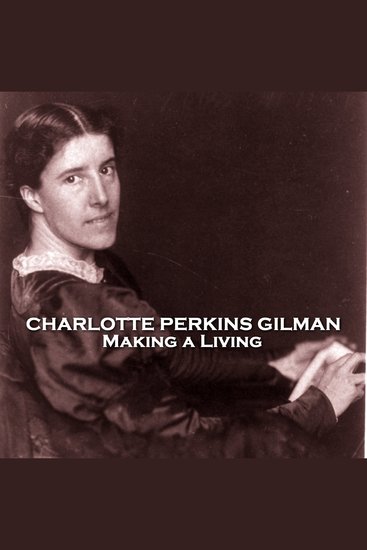
    Charlotte Perkins Gilman was born on 3rd July 1860 in Hartford, Connecticut, to an unaffectionate mother and a father who abandoned her and her older brother to a life of poverty. 
    Inevitably her schooling was limited and by 15 she had attended seven different schools but received only four years education.  However Charlotte was resourceful and did spend time with her father’s aunts – the suffragist Isabella Beecher Hooker and the ‘Uncle Tom Cabin’s’ author, Harriet Beecher Stowe as well as many hours at the public library studying ancient civilisations. 
    In 1878, she enrolled in classes at the Rhode Island School of Design where she met Martha Luther and they developed a close relationship until Luther married in 1881. Charlotte was devastated and detested romance and love until she met and married the artist Charles Walter Stetson.  
    Their only child, Katharine Beecher Stetson, was born in 1885 but left Charlotte with post-natal depression, then often dismissed as a case of hysteria or nerves.  Unsuited to domestic life she ruptured her life and moved to California with Katherine.  She divorced in 1894 and then sent Katharine east to live with her father and his second wife confirming that his paternal rights be acknowledged and that Katherine establish a relationship with her father. 
    After her mother died in 1893, Charlotte moved back east and became involved with her first cousin, Wall Street attorney, Houghton Gilman who she married in 1900. After his death she moved back to California, where Katherine now lived.   
    Her most popular story is ‘The Yellow Wallpaper’ which touched on her own post-partum depression and underlined the need for women to be responsible for their mental and physical well-being, as the narrator is ordered by her husband/doctor to take compete rest in her room where she is isolated and becomes obsessed with the revolting yellow wallpaper.   
    She wrote other notable short stories the best of which we also include.   
    Charlotte lectured widely for social reform, wrote important non-fiction works that questioned our patriarchal system and left a legacy as a leading and positive spokesperson for feminism.  
    She was diagnosed with incurable breast cancer in 1932 and, as she wrote in her suicide note and autobiography, she ‘chose chloroform over cancer’    
    Charlotte Perkins Gilman took her own life on 17th August 1935, aged 75, in Pasadena, California.
    Zum Buch