Join us on a literary world trip!
Add this book to bookshelf
Grey
Write a new comment Default profile 50px
Grey
Subscribe to read the full book or read the first pages for free!
All characters reduced
The Philosophy of Auguste Comte - Exploring Auguste Comte's Positivist Legacy - cover

The Philosophy of Auguste Comte - Exploring Auguste Comte's Positivist Legacy

Lucien Lévy-Bruhl

Translator Kathleen Mary de Beaumont Klein

Publisher: Good Press

  • 0
  • 0
  • 0

Summary

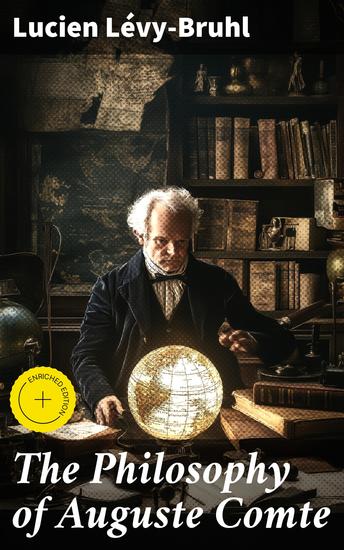
In "The Philosophy of Auguste Comte," Lucien L√©vy-Bruhl offers an incisive examination of the foundational ideas of positivism, as articulated by the French philosopher Auguste Comte. This work not only delineates Comte's philosophical innovations, particularly his law of three stages, but also situates his thought within the broader context of 19th-century intellectual movements. L√©vy-Bruhl'Äôs clear expository style and rigorous analysis delve into the intersections between science, sociology, and ethics, revealing how Comte's vision aimed to reconcile empirical inquiry with the moral dimensions of human society. As a detailed articulation of Comte'Äôs systematic thinking, this book serves as a significant scholarly reference for those exploring modern philosophy's roots. Lucien L√©vy-Bruhl, a preeminent French philosopher and sociologist, was profoundly influenced by Comte's ideas throughout his academic career. His background in anthropology and his interest in the evolution of human thought equipped him with a unique lens through which to interpret Comte'Äôs legacy. L√©vy-Bruhl's scholarship is characterized by its critical approach, as he seeks to explore not just philosophical doctrines, but also the societal implications of those ideas, making this work a culmination of his extensive intellectual pursuits. This text is highly recommended for students and scholars of philosophy, sociology, and intellectual history. L√©vy-Bruhl's detailed exploration of Comte's thought provides invaluable insight into the emergence of modern social science, making it essential reading for anyone wishing to understand the philosophical underpinnings of contemporary scientific discourse and the evolution of social thought.
Available since: 11/10/2023.
Print length: 285 pages.

Other books that might interest you

  • Mother's Secret - A Nutritionist's View of Family and Alzheimer's Disease - cover

    Mother's Secret - A...

    Marilyn Walls

    • 0
    • 0
    • 0
    Artfully blending the genres of memoir and scientific research, Mother's Secret: A Nutritionist's View of Family and Alzheimer's Disease offers the compelling story of one woman's southern roots. She is familiar, perhaps like your mother or grandmother, a woman who gained strength during the upheavals of the Great Depression and World War II. Her independence served her well until dementia overwhelmed her and challenged her relationship with her daughters. 
    Sadly, the spread of progressive brain disorders is wider than the Mississippi River. Mother's Secret, a hybrid book confronting these issues, combines personal experiences with information about a healthful diet, the benefits of botanicals, and current discoveries about brain function. Walls' powerful story will resonate with families affected by Alzheimer's, students in holistic or social programs, those wanting to make better choices for their own cognitive health, and anyone who likes a good read. While looking directly at the realities of Alzheimer's, the narrative transcends the disease to reveal both the loss and the glory of this mother's life.
    Show book
  • Parish Priest - Father Michael McGivney and American Catholicism - cover

    Parish Priest - Father Michael...

    Anonymous

    • 0
    • 0
    • 0
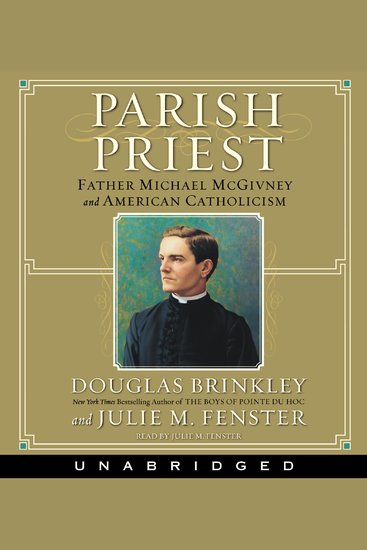
    Father Michael McGivney was a man to whom ""family values"" represented more than mere rhetoric, a man who has left a legacy of hope still celebrated around the world. 
    In the late 1800s, discrimination against American Catholics was widespread. Called to action in 1882, Father McGivney founded the Knights of Columbus, an organization that helped to save countless families. It has since grown to an international membership of 1.7 million men. At heart, though, Father McGivney was never anything more than an American parish priest, and nothing less than that, either. 
    In an incredible work of academic research, Douglas Brinkley and Julie M. Fenster re-create the life of Father McGivney, a fiercely dynamic and yet tenderhearted man. Moving and inspirational, Parish Priest chronicles the process of canonization that may well make Father McGivney the first American-born parish priest to be declared a saint by the Vatican.
    Show book
  • Essential Questions - cover

    Essential Questions

    Ph.D. Jacob Needleman

    • 0
    • 0
    • 0
    If we had the opportunity to speak to our younger self, what would we say? What wisdom could we give to that younger self about the meaning and purpose of life? What does our experience tell us about why we are here and who we are? This conversation explores these questions and why they may be important to our lives.
    Show book
  • Last Voices of the Irish Revolution - cover

    Last Voices of the Irish Revolution

    Tom Hurley

    • 0
    • 0
    • 0
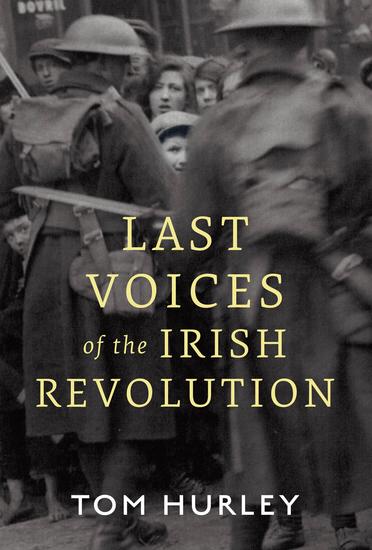
    The Irish Civil War ended in 1923. Eighty years on, documentary-maker Tom Hurley wondered if there were many civilians and combatants left from across Ireland who had experienced the years 1919 to 1923, their prelude and their aftermath. What memories had they, what were their stories and how did they reflect on those turbulent times?
    In early 2003, he recorded the experiences of 18 people, conducting 2 further interviews abroad in 2004. Tom spoke to a cross section (Catholic, Protestant, Unionist and Nationalist) who were in their teens or early twenties during the civil war. The chronological approach he has taken spans 50 years, beginning with the oldest interviewee's birth in 1899 and ending when the Free State became a republic in 1949.
    Last Voices of the Irish Revolution.
    Show book
  • The Relevance of Emotion Regulation - cover

    The Relevance of Emotion Regulation

    Jim Colajuta

    • 0
    • 0
    • 0
    Daily, we all experience emotions, both happy and negative. Most of us learn how to control, express, and cope with our emotions healthy as youngsters. Emotion regulation is more challenging for some people, sometimes due to terrible childhood events like abuse or trauma, sometimes due to a biological vulnerability to emotional sensitivity, and sometimes due to not being shown or taught how to manage challenging emotions.We can learn to modify what feeling we experience, how intense it is when we have it, and how we react to it since emotions are not absolute and everlasting. Emotion regulation promotes psychological well-being and aids in the management of bad life events and stress.There are various advantages to having better emotion regulation strategies to handle your emotions. Individuals who exercise emotional regulation are more robust and manage better with life's stresses. They have more effective coping mechanisms and are more tolerant of stress. Emotion regulation is a protective factor against anxiety and depressive symptoms. Furthermore, children who can control their emotions have greater flexibility in their thinking and higher focus, impulse control, and problem-solving abilities. These advantages cascade, resulting in more self-assurance, emotional well-being, and general satisfaction.
    Show book
  • A Rare Recording of President William Howard Taft - cover

    A Rare Recording of President...

    President William Howard Taft

    • 0
    • 0
    • 0
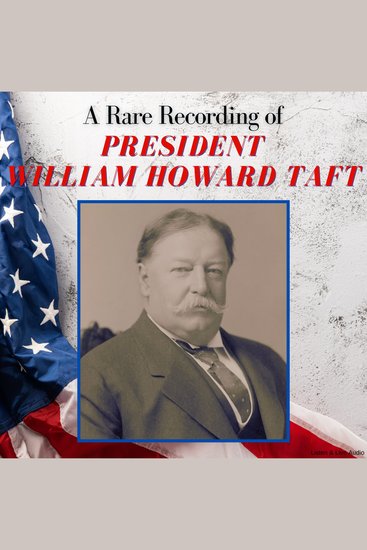
    William Howard Taft (September 15, 1857 - March 8, 1930), born in Cincinnati, Ohio, served as Secretary of War under President Theodore Roosevelt, then was elected on the Republican ticket as the 27th president of the United States from 1909 to 1913, and, later, named the tenth chief justice of the United States from 1921 to 1930. He is the only person to have held both offices. The following recordings are from the campaign trail in 1908, and, later, in 1912.
    Show book