
Join us on a literary world trip!
Add this book to bookshelf
Grey
Write a new comment Default profile 50px
Grey
Subscribe to read the full book or read the first pages for free!
All characters reduced
First Video Games - cover

First Video Games

Lucas Lee

Translator A AI

Publisher: Publifye

  • 0
  • 0
  • 0

Summary

"First Video Games" explores the captivating origins of the digital entertainment we know today, tracing the evolution from rudimentary pixel graphics to modern immersive worlds. It reveals how early hardware limitations spurred remarkable creativity in game design. The book uncovers how pioneering developers ingeniously worked around constraints, establishing fundamental design principles still evident in contemporary games. For example, early developers used limited color palettes and pixel-based displays to create iconic characters and environments, demonstrating that creativity can flourish even within strict technological boundaries. The book examines pivotal games like "Tennis for Two," "Spacewar!," and "Pong," highlighting that game technology and innovation weren't solely about technical advancements but also about artistic vision. By analyzing these early arcade games and home consoles, "First Video Games" showcases the historical landscape of computer science and electrical engineering, explaining key concepts in accessible language. It progresses from fundamental concepts of early computer graphics to specific case studies and culminates in an analysis of their lasting legacy on modern game design. This unique perspective emphasizes the human element behind the technology, making it valuable for video game enthusiasts, students of game design, and historians of technology alike. By understanding the challenges and triumphs of early developers, readers gain insights into problem-solving, resource management, and creative design, offering a comprehensive account of the foundations of modern game design.
Available since: 02/26/2025.
Print length: 63 pages.

Other books that might interest you

  • The Shortcut - Why Intelligent Machines Do Not Think Like Us - cover

    The Shortcut - Why Intelligent...

    Nello Cristianini

    • 0
    • 0
    • 0
    An influential scientist in the field of artificial intelligence (AI) explains its fundamental concepts and how it is changing culture and society. 


    A particular form of AI is now embedded in our tech, our infrastructure, and our lives. How did it get there? Where and why should we be concerned? And what should we do now? The Shortcut: Why Intelligent Machines Do Not Think Like Us provides an accessible yet probing exposure of AI in its prevalent form today, proposing a new narrative to connect and make sense of events that have happened in the recent tumultuous past, and enabling us to think soberly about the road ahead. 


    This book is divided into ten carefully crafted and easily digestible chapters. Each chapter grapples with an important question for AI. Ranging from the scientific concepts that underpin the technology to wider implications for society, it develops a unified description using tools from different disciplines and avoiding unnecessary abstractions or words that end with -ism. The book uses real examples wherever possible, introducing the listener to the people who have created some of these technologies and to ideas shaping modern society that originate from the technical side of AI. It contains important practical advice about how we should approach AI in the future without promoting exaggerated hypes or fears.
    Show book
  • Mastering Machine Learning: A Blueprint for Success in the AI Era - Practical Techniques Tools and Strategies for Building Intelligent Systems - cover

    Mastering Machine Learning: A...

    Rachel Chen

    • 0
    • 0
    • 0
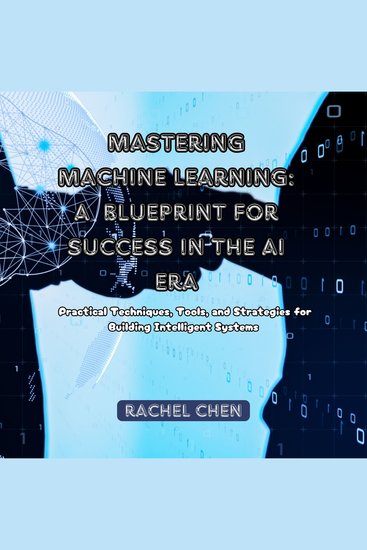
    Anyone hoping to succeed in the rapidly expanding field of artificial intelligence will find "Mastering Machine Learning: A Blueprint for Success in the AI Era: Practical Techniques, Tools, and Strategies for Building Intelligent Systems" to be an invaluable resource. The book offers a comprehensive examination of machine learning, covering everything from its most basic applications to its underlying concepts. Its authors have an excellent knowledge of both the novice and seasoned expert. 
    The way the book is organized offers a thorough educational experience. It starts by providing a strong foundation in fundamental ideas, including selecting an algorithm, preparing data, and evaluating models. After that, readers are led through increasingly difficult subjects, including natural language processing, reinforcement learning, and deep learning. Every component is designed to be extremely practical, with examples from real-world situations and detailed instructions that promote hands-on learning. 
    "Mastering Machine Learning" explores the strategic and ethical aspects of artificial intelligence in addition to its technological aspects. It covers important topics, including project management, moral AI behavior, and how to effectively convey AI discoveries to stakeholders who aren't technical. This all-encompassing method guarantees that readers will be able to create complex machine-learning models and be ready to apply them ethically and successfully in a range of professional settings. 
    The book is a vital toolset for data scientists, engineers, and business executives alike because of its unique combination of theory, useful methodologies, and strategic advice. As a definitive manual for thriving in the AI era, "Mastering Machine Learning" stands out for providing readers with the necessary abilities and mentality.
    Show book
  • Data Governance - A Comprehensive Guide to Unlocking the Power of Your Data - cover

    Data Governance - A...

    Simon Winston

    • 0
    • 0
    • 0
    In an era where data is the lifeblood of business and the key to informed decision-making, "Data Governance: A Comprehensive Guide to Unlocking the Power of Your Data" serves as your indispensable roadmap to harnessing the full potential of your organization's data assets. 
    Data governance is the linchpin that ensures data is reliable, accessible, secure, and compliant with regulatory requirements. Without a solid data governance framework, organizations risk drowning in a sea of chaotic, inconsistent, and unreliable data. This book demystifies the complex world of data governance, empowering you to take control of your data and turn it into a strategic asset. 
    In "Data Governance," you will embark on a journey that covers the fundamentals of data governance, from defining roles and responsibilities to establishing data quality standards. The book explores a variety of data governance frameworks and models, guiding you in selecting the one that aligns with your organization's unique needs. With the aid of this comprehensive guide, you will learn to implement data governance policies and procedures, while ensuring compliance with data privacy regulations and industry standards. 
    "Data Governance" also delves into the symbiotic relationship between data governance and data architecture, illustrating how proper alignment can drive efficiency and accuracy in your data ecosystem. You'll explore the crucial connection between data governance and data security, and how to protect your sensitive information in an ever-evolving threat landscape. 
    Unlock the full potential of your data with "Data Governance." Your journey to data excellence begins here. 
     
    Show book
  • Fungi Wonders: Transforming Our World and Minds - "Discover Fungi Wonders: Captivating Audio Lessons for Mind-Blowing Insights!" - cover

    Fungi Wonders: Transforming Our...

    Thatcher Wrenwood

    • 0
    • 0
    • 0
    Fungi Wonders: Transforming Our World and Minds 
    Looking to delve into the captivating realm of fungi and understand how they are revolutionizing our world and influencing our minds? 
    Seeking a comprehensive guide that offers all the essentials to grasp the transformative power of fungi? 
    Your search ends here! 
    This guide serves as your definitive companion for deepening your understanding, applying your knowledge, and engaging in hands-on discoveries about fungi. With this, you're primed for success in exploring the wonders of fungi. 
    Updated for the latest research and insights on fungi and their impact. 
    Key features of this enriched guide: 
    - Profound insights about the transformative magic of fungi, reshaping our world 
    - Detailed explanations of how fungi interact with our environment and psyche 
    - Effective strategies for learning, exploring, and appreciating fungi's role 
    Our guide distinguishes itself through comprehensive coverage, essential for grasping the full scope of fungi’s influence. Concepts aren't merely skimmed; they are explored with precision. 
    Please note that this guide is an independent resource designed for your benefit and is not affiliated with any official entity. 
    Designed with a clear structure and easy-to-understand language, our guide on the transformative magic of fungi ensures smooth transitions between topics. Say goodbye to dense jargon and welcome clear, precise, and scientifically accurate content. 
    So, why wait? Click the BUY NOW button, secure your guide, and begin your journey into the fascinating world of fungi!
    Show book
  • Silurian Period The: The History of the Prehistoric Era When Life Formed on Land - cover

    Silurian Period The: The History...

    Editors Charles River

    • 0
    • 0
    • 0
    The early history of Earth covers such vast stretches of time that years, centuries, and even millennia become virtually meaningless. Instead, paleontologists and scientists who study geochronology divide time into periods and eras.  
    The Silurian Age occurred during the mid-Paleozoic, and despite its relative brevity, the era developed some interesting features that promulgated life on Earth. Roderick J. Murchison, a British geologist, named a sequence of rocks after a group of indigenous people called the Silures living in Wales during the mid-19th century. Despite their absence in the Silurian Age, the name was bestowed to honor the tribe. 
    Murchison was inspired by close friend Adam Sedgwick, who named the Cambrian Age, employing the Latin word for Wales. In 1835, the two presented a paper together entitled On the Silurian and Cambrian Systems. Their separate categorizing systems caused a serious enough disagreement over chronology that the friendship ended bitterly. The alternative name for Siluria was Gotlandia after the Baltica island of Gotland. 
    What ultimately precipitated these subdivisions in the chronology was a “famous unconformity” on the River Onny in Shropshire. It indicated a natural break within “classic Silurian on its own home territory.” The timeline for beginning and end dates has remained imprecise, but the order of fossilized discoveries has proven correct. Joachim Barrande, a French paleontologist, geologist, and botanist, pursued the same issue in the Prague Basin of Bohemia. Studying the Paleozoic trilobite for a period of 10 years, his extensive work was published in his Silurian System of Central Bohemia. Altogether, he identified and analyzed over 4,000 new fossil species, producing the enormous Encyclopedia of Fossils, numbering over 6,000 pages.
    Show book
  • Snake Men - Rebels Reptiles and the Race to Name the Creatures of Earth - cover

    Snake Men - Rebels Reptiles and...

    Zach St. George

    • 0
    • 0
    • 0
    A wry and thought-provoking tale about the defiant, eccentric figures obsessed with Australia's deadliest reptiles. 
    Raymond Hoser is known as the Snakeman, a moniker he has zealously defended. As a day job, Hoser runs a business in Melbourne that offers several services. One service is snake removal, a common trade in Australia. Another is snake shows, most often performed at children's birthday parties. But by the 2010s, Hoser had become famous around the world for an entirely different activity: his work as a taxonomist, a namer of new species. In a decade-long spree, Hoser had named thousands of new creatures, including more snakes than any other scientist. To some, Hoser's accomplishments were a scientific triumph. But others have accused Hoser of what they call "taxonomic vandalism," the results of which, they argue, could alter the very course of life on Earth. 
    Snake Men recounts this outrageous and humorous story, tracing the surprising intersection between taxonomists, the sober and serious class of scientists who have for centuries cooperated in a global effort to understand the order of life, and Raymond Hoser and other snake men. The results―chaotic, mischievous, the stuff of legends―hint at the rebellious impulse that lies coiled somewhere deep inside us all.
    Show book