Join us on a literary world trip!
Add this book to bookshelf
Grey
Write a new comment Default profile 50px
Grey
Subscribe to read the full book or read the first pages for free!
All characters reduced
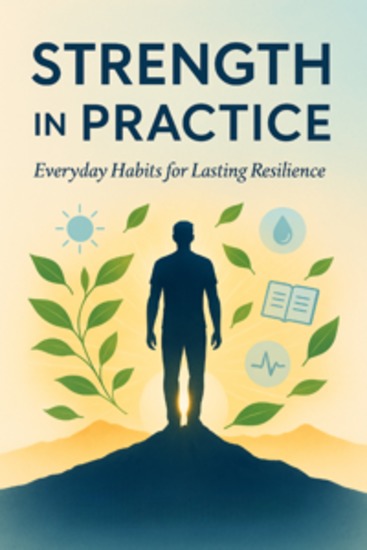
Strength in Practice: Everyday Habits for Lasting Resilience A Professional’s Guide to Protecting Energy Focus and Well-Being - cover

Strength in Practice: Everyday Habits for Lasting Resilience A Professional’s Guide to Protecting Energy Focus and Well-Being

Luca Fairbanks

Publisher: BookRix

  • 0
  • 0
  • 0

Summary

Resilience isn’t built in a crisis—it’s built in the daily routines that prepare you for one. For professionals and researchers seeking evidence-based strategies, this book offers a clear, practical framework for weaving resilience into everyday life.Drawing on the latest research in psychology, neuroscience, and performance science, it reveals how small, repeatable practices—morning resets, mindful pauses, boundary rituals, and recovery habits—become the invisible armor that protects against stress and burnout.With a casual yet authoritative tone, this guide bridges research with action, showing you how to strengthen your mental, emotional, and physical capacity without adding complexity to your schedule. You’ll find practical examples, simple frameworks, and powerful insights that transform resilience from an abstract concept into a reliable routine.Resilience isn’t about bouncing back after you’ve broken down—it’s about staying strong every day. Protect your focus, preserve your energy, and live with steady strength.
Available since: 09/06/2025.
Other books that might interest you

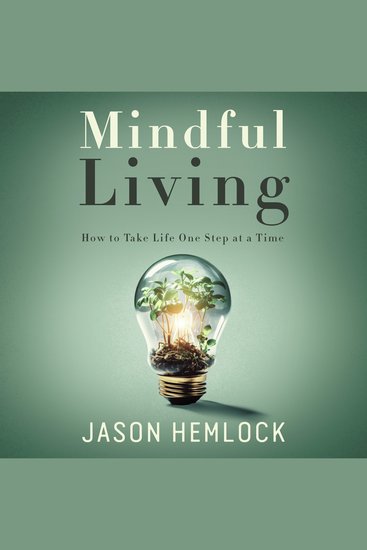
  • Mindful Living - How to Take Life One Step at a Time - cover

    Mindful Living - How to Take...

    Jason Hemlock

    • 0
    • 0
    • 0
    Do you find yourself getting caught up in obsessive thoughts and overthinking? 
    It’s time to break the cycle of negative thoughts and actions. Mindfulness has its roots in ancient practices but offers a fully modern way of tackling life’s problems. Mindful Living: How to Take Life One Step at a Time gives you everything you need to know to start living a more mindful – and happier – life. 
    Packed with practical tips and techniques, you’ll learn:How you can be mindful from the moment you wake upHow to be mindful in your conversationsWhy you don’t have to meditate to be mindfulHow to improve your diet with mindful eatingThe origins of mindfulness and why it’s not a religious or spiritual practiceMindfulness exercises you can easily incorporate into your daily routineAnd so much more! 
    Say goodbye to feeling constantly stressed and frazzled and welcome in a calmer, more relaxed you. 
    Pick up Mindful Living: How to Take Life One Step at a Time and see how simple it is for you to transform your life – today!
    Show book
  • Summary: The Wager - A Tale of Shipwreck Mutiny and Murder by David Grann: Key Takeaways Summary & Analysis Included - cover

    Summary: The Wager - A Tale of...

    Brooks Bryant

    • 0
    • 0
    • 0
    Disclaimer: This is NOT the official book, but a summary & it does NOT accompany the official. 
    In "The Wager: A Tale of Shipwreck, Mutiny, and Murder" by David Grann, readers are thrust into a thrilling narrative based on true events surrounding the shipwreck of His Majesty's Ship the Wager in the 1740s. On a secret mission during an imperial war with Spain, the Wager pursued a treasure-laden Spanish galleon before meeting its tragic fate off the Patagonian coast. The wreckage and the ensuing survival tale provoke questions surrounding heroism, mutiny, and the human capacity for survival under the most extreme conditions. 
    The survivors' ordeal spans many months of starvation and anarchy, as they battled to endure in a harsh, desolate environment. The narrative takes a dramatic turn when two groups of survivors — one landing in Brazil and the other in Chile — narrate conflicting accounts of the events that transpired during their harrowing journey. This divergence sets the stage for a court-martial, where the truth hangs in a precarious balance with life-and-death stakes. 
    Grann excels in bringing this historic tale to life, paralleling the depth of narrative nonfiction greats and survival literature classics. The unraveling court-martial narrative holds the savvy of a courtroom thriller, beckoning readers into a vividly recreated world of 18th-century naval warfare and exploration.
    Show book
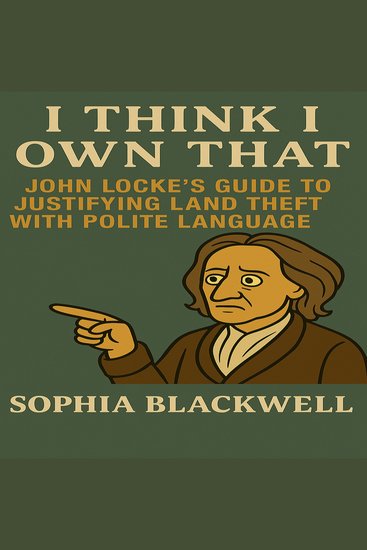
  • I Think I Own That - John Locke’s Guide to Justifying Land Theft with Polite Language - cover

    I Think I Own That - John...

    Sophia Blackwell

    • 0
    • 0
    • 0
    John Locke: Enlightenment philosopher, father of liberalism, inventor of “natural rights,” and accidental spiritual patron of land developers, libertarians, and your uncle who won’t shut up about property taxes. 
    In this gloriously sarcastic takedown of one of Western philosophy’s most over-quoted minds, Sophia Blackwell (Kant You Not, No Self, No God, No Clue) guides you through Locke’s greatest hits—including: 
    The blank slate theory, which basically says you’re born dumb and the world makes you worse 
    His ideas on identity, which collapse the second you forget your phone password 
    His version of consent, which mostly consists of “You didn’t leave, so I assume you’re fine with it.” 
    And of course, property rights—where mixing your labor with the earth somehow makes it yours, and stealing land becomes morally correct as long as you bring a shovel 
    Locke’s political philosophy inspired democracies, revolutions, and every 400-comment Reddit thread titled “Taxation is theft.” 
    This is not a respectful biography. 
    This is a roast. A eulogy. A survival guide for understanding how Locke gave us: 
    Liberalism 
    Landlords 
    Legal headaches 
    And a political system that thinks fencing off a patch of dirt = moral superiority 
    Perfect for: 
    Recovering philosophy students 
    Political skeptics 
    Enlightenment haters 
    Property law survivors 
    And anyone who wants to laugh while questioning whether government is just a giant metaphor for a really passive-aggressive roommate agreement 
    You don’t need to read Two Treatises of Government. 
    You just need to know Locke said, “I think I own that,” and people believed him.
    Show book
  • Han Dynasty - Silk Roads Science and the Confucian Revival - cover

    Han Dynasty - Silk Roads Science...

    Rolf Hedger

    • 0
    • 0
    • 0
    The Han Dynasty, lasting from 206 BCE to 220 CE, is one of the most significant periods in Chinese history, shaping the culture, politics, and identity of China for centuries. It followed the brief but influential Qin Dynasty, which had laid the foundations for imperial rule but also faced internal strife and rebellion. The Han emerged as the new power, restoring stability and expanding China's borders, making significant contributions to science, technology, trade, and philosophy. 
    The dynasty's rise was primarily due to the leadership of Liu Bang, a former peasant who became Emperor Gaozu. He defeated his rival, Xiang Yu, and took control of the vast Qin Empire, establishing the Han Dynasty. Gaozu's leadership marked the beginning of a new era, one that would see the consolidation of power and the implementation of reforms that would shape the future of the empire. 
    The Han Dynasty’s political structure was deeply influenced by the collapse of the Qin Dynasty. Emperor Gaozu restored the decentralized feudal system of governance, but with modifications to ensure more central control. Over time, the emperors of the Han Dynasty would strengthen the centralized bureaucracy, establishing a model that would endure for centuries in imperial China. One of the key developments was the introduction of Confucianism as the state philosophy. Confucian ideals, emphasizing hierarchy, duty, and moral governance, became deeply embedded in the political and social structure of the Han Empire. Confucian scholars played an essential role in the administration, and the dynasty itself was viewed as a time when the state was governed by virtuous and learned rulers.
    Show book
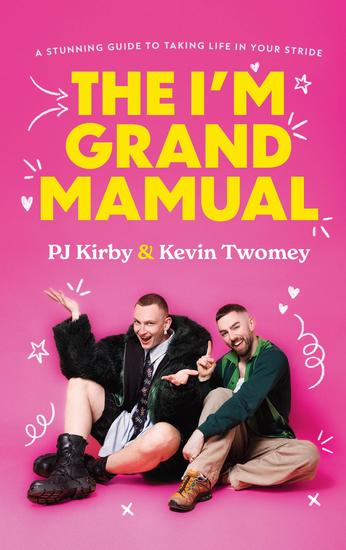
  • The I'm Grand Mamual - A stunning guide to taking life in your stride - cover

    The I'm Grand Mamual - A...

    PJ Kirby, Kevin Twomey

    • 0
    • 0
    • 0
    PJ Kirby and Kevin Twomey are two Mammy's boys from Cork who are always up for a skit.
    In The I'm Grand Mamual, they take well-worn expressions that their mams have always said, and share hilarious and heart-warming stories from their lives where these sayings have rung true – from schooldays to holidays, coming out to going out, and sustainable thrifting to end-of-night shifting.
    The I'm Grand Mamual is a big-sisterly companion for taking life in your stride. Mam might always know best – but Kevin and PJ will show you the rest!
    Show book
  • Residual Governance - How South Africa Foretells Planetary Futures - cover

    Residual Governance - How South...

    Gabrielle Hecht

    • 0
    • 0
    • 0
    In Residual Governance, Gabrielle Hecht dives into the wastes of gold and uranium mining in South Africa to explore how communities, experts, and artists fight for infrastructural and environmental justice. Hecht outlines how mining in South Africa is a prime example of what she theorizes as residual governance—the governance of waste and discard, governance that is purposefully inefficient, and governance that treats people and places as waste and wastelands. She centers the voices of people who resist residual governance and the harms of toxic mining waste to highlight how mining's centrality to South African history reveals the links between race, capitalism, the state, and the environment. In this way, Hecht shows how the history of mining in South Africa and the resistance to residual governance and environmental degradation is a planetary story: the underlying logic of residual governance lies at the heart of contemporary global racial capitalism and is a major accelerant of the Anthropocene.
    Show book