

Join us on a literary world trip!
Add this book to bookshelf
Grey
Write a new comment Default profile 50px
Grey
Subscribe to read the full book or read the first pages for free!
All characters reduced
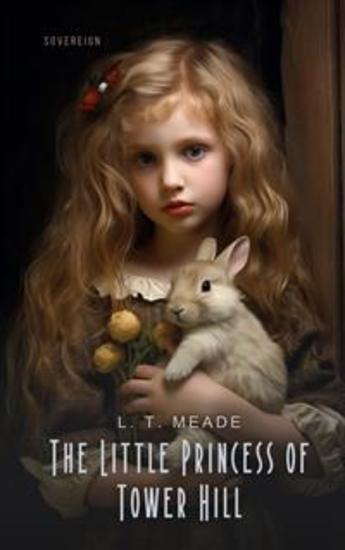
The Little Princess of Tower Hill - cover

The Little Princess of Tower Hill

L.T. Meade

Publisher: Interactive Media

  • 0
  • 0
  • 0

Summary

"The Little Princess of Tower Hill" by L. T. Meade is a heartwarming story set in the charming village of Tower Hill. It revolves around the life of young Rosemary, the beloved little princess of the town. Rosemary's infectious curiosity and kindness endear her to everyone she meets, and her adventures in the countryside, along with her animal friends, bring joy and laughter to Tower Hill. As she grows, Rosemary's radiant spirit continues to touch the lives of those around her, making this novel a delightful journey of innocence, friendship, and the beauty of simple pleasures in a close-knit community.
Available since: 09/14/2023.
Print length: 148 pages.

Other books that might interest you

  • Disease of Parliaments The (Unabridged) - cover

    Disease of Parliaments The...

    H. G. Wells

    • 0
    • 0
    • 0
    Herbert George Wells (21 September 1866 - 13 August 1946) was an English writer. Prolific in many genres, he wrote dozens of novels, short stories, and works of social commentary, history, satire, biography and autobiography. His work also included two books on recreational war games. Wells is now best remembered for his science fiction novels and is often called the "father of science fiction", along with Jules Verne and the publisher Hugo Gernsback.
    THE DISEASE OF PARLIAMENTS: There is a growing discord between governments and governed in the world. There has always been discord between governments and governed since States began; government has always been to some extent imposed, and obedience to some extent reluctant.
    Show book
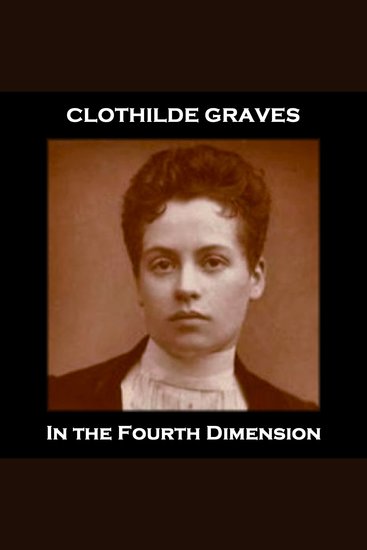
  • In the Fourth Dimension - From their pens to your ears genius in every story - cover

    In the Fourth Dimension - From...

    Clotilde Graves

    • 0
    • 0
    • 0
    Clotilde Augusta Inez Mary Graves was born on the 3rd June 1863 at Buttevant Castle, Co. Cork, to parents with military backgrounds. 
    At age nine, the family moved to Southsea in England for yet another military posting.  Her father’s postings gave her valuable experiences that would be put to good use in later years in some of her literary works. 
    She was educated at a Catholic convent in Lourdes before returning to London in 1884 to study art in Bloomsbury.  She worked part-time at the British Museum and the Royal Female School of Art and generated further income by drawing little pen-and-ink grotesques for the comic papers.  
    A few years later a chance meeting found her writing extra lyrics for a pantomime version of Puss in Boots.  She followed up with several financially successful plays, both in London and New York, and gained a measure of notoriety in one with the comparison of marriage and prostitution.   
    Despite her dramatic success she published her first novel in 1911 under the pseudonym of Richard Dehan which she continued to use for later works.  As well as novels and plays she published collections of short stories which glow with talent and invention. 
    She was an unusual figure in London society, wearing her hair short, taking on a masculine manner and cut of clothing, and smoking cigarettes in public when such traits were considered eccentric at best.  Add to this her admired collection of Chinese and Japanese trophies, her enthusiasm for fly-fishing and her riding of a tricycle and you have a perfect image of this fascinating writer. 
    Clotilde Graves died at the convent of Our Lady of Lourdes at Hatch End in Middlesex, on the 3rd December 1932.  She was 69.
    Show book
  • Beyond Good and Evil - Prelude to a Philosophy of the Future - cover

    Beyond Good and Evil - Prelude...

    Friedrich Wilhelm Nietzsche

    • 0
    • 0
    • 0
    A caustic criticism of nearly every philosophic predecessor and a challenge of traditionally held views on right and wrong, Friedrich Nietzsche’s Beyond Good and Evil paved the way for modern philosophical thought. Through nearly three hundred transformative aphorisms, Nietzsche presents a worldview in which neither truth nor morality are absolutes, and where good and evil are not opposites but counterparts that stem from the same desires. This work dramatically rejects the tradition of Western thought with its notions of truth and God, good and evil. Nietzsche demonstrates that the Christian world is steeped in a false piety and infected with a "slave morality." With wit and energy, he turns from this critique to a philosophy that celebrates the present and demands that the individual impose their own "will to power" upon the world. Beyond Good and Evil was a foundational text for early twentieth-century thinkers, including philosophers, psychologists, novelists, and playwrights. Today’s readers will delight in Nietzsche’s pithy wit and irony while gaining a deeper understanding of his core ideology.
    Show book
  • Encounter An (Unabridged) - cover

    Encounter An (Unabridged)

    James Joyce

    • 0
    • 0
    • 0
    James Augustine Aloysius Joyce (2 February 1882 - 13 January 1941) was an Irish novelist, short story writer, poet and literary critic. He contributed to the modernist avant-garde movement and is regarded as one of the most influential and important writers of the 20th century.
    AN ENCOUNTER: It was Joe Dillon who introduced the Wild West to us. He had a little library made up of old numbers of The Union Jack, Pluck and The Halfpenny Marvel. Every evening after school we met in his back garden and arranged Indian battles.
    Show book
  • Ben Pitcher's Elly - Mann delves into the human psyche with great touch in this story of murder and parenting - cover

    Ben Pitcher's Elly - Mann delves...

    Mary E. Mann

    • 0
    • 0
    • 0
    Mary Rackham was born in Norwich on 14th August 1848 to a merchant family.  Little is known of her early life and her biography only re-appears in September 1871 with marriage to Fairman Joseph Mann, a farmer with 800 acres.   
     
    Mary moved to Shropham, Norfolk and became involved with the workhouse, visiting the sick and other unfortunates of the parish, her observations and experiences a valuable source for her later stories.  
     
    She took up writing, partly to offset the dreary village life of her surroundings, in the 1880s and published her first novel, ‘The Parish of Hilby’ (1883) at her own expense. It was well received by the critics.  
     
    Thus began a career that spanning three decades provided thirty-three novels, hundreds of short stories, and fourteen plays.  Her work was largely focused on rural life in Norfolk and centered on the fictional town of Dulditch, with grim but authentic accounts of poverty and deprivation.  
     
    Her marriage produced one boy and three girls. With her husband's death in 1913, she moved to Sheringham.  
     
    She is regarded as a major contributor to East Anglian literature with particular praise given to her short stories. 
     
    Mary E Mann died on 19th May 1929.  She was 80.  Her grave-marker is a carved open book with the epitaph ‘We bring our years to an end, as if it were a tale that is told’. 
     
    Life in ‘Ben Pitcher's Elly’ is degrading, awful and unvarnished.  The chances of this young girl having a happy life are remote but her story must be heard.
    Show book
  • Moth The (Unabridged) - cover

    Moth The (Unabridged)

    H. G. Wells

    • 0
    • 0
    • 0
    'The Moth' is the strange tale of two rivalling entomologists, each determined to demolish the other's life's work. When one of them dies, the other struggles to cope in the absence of his rival. And then he discovers an entirely new species of moth - a moth very reminiscent of his dead rival - and which pursues him wherever he goes.
    Show book
