Join us on a literary world trip!
Add this book to bookshelf
Grey
Write a new comment Default profile 50px
Grey
Subscribe to read the full book or read the first pages for free!
All characters reduced
The Dunwich Horror - cover

The Dunwich Horror

Lovecraft H.P.

Publisher: Publisher s23237

  • 0
  • 0
  • 0

Summary

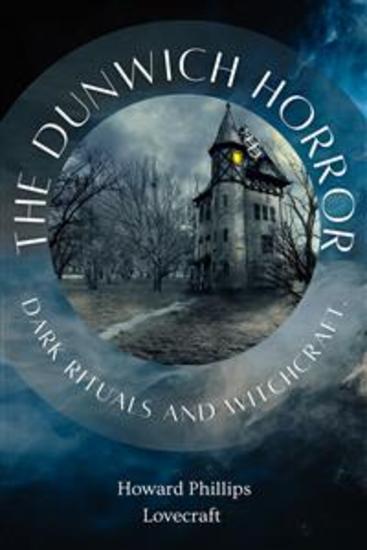
In H.P. Lovecraft’s, "The Dunwich Horror", we are told the story of Wilbur Whateley, the son of a deformed albino mother and an unknown father (alluded to in passing by the mad Old Whateley as "Yog-Sothoth"), and the strange events surrounding his birth and precocious development. Wilbur matures at an abnormal rate, reaching manhood within a decade. All the while, his sorcerer grandfather indoctrinates him into certain dark rituals and the study of witchcraft.
Available since: 09/21/2022.

Other books that might interest you

  • Darkness Box - cover

    Darkness Box

    Ursula K. Le Guin

    • 0
    • 0
    • 0
    This is the first story I ever got paid for; the second story I ever got published; and maybe the thirtieth or fortieth story I wrote. I had been writing poetry and fiction ever since my brother Ted, tired of having an illiterate five-year-old sister around, taught me to read. At about twenty I began sending things off to publishers. Some of the poetry got printed, but I didn’t get systematic about sending out the fiction till I was getting on to thirty. It kept systematically coming back. 
    “April in Paris” was the first “genre” piece—recognizably fantasy or science fiction—that I had written since 1942, when I wrote an Origin-of-Life-on-Earth story for Astounding, which for some inconceivable reason rejected it (I never did synch with John Campbell). At age twelve I was very pleased to get a genuine printed rejection slip, but by age thirty-two I was very pleased to get a check. “Professionalism” is no virtue; a professional is simply one who gets paid for doing what an amateur does for love. But in a money economy, the fact of being paid means your work is going to be circulated, is going to be read; it’s the means to communication, which is the artist’s goal. Cele Goldsmith Lalli, who bought this story in 1962, was as enterprising and perceptive an editor as the science fiction magazines have ever had, and I am grateful to her for opening the door to me.
    Show book
  • Heartbroke - cover

    Heartbroke

    Chelsea Bieker

    • 0
    • 0
    • 0
    From the acclaimed author of Godshot and "a pitch-perfect ventriloquist of extraordinary talent and ferocity" (T Kira Madden) comes a defining book of Californian stories where everyone is seeking or sabotaging love. 


    United by the stark and sprawling landscapes of California's Central Valley, the characters of Heartbroke boil with reckless desire. A woman steals a baby from a shelter in an attempt to recoup her own lost motherhood. A phone-sex operator sees divine opportunity when a lavender-eyed cowboy walks into her life. A mother and a son selling dream catchers along a highway that leads to a toxic beach manifest two young documentary filmmakers into their realm. And two teenage girls play a dangerous online game with destiny. 


    Heartbroke brims over with each character's attempt to salvage grace where they can find it. Told in bright, snapping prose that reveals a world of loss and love underneath, Chelsea Bieker brilliantly illuminates a golden yet gothic world of longing and abandonment under an unrelenting California sun.
    Show book
  • Obligation - cover

    Obligation

    Stefan Zweig

    • 0
    • 0
    • 0
    Stefan Zweig's "Obligation" is a riveting narrative that delves into the depths of human conscience, honor, and the moral quandaries that shape our destinies. Set in the early 20th century, this masterful work captures the essence of internal struggle through the life of its protagonist, a man ensnared by a promise made in a moment of desperation. 
    The story unfolds as the protagonist, a respected individual within his community, faces an unexpected moral dilemma. Years ago, he made a vow under circumstances that he believed would never resurface to challenge the integrity of his word. However, when the past comes knocking in an unforeseen manner, he is thrust into a vortex of ethical introspection and societal judgment. 
    Zweig, with his unparalleled ability to explore the psychological landscapes of his characters, crafts a tale that is not only about the weight of a promise but also about the complex interplay of duty, societal expectations, and personal integrity. The protagonist's journey is a compelling exploration of how one's sense of obligation can dictate the course of one's life, often leading to unforeseen consequences and internal conflicts. 
    "Obligation" is a testament to Zweig's genius in portraying the nuanced battles that rage within the human soul. It is a story that resonates with the timeless theme of how personal honor and the sense of duty can lead to a crucible of decision-making, where every choice comes with its own set of repercussions. This novel is a must-read for anyone who appreciates the art of psychological narrative and the exploration of moral dilemmas in the human experience.
    Show book
  • A Permanent Member of the Family - cover

    A Permanent Member of the Family

    Anonymous

    • 0
    • 0
    • 0
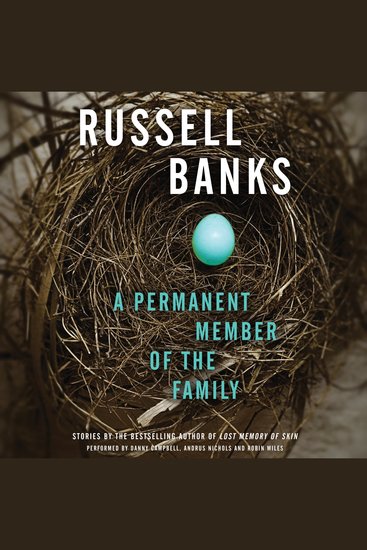
    Suffused with Russell Banks’s trademark lyricism and reckless humor, the twelve stories in A Permanent Member of the Family examine the myriad ways we try—and sometimes fail—to connect with one another, as we seek a home in the world. 
    In the title story, a father looks back on the legend of the cherished family dog whose divided loyalties mirrored the fragmenting of his marriage. “A Former Marine” asks, to chilling effect, if one can ever stop being a parent. And in the haunting, evocative “Veronica,” a mysterious woman searching for her daughter may not be who she claims she is. 
    Moving between the stark beauty of winter in upstate New York and the seductive heat of Florida, Banks’s acute and penetrating collection demonstrates the range and virtuosity of both his narrative prowess and his startlingly panoramic vision of modern American life.
    Show book
  • A Voice from the Pit - From their pens to your ears genius in every story - cover

    A Voice from the Pit - From...

    Bernard Capes

    • 0
    • 0
    • 0
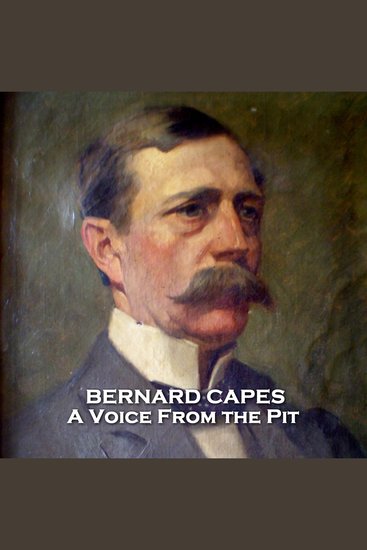
    Bernard Edward Joseph Capes was born on the 30th August 1854 in London.  He was one of 11 children. 
    His early work was as a journalist and this developed into writing many short stories for the periodicals of the time including Blackwood's, Cassell's, Cornhill Magazine, Illustrated London News, Macmillan's Magazine, Mall Magazine, Pearson's Magazine, The Idler, and The Queen. 
    It took him many years to decide that writing full-time could be a sustainable career path.  His initial success came with ‘The Mill of Silence’.  As well as being published it garnered second prize at a competition sponsored by the Chicago Record.  He exceeded that by winning it the following year with ‘The Lake of Wine’.   
    Capes quickly became both prolific and popular.  As well as his stories and articles for the periodicals he wrote around 40 volumes across novels, poetry, history as well as romance and mystery novels. 
    Bernard Capes died on 2nd November 1918 in the flu epidemic.
    Show book
  • Blessed Are the Meek - From their pens to your ears genius in every story - cover

    Blessed Are the Meek - From...

    Mary Webb

    • 0
    • 0
    • 0
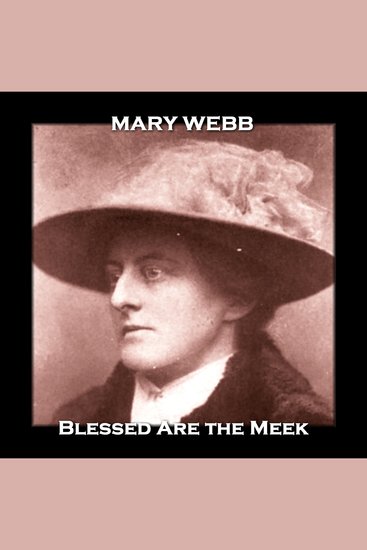
    Mary Gladys Meredith was born on 25th March 1881 at Leighton Lodge in the village of Leighton, near Shrewsbury in Shropshire.  
    Mary was home-schooled by her father before being sent to a finishing school in Southport in 1895. Her longs walks in the countryside helped her develop a heightened sense of observation and description, of both people and places, which later infused both her poetry and prose. 
    When she was 20 she developed symptoms of Graves' disease, a thyroid disorder that caused bulging protuberant eyes and throat goitre. This caused life-long ill health and was a possible contributor to her early death.  
    Mary was first published as a teenager when her brother sent to a local newspaper her poem on a recent rail accident.  Mary, who was in the habit of destroying her work was appalled though placated when she discovered that it had received some positive appreciation in readers letters. 
    1912 brought marriage to Henry Bertram Law Webb, a teacher. He supported her literary work which, in 1917, resulted in the publication of her novel ‘The Golden Arrow.’ 
    A few years later they acquired a property in London where, it was hoped, recognition of her literary talents would be more easily recognised.   
    Her 1924 novel, ‘Precious Bane’, won the Prix Femina Vie Heureuse, the prestigious French literary prize awarded by an all-female jury. 
    Most of her poetry and various other works were only published after her death. 
    By 1927 her health was deteriorating and her marriage failing.   
    Mary Webb died on 8th October 1927 at St Leonards-on-Sea, East Sussex.  She was 46.
    Show book