Join us on a literary world trip!
Add this book to bookshelf
Grey
Write a new comment Default profile 50px
Grey
Subscribe to read the full book or read the first pages for free!
All characters reduced
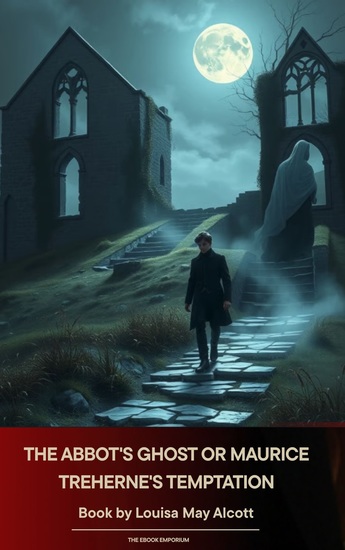
The Abbot's Ghost Or Maurice Treherne's Temptation - cover

The Abbot's Ghost Or Maurice Treherne's Temptation

Louisa May Alcott

Publisher: The Ebook Emporium

  • 0
  • 0
  • 0

Summary

"A haunted estate, a family curse, and a secret that refuses to stay buried."

In this chilling gothic tale, a group of houseguests gathers at the grand, gloomy estate of Christie's Abbey for Christmas. Among them is Maurice Treherne, a man seeking to reclaim his reputation and his rightful inheritance. However, the festivities are overshadowed by the legend of the Abbot's Ghost—a spectral figure said to haunt the Abbey's ruins as an omen of doom. As Maurice navigates a web of romantic rivalry and blackmail, he must face a harrowing temptation that could secure his fortune but cost him his soul.

A Hidden Gem of Suspense: Long before she became famous for wholesome family stories, Alcott mastered the art of the sensational thriller. This story features all the hallmarks of the genre: secret identities, ghostly sightings in moonlit cloisters, and intense psychological drama.

Themes of Honor and Temptation: At its heart, the story is a battle of will. Maurice Treherne stands as a complex hero, struggling against the bitterness of his past and the manipulative schemes of those around him. Alcott expertly balances the supernatural elements with a very human story of greed and redemption.

Step into the shadows of the Abbey. Purchase "The Abbot's Ghost" today.
Available since: 01/15/2026.
Print length: 66 pages.
Other books that might interest you

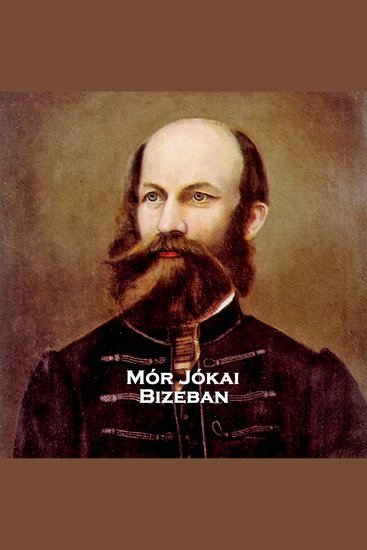
  • Bizeban - From their pens to your ears genius in every story - cover

    Bizeban - From their pens to...

    Moritz Jokai

    • 0
    • 0
    • 0
    Móric Jókay de Ásva was born on the 18th February 1825 in Komárom, then in the Kingdom of Hungary but now part of Slovakia.  
    Due to his timid and delicate constitution he was educated at home until the age of 10 and then sent away to complete his studies at the Calvinist college at Pápa. 
    At 12 his father died, and he was pushed to honour him by replicating his career as a lawyer.  He studied hard and completed the curriculum at Kecskemét and Pest.  He won his first case as a newly graduated lawyer. 
    But he found a career in law to be dull and, encouraged by the positive reaction to his first play, he moved to Pest in 1845.  There he published, first in a newspaper, and then as a novel ‘Hétköznapok’ (‘Working Days’).  It was acclaimed as a masterpiece.  To add to his promise he was appointed as the editor of Életképek, the leading Hungarian journal. 
    In 1848 he married the actress, Róza Laborfalvi.  That same year Europe was awash with revolutions and Jókai, a moderate Liberal, enthusiastically supported the nationalist cause and its decision to depose the Habsburg dynasty.  The attempt failed. 
    He was now classed as a political suspect and threw himself into his literary career, writing dozens of novels, many of them masterpieces, stories, essays and the like.  In total he wrote several hundred volumes, many of them in the local Magyar language which helped arrest its declining relevance in society.  
    By 1867 the political temperature had cooled, and he entered parliament as well as becoming the editor a government journal he had founded.   His skills were much admired and helped the government navigate through several difficult matters.   
    His wife died in 1886 but although grief-stricken he continued to work and to write.  
    In 1897 the king appointed him a member of the upper house.  Two years later he caused a minor scandal by marrying the young 20-year-old actress, Bella Nagy.  At the time he was 74.
    Show book
  • Go Ahead 'Say Gay' Series Celebrate! The - A Literary History of LGBTQ Fiction - An Inspiring Collection From The Finest Writers - cover

    Go Ahead 'Say Gay' Series...

    Finest Writers

    • 0
    • 0
    • 0
    Themes of love between people of the same gender are found in a variety of texts throughout the world. The Greeks, explored the theme on different levels in works such as Plato's. Religious narratives include stories of sexuality between men or feature divine actions that result in changes in gender. These myths too are forms of LGBTQ expression and modern conceptions of sexuality and gender. Myths too have been used by to explain the "cause" of transgender identity or homosexuality.Many early Gothic fiction authors, were homosexual and would sublimate these themes using transgressive genres like Gothic and horror fiction. Sheridan Le Fanu's novella Carmilla was the first lesbian vampire story and influenced Bram Stoker's Dracula.Stoker's novel has its own homoerotic aspects, as when Count Dracula warns off the female vampires and claims Jonathan Harker, saying "This man belongs to me!"The founding of the Lambda Literary Award in 1988 helped increase the visibility of LGBT literature.In the 21st century, much LGBTQ literature achieved a high level of sophistication and many works have earned mainstream acclaim. Notable authors include Sean Greer. Greer, an openly gay man, won the 2018 Pulitzer Prize for Fiction for Less. Becky Albertalli's teen novel Simon vs. the Homo Sapiens Agenda was adapted into the feature film Love, Simon by 20th Century Fox, the first film by a major studio focused on a gay teenage romance. Here is the ultimate collection of LGTBQ fiction from some of our most heralded  writers. A celebration of love, light and freedom.
    Show book
  • The White Maniac - A Doctor's Tale - cover

    The White Maniac - A Doctor's Tale

    Mary Fortune

    • 0
    • 0
    • 0
    A country doctor visits the spacious house of a Baron. But when he arrives, he draws up in shock. Everything inside and outside of the house, down to the clothing of the inhabitants, is all the same color – white. Why is everything about the house eerily bloodless?  
     
    Mary Fortune was one of the earliest female writers of crime fiction, and likely the first to write from the point of view of the detective. She enjoyed a prolific career in Australia, where she also wrote under the pseudonyms Waif Wanderer and W.W. The White Maniac was originally published in The Australian Journal, July 13th, 1867.
    Show book
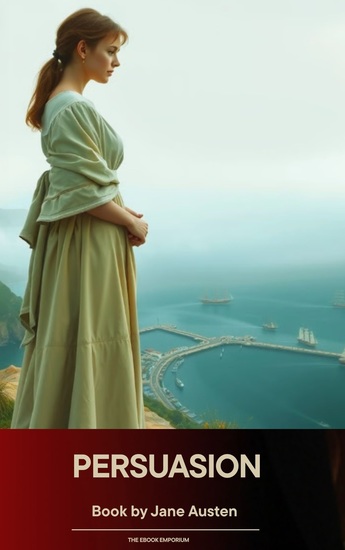
  • Persuasion - cover

    Persuasion

    Jane Austen

    • 0
    • 0
    • 0
    "You pierce my soul. I am half agony, half hope. I have loved none but you."
    
    Eight years ago, Anne Elliot was young, beautiful, and deeply in love with Frederick Wentworth, a confident but poor naval officer. However, she was "persuaded" by her family and her trusted friend, Lady Russell, to break the engagement due to his lack of fortune and status. Now, at twenty-seven, Anne is a "faded" spinster living with her vain father at Kellynch Hall. When the Napoleonic Wars end, a now-wealthy and decorated Captain Wentworth returns to England. Forced into the same social circles, Anne must endure his cold indifference while grappling with her own silent regret. It is a poignant journey of emotional reckoning, asking if a heart can truly recover its first, best love.
    
    The Poignancy of the "Second Chance": Unlike the vibrant courtships of Pride and Prejudice, Persuasion is a story of "autumnal" beauty. It focuses on the internal life of Anne Elliot—Austen's most selfless and observant heroine—as she navigates a world that has largely overlooked her, only to find herself rediscovered by the man she once gave up.
    
    A Celebration of the British Navy: Written during the aftermath of the Napoleonic Wars, the novel serves as a tribute to the "New Men" of the Navy. Through characters like Admiral Croft and Captain Harville, Austen contrasts the vapid snobbery of the aristocracy with the warmth, loyalty, and professional excellence of the sailors who protected the nation.
    
    Step into a world of quiet courage and triumphant love. Purchase "Persuasion" today.
    Show book
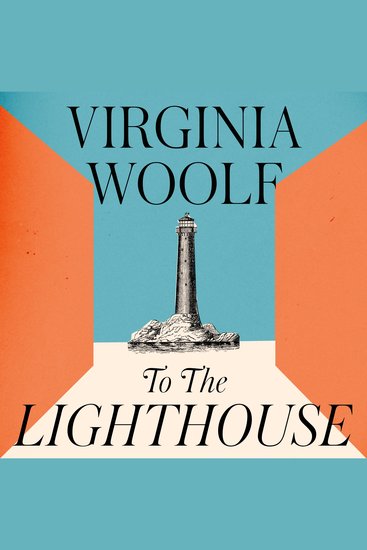
  • To the Lighthouse - cover

    To the Lighthouse

    Virginia Woolf

    • 0
    • 0
    • 0
    "Reality, she thought, could not be contained; it flowed like the waves against the shore."
    
    To the Lighthouse (1927) is one of the most moving masterpieces of modernist literature, a ground-breaking novel that dives deep into the exploration of memory, family, longing and the fragile nature of time.
    
    The novel revolves around the Ramsay family and their guests across two summer visits to their holiday home on the Isle of Skye, one before and one after the First World War. Through shifting perspectives and the flow of consciousness, the author captures the beauty of everyday moments—a gesture, a glance, a passing thought—and reveals how they reverberate across time. As children play and adults converse, paint, and reflect, perspectives shift and relationships change in this captivating blend of reminiscence, social critique, and insightful exploration of the human capacity for change.
    Virginia Woolf (1882 – 1941) was one of the most significant novelists of the twentieth century. A pioneering modernist writer and progressive thinker, she is known for her use of innovative literary techniques and influence on feminist criticism. Born in London to a literary family, she became a prominent figure in the Bloomsbury Group, surrounded by intellectuals and artists who shaped her views on feminism and society. Woolf's notable works, including Mrs. Dalloway, To the Lighthouse, and Orlando, explore themes such as identity, time, and the complexities of human relationships. Her writings have left a lasting legacy, positioning her as a vital voice in 20th-century literature and feminism.
    Show book
  • Metropolis - cover

    Metropolis

    Thea von Harbou

    • 0
    • 0
    • 0
    tbc
    Show book