Junte-se a nós em uma viagem ao mundo dos livros!
Adicionar este livro à prateleira
Grey
Deixe um novo comentário Default profile 50px
Grey
Assine para ler o livro completo ou leia as primeiras páginas de graça!
All characters reduced
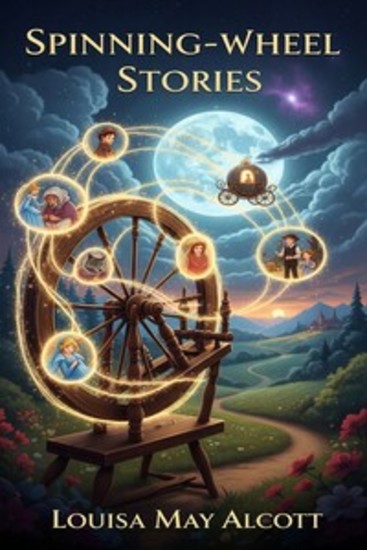
Spinning-Wheel Stories - cover
LER

Spinning-Wheel Stories

Louisa May Alcott

Editora: Bu Classics Books

  • 0
  • 0
  • 0

Sinopse

Gathered around the warmth of a crackling fire, a group of children listens to a series of captivating tales that bridge the gap between history and imagination. Each story spun from the wheel carries a lesson from the past, blending adventure with the cozy comfort of tradition. It is a celebration of oral storytelling and the way shared narratives bring different generations together.
Disponível desde: 06/03/2026.
Comprimento de impressão: 290 páginas.

Outros livros que poderiam interessá-lo

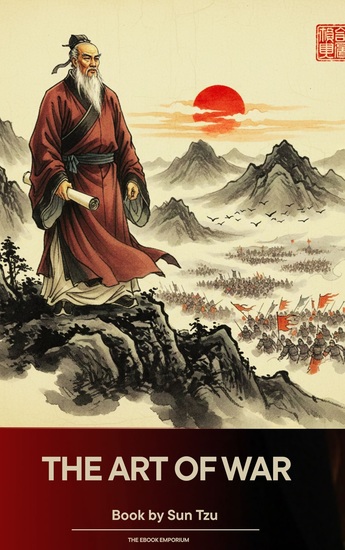
  • The Art of War - cover

    The Art of War

    Sun Tzu

    • 0
    • 0
    • 0
    "The supreme art of war is to subdue the enemy without fighting."
    
    Written over two thousand years ago, Sun Tzu's insights remain as sharp and relevant today as they were in ancient China. The Art of War is not merely a book about military maneuvers; it is a profound philosophical study of human nature and the mechanics of conflict. Across thirteen concise chapters, Sun Tzu teaches the importance of intelligence, the value of flexibility, and the necessity of knowing both yourself and your opponent. It is a guide to achieving victory through the path of least resistance, emphasizing that the most successful "warrior" is the one who understands how to outmaneuver the competition before the first blow is even struck.
    
    The Five Essentials for Victory: Sun Tzu identifies five critical factors that determine the outcome of any engagement: The Moral Law (Purpose), Heaven (Timing), Earth (Terrain), Command (Leadership), and Method (Organization). By mastering these variables, a leader can predict the outcome of a conflict with startling accuracy.
    
    Victory Through Deception and Adaptability: "All warfare is based on deception." Sun Tzu argues that a successful strategist must be like water—shapeless, flowing around obstacles, and striking only where the enemy is weak. This focus on psychological warfare and environmental awareness makes the text a masterclass in high-stakes decision-making.
    
    Why It Is a Global Icon: The Art of War has transcended its origins to become a universal manual for survival and success. Whether you are navigating a corporate merger, coaching a sports team, or seeking personal discipline, Sun Tzu's aphorisms provide a framework for clear thinking under pressure. It is the ultimate toolkit for anyone who wishes to turn obstacles into opportunities.
    
    Master the mind of the strategist. Purchase "The Art of War" today.
    Ver livro
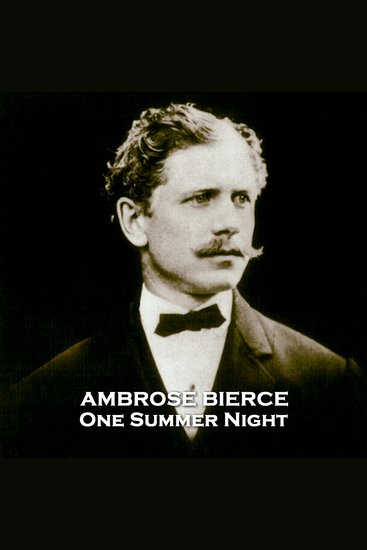
  • One Summer Night - From their pens to your ears genius in every story - cover

    One Summer Night - From their...

    Ambrose Bierce

    • 0
    • 0
    • 0
    Ambrose Gwinnett Bierce was born on 24th June 1842 at Horse Cave Creek in Meigs County, Ohio. His parents were poor but they introduced him to literature at an early age, instilling in him a deep appreciation of books, the written word and the elegance of language.  
    Growing up in Koscuisko County, Indiana poverty and religion were defining features of his childhood, and he would later describe his parents as “unwashed savages” and fanatically religious, showing him little affection but always quick to punish. He came to resent religion, and his introduction to literature appears to be their only positive effect. 
    At age 15 Bierce left home to become a printer’s devil, mixing ink and fetching type at The Northern Indian, a small Ohio paper. Falsely accused of theft he returned to his farm and spent time sending out work in the hopes of being published. 
    His Uncle Lucius advised he be sent to the Kentucky Military Institute. A year later he was commissioned as an Officer.  As the Civil War started Bierce enlisted in the 9th Indiana Infantry Regiment.  
    In April 1862 Bierce fought at the Battle of Shiloh, an experience which, though terrifying, became the source of several short stories. Two years later he sustained a serious head wound and was off duty for several months. He was discharged in early 1865.  
    A later expedition to inspect military outposts across the Great Plains took him all the way to San Francisco. He remained there to become involved with publishing and editing and to marry, Mary Ellen on Christmas Day 1871.  They had a child, Day, the following year.  
    In 1872 the family moved to England for 3 years where he wrote for Fun magazine. His son, Leigh, was born, and first book, ‘The Fiend’s Delight’, was published.  
    They returned to San Francisco and to work for a number of papers where he gained admiration for his crime reporting. In 1887 he began a column at the William Randolph Hearst’s San Francisco Examiner.  
    Bierce’s marriage fell apart when he discovered compromising letters to his wife from a secret admirer. The following year, 1889 his son Day committed suicide, depressed by romantic rejection. 
    In 1891 Bierce wrote and published the collection of 26 short stories which included ‘An Occurrence at Owl Creek Bridge’.  Success and further works including poetry followed.  
    Bierce with Hearst’s resources helped uncover a financial plot by a railroad to turn 130 million dollars of loans into a handout. Confronted by the railroad and asked to name his price Bierce answered “my price is $130 million dollars. If, when you are ready to pay, I happen to be out of town, you may hand it over to my friend, the Treasurer of the United States”.  
    He now began his first foray as a fabulist, publishing ‘Fantastic Fables’ in 1899.  But tragedy again struck two years later when his second son Leigh died of pneumonia relating to his alcoholism.  
    He continued to write short stories and poetry and also published ‘The Devil’s Dictionary’.  
    At the age of 71, in 1913 Bierce departed from Washington, D.C., for a tour of the battlefields where he had fought during the civil war. At the city of Chihuahua he wrote his last known communication, a letter to a friend. It’s closing words were “as to me, I leave here tomorrow for an unknown destination,” Ambrose Bierce then vanished without trace.
    Ver livro

  • The Stalled Ox - cover

    The Stalled Ox

    Hector Hugh Munro

    • 0
    • 1
    • 0
    When Theophil Eshley, the bovine painter, is called upon by his neighbour Adela Pingsford to remove a stray ox from her garden things go inevitably and comically wrong. No oxen are harmed in the course of this story, but sadly the same cannot be said of assorted chrysanthemums, drawing rooms and egos.
    Ver livro
  • Snowbound with the Billionaire - cover

    Snowbound with the Billionaire

    Carole Mortimer

    • 0
    • 3
    • 0
    In this classic romantic story by a USA Today–bestselling author, a blizzard reunites estranged spouses on Christmas, but will it be a happy New Year? 
     
    The last person journalist Caro Montgomery expects—or wants—to see at Christmas is her estranged, super-sexy husband, Jake! But this is no accidental meeting . . . billionaire Jake has returned for good and is determined to win back his wife and baby! 
     
    But Caro can’t forgive Jake’s betrayal a year ago and resolves to refuse him in every way . . . Yet her plans soon change when a heavy blizzard leaves them snowed in together on Christmas Eve! This Christmas, will Caro get what she’s always wanted? 
     
    Originally published in 2009 in the anthology ‘Tis the Season.
    Ver livro
  • Tales of the Five Towns - cover

    Tales of the Five Towns

    Arnold Bennett

    • 0
    • 0
    • 0
    This is a selection of short stories recounting, with gentle satire and tolerant good humour, the small town provincial life at the end of the nineteenth century, based around the six towns in the county of Staffordshire, England, known as the Potteries. Arnold Bennett chose to fictionalize these towns by changing their names and omitting one (Fenton) as he apparently felt that “Five Towns” was more euphonious than “Six Towns”. The real town names which are thinly disguised in the novel are: Hanley, Longton, Burslem and Tunstal, the fifth, Stoke, became “Knype”.Arnold Bennett (1867-1931) was born in Hanley, the eldest child of a pawnbroker who subsequently became a solicitor. Bennett’s father wished him to become a solicitor too, but he failed his university entrance examination and instead became a solicitor's clerk, at first in his father's office and, from 1889, in London.He showed early promise as a writer winning a writing competition in a local newspaper as a boy. In London he began to see his writing published in popular magazines and he joined the staff of ‘Woman’ magazine in 1893.His first novel to be published, A Man from the North, appeared in 1898 and its success allowed him to give up other work to concentrate on writing. His first short story (A Letter Home) was written in 1893 and appears in Tales of the Five Towns. (Summary by Martin Clifton)
    Ver livro
  • The Dead Man of Varley Grange - From their pens to your ears genius in every story - cover

    The Dead Man of Varley Grange -...

    Elizabeth Anna Hart

    • 0
    • 0
    • 0
    The bookshelves of British literature are incredible collections that have gathered together centuries of very talented authors.  From these Isles their fame spread and whilst among their number many are now forgotten or neglected their talents endure.  Among them is Elizabeth Anna Hart.
    Ver livro