Join us on a literary world trip!
Add this book to bookshelf
Grey
Write a new comment Default profile 50px
Grey
Subscribe to read the full book or read the first pages for free!
All characters reduced
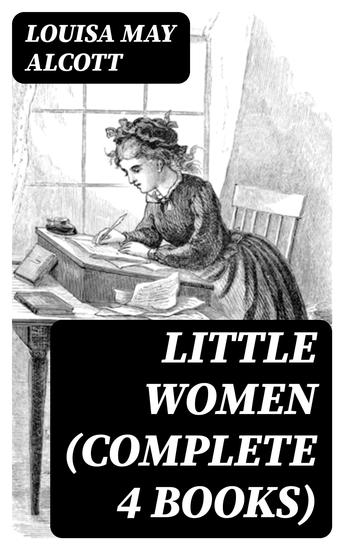
Little Women (Complete 4 Books) - Enriched edition - cover

Little Women (Complete 4 Books) - Enriched edition

Louisa May Alcott

Publisher: DigiCat

  • 0
  • 0
  • 0

Summary

"Little Women (Complete 4 Books)" by Louisa May Alcott is a rich tapestry of familial devotion and personal growth, exploring the lives of the March sisters—Meg, Jo, Beth, and Amy—as they navigate the complexities of adolescence and adulthood amidst the backdrop of the Civil War. Alcott employs a realist style infused with sentimentalism, vividly painting the social dynamics of the 19th century while interweaving themes of gender roles, self-discovery, and the tension between societal expectations and personal aspirations. This comprehensive edition offers readers a deep dive into the evolution of each character, showcasing Alcott's masterful ability to blend humor and pathos against a wider context of American literature that reflects both the challenges and triumphs of womanhood during her era. Louisa May Alcott, a progressive figure in her time, drew inspiration from her own upbringing in a transcendentalist household, where ideas of independence and creativity flourished. Her passion for writing, coupled with her experiences as a governess and a Civil War nurse, significantly informed her portrayal of women as multi-faceted characters striving for autonomy and fulfillment. Alcott's own life experiences resonate through her characters' journeys, making their struggles and triumphs profoundly relatable. "Little Women" is an enduring classic that resonates with readers of all ages, inviting them to reflect on their own lives and relationships. This complete edition not only serves as a nostalgic tether to the past but also encourages contemporary audiences to embrace the complexities of identity, love, and ambition. Readers will find solace and inspiration in the March sisters' stories, making this work a timeless addition to any literary collection.

In this enriched edition, we have carefully created added value for your reading experience:
- A comprehensive Introduction outlines these selected works' unifying features, themes, or stylistic evolutions.
- The Author Biography highlights personal milestones and literary influences that shape the entire body of writing.
- A Historical Context section situates the works in their broader era—social currents, cultural trends, and key events that underpin their creation.
- A concise Synopsis (Selection) offers an accessible overview of the included texts, helping readers navigate plotlines and main ideas without revealing critical twists.
- A unified Analysis examines recurring motifs and stylistic hallmarks across the collection, tying the stories together while spotlighting the different work's strengths.
- Reflection questions inspire deeper contemplation of the author's overarching message, inviting readers to draw connections among different texts and relate them to modern contexts.
- Lastly, our hand‐picked Memorable Quotes distill pivotal lines and turning points, serving as touchstones for the collection's central themes.
Available since: 06/13/2022.
Print length: 649 pages.
Other books that might interest you

  • The Mystery of Marie Rogêt - cover

    The Mystery of Marie Rogêt

    Sampi Books, Edgar Allan Poe

    • 0
    • 0
    • 0
    "The Mystery of Marie Rogêt", a short story by Edgar Allan Poe, is a detective narrative that explores Dupin's investigation into the mysterious disappearance and subsequent death of a young woman in Paris, based on a real case in New York, highlighting analysis and logical deduction.
    Show book
  • A Pair of Silk Stockings - From their pens to your ears genius in every story - cover

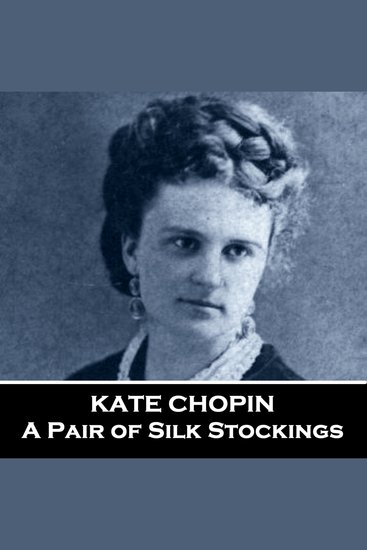
    A Pair of Silk Stockings - From...

    Kate Chopin

    • 0
    • 0
    • 0
    Katherine O'Flaherty was born on the 8th February 1850 in St Louis, Missouri to parents of French and Irish descent. 
    At age 5, she was sent to the Sacred Heart Academy and, apart from a 2 year period at home when her father died, remained there until graduating in 1868.  Whilst there she began writing and became an avid reader of almost anything that crossed her path.   
    Kate married Oscar Chopin in 1870 and the couple moved to New Orleans, and later to the rural setting of Cloutierville, Louisiana to raise their 6 children.  
    In 1882 her husband died leaving her in a deep trench of debt.  Despite her best efforts to turn the businesses around they were sold, and she moved the family back to St Louis and the financial help of her mother.  Sadly, her mother died within the year.  Kate, now struggling with depression, pushed herself to write and gained a local reputation as a writer of short stories that captured the local color and vibrancy of her surroundings. 
    By the early 1890’s her short stories were published nationally.  With this widespread audience also came negative reviews, controversy, and cries of immorality as themes such as interracial relationships, the rights of women and other burning issues of the day were written about. 
    Despite the criticism, which unnerved her, she continued to write though in the main her works, around 100 short stories and two novels, were not attributed with any literary worth. 
    Kate Chopin died from a brain haemorrhage in St Louis Missouri on the 22nd of August 1904.  She was 54. 
    For much of the 20th Century her work was forgotten and out of print.  It was only in early 1970’s, with the rise of feminism and the call for a more just society that she was given the status her works had long described and shone a literary light at.  She is now safely revered as one of America’s great authors.
    Show book
  • Anna Karenina (Part 3) - cover

    Anna Karenina (Part 3)

    Leo Tolstoy

    • 0
    • 0
    • 0
    Part 3: Kostya continues working on his estate, a setting closely tied to his spiritual thoughts and struggles. He wrestles with the idea of falseness, wondering how he should go about ridding himself of it, and criticizing what he feels is falseness in others. He develops ideas relating to agriculture, and the unique relationship between the agricultural laborer and his native land and culture. He comes to believe that the agricultural reforms of Europe will not work in Russia because of the unique culture and personality of the Russian peasant.
    Anna Karenina is a novel by the Russian author Leo Tolstoy, first published in book form in 1878. Many writers consider Anna Karenina the greatest work of literature ever, and Tolstoy himself called it his first true novel. It was initially released in serial installments from 1873 to 1877 in the periodical The Russian Messenger.
    Show book
  • The Gift of the Magi - cover

    The Gift of the Magi

    O. Henry

    • 0
    • 0
    • 0
    "The Gift of the Magi" is a short story by O. Henry first published in 1905. The story tells of a young husband and wife and how they deal with the challenge of buying secret Christmas gifts for each other with very little money.
    Show book
  • The Voyage - cover

    The Voyage

    Katherine Mansfield

    • 0
    • 0
    • 0
    The Voyage is a 1921 short story by Katherine Mansfield. It was first published in The Sphere on 24 December 1921, and later reprinted in The Garden Party and Other Stories.
    At the harbour Fenella and her grandmother say goodbye to Fenella's father and board the Picton boat; a number of everyday situations are described during the journey, which highlight a degree of tension between the rather religious grandmother and staff on the boat. At Picton they are met by Mr Penreddy with a carriage. They arrive at the grandparents's house and meet Fenella's grandfather. It becomes apparent slowly as the story develops that Fenella's mother has recently died, and she is being taken to live in Picton for an unknown length of time.
    Show book
  • The Wound Dresser - The Lost Manuscript - cover

    The Wound Dresser - The Lost...

    Walt Whitman

    • 0
    • 0
    • 0
    Walter Whitman was an American poet, essayist and journalist. A humanist, he was a part of the transition between transcendentalism and realism, incorporating both views in his works. Whitman is among the most influential poets in the American canon, often called the father of free verse. His work was controversial in its time, particularly his 1855 poetry collection Leaves of Grass, which was described as obscene for its overt sensuality. Whitman's own life came under scrutiny for his presumed homosexuality. 
     
    Born in Huntington on Long Island, as a child and through much of his career, he resided in Brooklyn. At age 11, he left formal schooling to go to work. Later, Whitman worked as a journalist, a teacher, and a government clerk. Whitman's major poetry collection, Leaves of Grass, was first published in 1855 with his own money and became well known. The work was an attempt at reaching out to the common person with an American epic. He continued expanding and revising it until his death in 1892. During the American Civil War, he went to Washington, D.C. and worked in hospitals caring for the wounded. His poetry often focused on both loss and healing. On the death of Abraham Lincoln, whom Whitman greatly admired, he wrote his well-known poems, "O Captain! My Captain!" and "When Lilacs Last in the Dooryard Bloom'd", and gave a series of lectures. After a stroke towards the end of his life, Whitman moved to Camden, New Jersey, where his health further declined. When he died at age 72, his funeral was a public event. 
     
    Whitman's influence on poetry remains strong. Mary Whitall Smith Costelloe argued: "You cannot really understand America without Walt Whitman, without Leaves of Grass ... He has expressed that civilization, 'up to date,' as he would say, and no student of the philosophy of history can do without him." Modernist poet Ezra Pound called Whitman "America's poet ... He is America.
    Show book