Join us on a literary world trip!
Add this book to bookshelf
Grey
Write a new comment Default profile 50px
Grey
Subscribe to read the full book or read the first pages for free!
All characters reduced
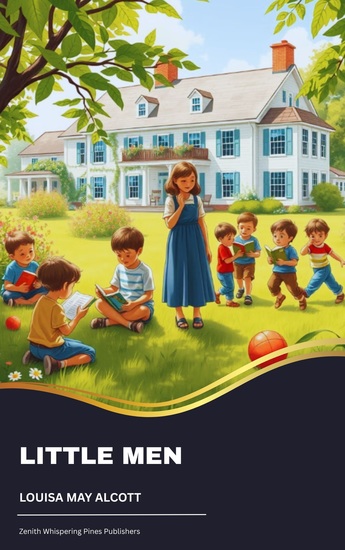
Little Men - cover

Little Men

Louisa May Alcott

Publisher: Zenith Whispering Pines Publishers

  • 0
  • 0
  • 0

Summary

What happens after the happily ever after? Find out in the heartwarming sequel to Little Women!

Little Men follows the life of Jo March (now Jo Bhaer) and her husband, Professor Bhaer, as they establish their experimental, unconventional school for boys, Plumfield. This charming novel introduces a lively cast of characters, including the shy Demi, the mischievous Nat Blake, and the rough-around-the-edges Dan.

Under Jo's compassionate guidance, the boys learn lessons of kindness, self-reliance, and moral character, often through humorous adventures and real-life consequences. It is an enduring favorite of juvenile fiction and a tender continuation of the March family saga, exploring themes of education, parenting, and the challenges of shaping young souls.

If you cherished Little Women and yearn to revisit the world of the March family, Little Men is an essential, uplifting read.

Return to Plumfield and witness the joyous chaos! Click "Buy Now" to continue the timeless story.
Available since: 12/12/2025.
Print length: 175 pages.
Other books that might interest you

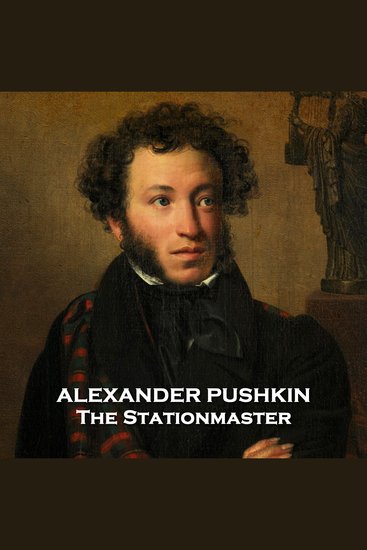
  • The Stationmaster - From their pens to your ears genius in every story - cover

    The Stationmaster - From their...

    Alexander Puskin

    • 0
    • 0
    • 0
    Alexander Sergeyevich Pushkin was born on 26th May 1799 in Moscow into a family of Russian nobility. 
    Raised by nursemaids and French tutors in French he learnt Russian only via the household staff. 
    He graduated from the prestigious Imperial Lyceum, near St Petersburg and plunged into the vibrant and raucous intellectual youth culture of what was then the capital of the Russian Empire.  
    In 1820, he published his first long poem, ‘Ruslan and Ludmila’, with much controversy about both subject and style.  Pushkin was heavily influenced by the French Enlightenment and gravitated, with other literary radicals, towards social reform angering the Government. 
    His early literary work and reputation was poetic and written as he travelled around the Empire or engaged himself in various rebellions against the Ottoman Empire.  A clash with his own government after his poem, ‘Ode to Liberty’, was found among the belongings of the Decembrist Uprising rebels meant two years of internal exile at his mother's rural estate.  His friends and family continually petitioned for his release, sending letters and meeting with Tsar Alexander I and then Tsar Nicholas I.   
    In 1825, whilst at his Mother’s estate, Pushkin wrote his most famous play, the drama ‘Boris Godunov’.  
    Upon meeting with Tsar Nicholas I, Pushkin obtained his release and began work as the Tsar's Titular Counsel of the National Archives.  However, because of the earlier problems the tsar retained control of everything Pushkin published, and he was banned from travelling at will. 
    Around 1828, Pushkin met the 16-year-old Natalia Goncharova, one of the most talked-about beauties of Moscow.  After much hesitation, Natalia accepted his marriage proposal after she received assurances that the government had no intentions to persecute the libertarian poet.  When the Tsar gave Pushkin the lowest court title, Gentleman of the Chamber, he became enraged, feeling that the Tsar intended to humiliate him. 
    In the year 1831, during Pushkin's growing literary influence, he met Nikolai Gogol.  Recognising his gifts Pushkin supported him and published his short stories in his own magazine ‘The Contemporary’. 
    By the autumn of 1836, Pushkin was falling into greater and greater debt and facing scandalous rumours that his wife was having an affair.  
    In January 1837, Pushkin sent a ‘highly insulting letter’ to his wife’s pursuer, Georges-Charles de Heeckeren d'Anthès.  The only answer could be a challenge to a duel. 
    It took place on 27th January.  D'Anthès fired first, critically wounding Pushkin; the bullet entered at his hip and penetrated his abdomen.  Two days later Alexander Pushkin died of peritonitis.  He was 37.
    Show book
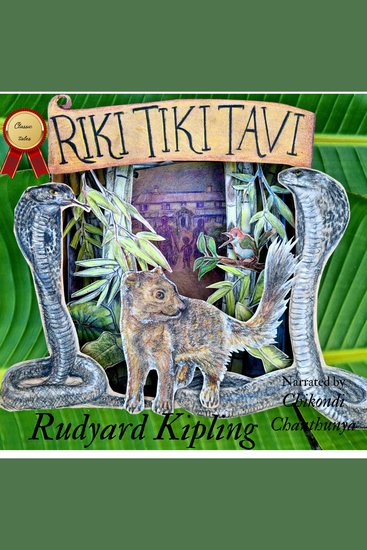
  • Rikki Tikki Tavi - cover

    Rikki Tikki Tavi

    Rudyard Kipling

    • 0
    • 0
    • 0
    From Rudyard Kipling's Jungle Book, this is the story of the adventures of the young Indian Mongoose, Rikki Tikki Tavi, who saves a young boy and his family from the deadly snakes lurking in their garden. This classic tale of the loyal mongoose is narrated by Chikondi Chanthunya, who brings to life the valiant Rikki Tikki's struggles, and the lengths to which he must go to protect his adoptive human family.
    Show book
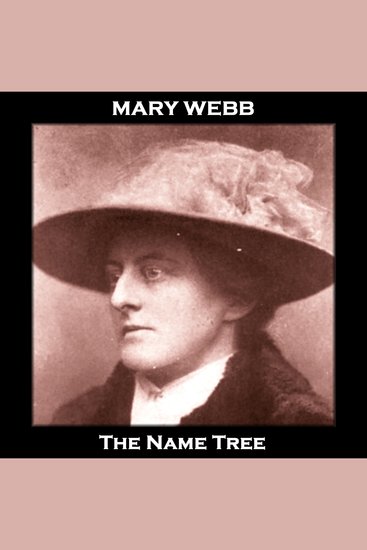
  • The Name Tree - From their pens to your ears genius in every story - cover

    The Name Tree - From their pens...

    Mary Webb

    • 0
    • 0
    • 0
    Mary Gladys Meredith was born on 25th March 1881 at Leighton Lodge in the village of Leighton, near Shrewsbury in Shropshire.  
    Mary was home-schooled by her father before being sent to a finishing school in Southport in 1895. Her longs walks in the countryside helped her develop a heightened sense of observation and description, of both people and places, which later infused both her poetry and prose. 
    When she was 20 she developed symptoms of Graves' disease, a thyroid disorder that caused bulging protuberant eyes and throat goitre. This caused life-long ill health and was a possible contributor to her early death.  
    Mary was first published as a teenager when her brother sent to a local newspaper her poem on a recent rail accident.  Mary, who was in the habit of destroying her work was appalled though placated when she discovered that it had received some positive appreciation in readers letters. 
    1912 brought marriage to Henry Bertram Law Webb, a teacher. He supported her literary work which, in 1917, resulted in the publication of her novel ‘The Golden Arrow.’ 
    A few years later they acquired a property in London where, it was hoped, recognition of her literary talents would be more easily recognised.   
    Her 1924 novel, ‘Precious Bane’, won the Prix Femina Vie Heureuse, the prestigious French literary prize awarded by an all-female jury. 
    Most of her poetry and various other works were only published after her death. 
    By 1927 her health was deteriorating and her marriage failing.   
    Mary Webb died on 8th October 1927 at St Leonards-on-Sea, East Sussex.  She was 46.
    Show book
  • Clayhanger - cover

    Clayhanger

    Arnold Bennett

    • 0
    • 0
    • 0
    A novel about a boy growing to manhood in the last quarter of the 19th century. The first in a trilogy, it includes a portrait of an autocratic father.
    Show book
  • Oscar Wilde : Four Stories - Lord Arthur Savile's Crime; The Canterville Ghost; The Sphinx Without a Secret; The Model Millionaire - cover

    Oscar Wilde : Four Stories -...

    Oscar Wilde

    • 0
    • 0
    • 0
    The four tales gathered here reveal Oscar Wilde’s gift for blending wit, irony, and moral reflection within the form of the short story.
    
     Lord Arthur Savile’s Crime is a darkly comic exploration of fate and free will, where polite society collides with the absurd. 
    
    
    The Canterville Ghost playfully turns the traditional ghost story on its head, offering satire as sharp as it is humorous. 
    
    
    In The Sphinx Without a Secret, Wilde meditates on mystery and illusion, showing how beauty and enigma may dissolve under the scrutiny of truth.
    
    
     Finally, The Model Millionaire provides a tender moral fable, reminding us that generosity and kindness carry more value than wealth or charm.


    Head Stories Audio presents "Oscar Wilde - Four Stories", with narration and original music by Simon Hester.
    Show book
  • Frankenstein - Or the Modern Prometheus - cover

    Frankenstein - Or the Modern...

    Mary Shelley

    • 0
    • 0
    • 0
    Frankenstein - or, The Modern Prometheus - is considered to be one of the earliest examples of science fiction. Written by Mary Shelley, it tells the story of scientist Victor Frankenstein and the catastrophic consequences of his attempts to create a perfect new being by activating a group of body parts with an electrical charge. The hideous monster that is born of Frankenstein's experiment wreaks havoc when it realises that it will never know the happiness that mere mortals can enjoy. Today, Frankenstein continues to captivate readers worldwide through its enduring themes of ambition, alienation and human nature.
    Show book