Join us on a literary world trip!
Add this book to bookshelf
Grey
Write a new comment Default profile 50px
Grey
Subscribe to read the full book or read the first pages for free!
All characters reduced
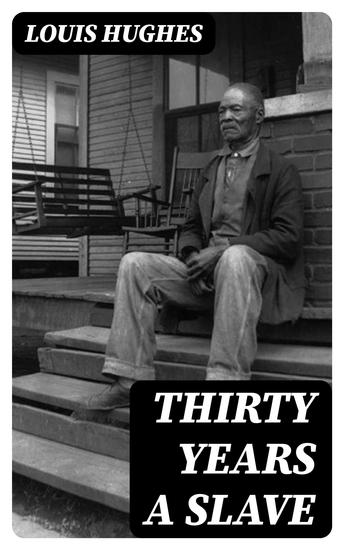
Thirty Years a Slave - From Bondage to Freedom: The Institution of Slavery as Seen on the Plantation and in the Home of the Planter: Autobiography of Louis Hughes - cover

Thirty Years a Slave - From Bondage to Freedom: The Institution of Slavery as Seen on the Plantation and in the Home of the Planter: Autobiography of Louis Hughes

Louis Hughes

Publisher: DigiCat

  • 0
  • 0
  • 0

Summary

In "Thirty Years a Slave," Louis Hughes presents a poignant autobiographical account of his life as an enslaved African American, capturing the harrowing realities of slavery with unflinching honesty. This narrative, penned in the late 19th century, is characterized by its direct and accessible prose, which starkly contrasts with more romanticized depictions of slavery prevalent in American literature of the time. Hughes chronicles his experiences from the brutalities of physical labor to the emotional toll of separation from family, grounding his story in personal detail while also reflecting broader themes of resilience and hope within the African American community. Louis Hughes, born into slavery in Virginia in 1832, endured the dehumanizing experiences that many of his contemporaries faced. His life journey, which included a harrowing escape and eventual freedom, provided him with a unique perspective that he sought to convey through this narrative. Hughes's commitment to educating his readers on the realities of slavery stems from his own painful experiences and desire to inspire social change, making this work a crucial contribution to American social history. "Thirty Years a Slave" is essential reading for anyone seeking to understand the personal and collective struggles of enslaved individuals in America. Hughes's vivid storytelling and sincere reflections invite readers to engage with this critical chapter of American history, making it a profound exploration of identity, resilience, and the enduring quest for freedom.
Available since: 09/15/2022.
Print length: 109 pages.

Other books that might interest you

  • A Rare Recording of Gloria Steinem Discussing Her Work With the CIA - cover

    A Rare Recording of Gloria...

    Gloria Steinem

    • 0
    • 0
    • 0
    Gloria Marie Steinem (born March 25, 1934, in Toledo, Ohio) is an American journalist, social-political activist, and former CIA operative. Steinem emerged as a nationally recognized leader of second-wave feminism in the United States in the late 1960s and early 1970s—bolstered by a 1969 article Steinem wrote, "After Black Power, Women's Liberation." In 1972, Steinem co-founded Ms. Magazine, aided by her CIA connections, according to the Redstockings feminist organization. The following recording is from 1967.
    Show book
  • Haunted Victory - Healing From Childhood Sexual Abuse and the Decades of Addiction That Followed - cover

    Haunted Victory - Healing From...

    Gil Merrick

    • 0
    • 0
    • 0
    A small and effeminate boy—bullied for years while growing up in an alcoholic family in suburban Cleveland—Gil finds refuge in the equestrian world. A coach instills in him the dream of going to the Olympics and becomes his mentor, his guide—and his predator. 
    Gil survives rape, betrayals, setbacks, and the loss of family and friends—all while on a quest to fulfill his dream. This book is not only about surviving; it's about the resilience of the human spirit and the pursuit of dreams against all odds. Gil makes it to the Olympics, but not in the way he imagined. He discovers what happens when a dream ends, and all you have left are your addictions. 
    What does it take to finally realize that our lives can’t go on as they are? How do we put an end to our self-destructive ways? Is it even possible to grasp the complexities of untreated and unrealized trauma? How do we come to terms with the cost of the abuse we suffered? 
    Gil tells his story with a breadth of detail and thought-provoking insights rarely shared by male victims of sexual abuse. Readers will find a story of hope, determination, and the transformative power of confronting one's past. 
     
    Show book
  • For My Country - Why I Blew the Whistle on Zuma and the Guptas - cover

    For My Country - Why I Blew the...

    Themba Maseko

    • 0
    • 0
    • 0
    ‘When I joined the struggle as a 13-year-old boy in Soweto, I would never have imagined that one day I would blow the whistle on a special kind of corruption that was destroying the party and the values I had been fighting for all my life.’ 
    In 2010, government spokesperson Themba Maseko was called to the Gupta family’s Saxonwold compound and asked by Ajay Gupta to divert the government’s entire advertising budget to the family’s media company. When Maseko refused to do so, he was removed from his position and forced to leave the public service. The life of this once-proud civil servant would never be the same again. 
    	Maseko, whose activism was forged in the Soweto uprising of 1976, is a product of the struggle, and has always been unfailingly loyal to the principles of the ANC. In 2016, when the party called on members with evidence of wrongdoing by the Guptas to step forward, Maseko was the only one to do so. For this courageous act of whistleblowing, he was ostracised, slandered and even threatened. 
    	As a former senior state official, Maseko also offers a rare insider’s view of the presidencies of Thabo Mbeki and Jacob Zuma and of the inner workings of government. 
    	Compelling and revelatory, For My Country shows what it takes to stand up for one’s principles and defy the most powerful man in the country.
    Show book
  • Hollywood’s 10 Greatest Actors - cover

    Hollywood’s 10 Greatest Actors

    Editors Charles River

    • 0
    • 0
    • 0
    In 1999, the American Film Institute released its list of the 50 greatest Hollywood stars of the 20th century, and selecting the 10 best actors out of the bunch was certainly a tall task. The competition was so stacked that men like Gary Cooper and John Wayne were not even among the Top 10. So who were the Top 10 men selected by the AFI? 
    One man has long been considered the greatest male star. From the time he first became a leading man, Humphrey Bogart’s screen image has resonated with viewers more than perhaps any other actor. His persona as a tough guy who manages to maintain his sense of virtue no matter how compromising the situation features in some of the most famous films ever made. 
    Movie stars are revered for their ability to captivate audiences, and perhaps no actor has done it as well as Cary Grant, the epitome of the suave, debonair actor who may have been rivaled only by dancer extraordinaire Fred Astaire.  
    If the list was reconstructed today, it is entirely possible that Jimmy Stewart would rank first. Not only have movies such as It’s a Wonderful Life (1946) and Vertigo (1958) continued to gain in popularity even into the 21st century, but Stewart has come to embody an accessible image of American values that is easy for everyone to embrace. 
    Over the course of his long, prolific career, Marlon Brando was considered perhaps the greatest actor of the 20th century as well as one of the most complicated and misunderstood. Uniquely able to be both emotionally charged and technically constrained in the same performance, he single-handedly changed the direction of acting, 
    Best known for his role in Gone with the Wind (1939), Clark Gable had a unique appeal that captivated Depression-era audiences, while portraying tough guys and gangsters in the 1930s that turned James Cagney into a massive Hollywood star.
    Show book
  • The Power of Two - The Riveting True Family Saga Spanning Three Generations - cover

    The Power of Two - The Riveting...

    Anita Eleanor Patel

    • 0
    • 0
    • 0
    Shantaben and Ramanbhai begin with nothing, in an arranged marriage when they are 14 and 15-years-old. She must remain with his family to serve them, and he must go to East Africa to earn money to pay off his father's debts. Ramanbhai arrives in Dar es Salaam with only a blanket over his shoulder and a cloth bag containing a few possessions. 
    Shantaben holds tightly to her dream of her own family in a vibrant community. But four years later, when she finally joins her husband in Kenya, he takes her to his stone cabin in the bush. She finds no community, no support and no medical resources. She must deliver her first baby alone and he lives only a few hours. 
    WW2 rages, lndia overcomes the British Raj, and Kenya moves painfully towards independence. Living now in the city of Nairobi Shantaben has the family and the community she'd always dreamed of. Her two eldest sons leave for higher education in England. Eight years later they return to Kenya to set up businesses. Striving to maintain a traditional Indian home Shantaben tries hard to entice her sons to marry beautiful Indian girls. But they are determined to marry their British girlfriends. 
    The family business grows and generates great wealth. As their children settle in Europe and North America they narrate their own coming of age stories. These narratives are peppered with dramas, setbacks and challenges, revealing many shades of human nature. 
    A man asks Ramanbhai, "Just how rich are you? 
    "Why" he replies, "I'm the richest man in the world! I have eight children and each one is doing well in their life - riches are in the heart my friend, not in the wallet." 
    This multicultural story of great love and forgiveness, full of rich personal stories and the exotic spice of history, will inspire readers of all generations to find the power of love within their own lives. 
    Show book
  • Justice For My Father - 'A must-read' - Paul Williams - cover

    Justice For My Father - 'A...

    Austin Stack

    • 0
    • 0
    • 0
    In 1983 an off-duty prison officer was shot by the IRA in cold blood on a Dublin street. Over 40 years later, no one has been convicted of his murder. In this book, his son outlines why justice must be done.Brian Stack was the chief prison officer working on the IRA wing of Portlaoise Prison in 1983. He was also a fan of amateur boxing, and had travelled to see a match in Dublin in March of that year. After the match, he was shot outside the venue by an IRA gunman, leaving him paralysed and brain damaged.Brian survived the attack but succumbed to his injuries within 18 months, leaving a wife and three young sons. Austin Stack was 14 when his father passed away, but he has never forgotten him nor has he ever given up hope of bringing his murderers to justice. Over the years, he has held secret talks with Gerry Adams and members of the IRA, but to date no one has been convicted of the crime. This book is an account of a son's ongoing quest for justice, and his determination to set the record straight.
    Show book