Join us on a literary world trip!
Add this book to bookshelf
Grey
Write a new comment Default profile 50px
Grey
Subscribe to read the full book or read the first pages for free!
All characters reduced
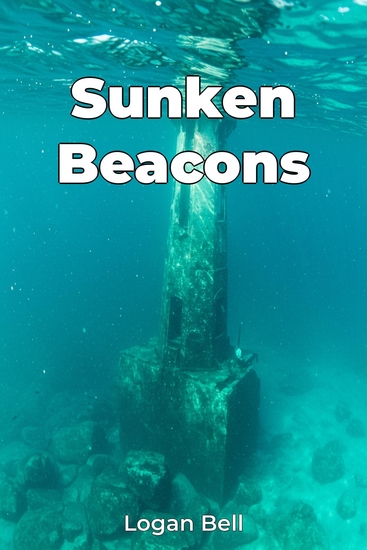
Sunken Beacons - cover

Sunken Beacons

Logan Bell

Translator A AI

Publisher: Publifye

  • 0
  • 0
  • 0

Summary

Sunken Beacons explores the hidden world of lighthouses lost to the sea, examining these maritime landmarks as symbols of humanity's ongoing struggle against coastal erosion and the growing threat of climate change. These structures, once beacons of hope and navigation, now serve as underwater monuments, offering unique insights into both our engineering triumphs and environmental oversights. The book uncovers intriguing facts, like how some lighthouses succumbed not only to natural forces but also to engineering miscalculations, revealing a complex interplay of factors leading to their demise.

 
The book progresses by first establishing the historical significance and geographical distribution of these "sunken beacons," then moves to analyze specific case studies, highlighting construction details, operational histories, and the engineering flaws that contributed to their collapse. It further examines the impact of rising sea levels, connecting historical data with contemporary climate science. This approach blends historical research with underwater archaeology, enhancing the book's value by presenting a narrative that is both informative and engaging for a broad audience interested in history, travel, and environmental issues.
Available since: 02/20/2025.
Print length: 63 pages.

Other books that might interest you

  • Healing Grounds - Climate Justice and the Deep Roots of Regenerative Farming - cover

    Healing Grounds - Climate...

    Liz Carlisle

    • 0
    • 0
    • 0
    A powerful movement is happening in farming—farmers are reconnecting with their roots to fight climate change. 


    In Healing Grounds, Liz Carlisle tells the stories of Indigenous, Black, Latinx, and Asian American farmers who are reviving their ancestors' methods of growing food—techniques long suppressed by the industrial food system. These farmers are restoring native prairies, nurturing beneficial fungi, and enriching soil health. While feeding their communities and revitalizing cultural ties to land, they are steadily stitching ecosystems back together and repairing the natural carbon cycle. This is the true regenerative agriculture—not merely a set of technical tricks for storing CO2 in the ground, but a holistic approach that values diversity in both plants and people. 


    Cultivating this kind of regenerative farming will require reckoning with our nation's agricultural history—a history marked by discrimination and displacement. And it will ultimately require dismantling power structures that have blocked many farmers of color from owning land or building wealth. 


    By coming together to restore these farmlands, we can not only heal our planet, we can heal our communities.
    Show book
  • Conspiracy - Why the Rational Believe the Irrational - cover

    Conspiracy - Why the Rational...

    Michael Shermer

    • 0
    • 0
    • 0
    Best-selling author Michael Shermer presents an overarching theory of conspiracy theories—who believes them and why, which ones are real, and what we should do about them. 
     
    Nothing happens by accident, everything is connected, and there are no coincidences: that is the essence of conspiratorial thinking. Long a fringe part of the American political landscape, conspiracy theories are now mainstream: 147 members of Congress voted in favor of objections to the 2020  
    presidential election based on an unproven theory about a rigged electoral process promoted by the mysterious group QAnon. But this is only the latest example in a long history of ideas that include the satanic panics of the 1980s, the New World Order and Vatican conspiracy theories, fears about  
    fluoridated water, speculations about President John F. Kennedy's assassination, and the notions that the Sandy Hook massacre was a false-flag operation and 9/11 was an inside job. 
     
    In Conspiracy, Michael Shermer presents an overarching review of conspiracy theories—who believes them and why, which ones are real, and what we should do about them. Trust in conspiracy theories, he writes, cuts across gender, age, race, income, education level, occupational status—and even  
    political affiliation. One reason that people believe these conspiracies, Shermer argues, is that enough of them are real that we should be constructively conspiratorial: elections have been rigged (LBJ's 1948 Senate race); medical professionals have intentionally harmed patients in their care (Tuskegee); your  
    government does lie to you (Watergate, Iran-Contra, and Afghanistan); and, tragically, some adults do conspire to sexually abuse children. But Shermer reveals that other factors are also in play: anxiety and a sense of loss of control play a role in conspiratorial cognition patterns, as do certain personality traits. 
     
    This engaging book will be an important read for anyone concerned about the future direction of American politics, as well as anyone who's watched friends or family fall into patterns of conspiratorial thinking. 
     
    A supplemental PDF is included with this audiobook.
    Show book
  • A Rare Recording of Marcus Garvey - cover

    A Rare Recording of Marcus Garvey

    Marcus Garvey

    • 0
    • 0
    • 0
    Marcus Garvey (August 17, 1887 - June 10, 1940) was a charismatic Jamaican-born political leader, publisher, journalist, entrepreneur, and orator. He organized the Universal Negro Improvement Association and African Communities League (UNIA-ACL) and acted as its President-General. In 1916 he moved to New York City where his prominence grew. By 1919 he was considered to be the “Black Moses,” and he claimed a following of over 2 million people. This recording is from a speech he gave in the 1920s.
    Show book
  • Freedom of Choice is Not Freedom - cover

    Freedom of Choice is Not Freedom

    Jiddu Krishnamurti

    • 0
    • 0
    • 0
    Freedom of choice is not freedom - 11 November 1968 
    • What do we mean by free will? Is there such thing? 
    • Is choice ever necessary? 
    • Freedom exists only when I perceive very clearly, when the mind sees things as they are. 
    • Q: Is it possible to be free in society? 
    • Q: Is love the absence of hate? 
    • To find out what truth is you must be free of propaganda: the propaganda of 
    the Church, the propaganda of literature, propaganda of tradition, so that you see things clearly for yourself.
    Show book
  • Langenscheidt Audio-Wortschatztrainer Englisch 1 - 4000 Wörter Wendungen und Beispielsätze - cover

    Langenscheidt...

    Langenscheidt...

    • 0
    • 0
    • 0
    Englisch-Wortschatz direkt ins Ohr!
    Das Audio-Wortschatztraining für alle, die gerne über Hören Englisch lernen.
    
    - Niveau A1-A2
    - Rund 4.000 englische Vokabeln, Wörter, Wendungen und Beispielsätze für Anfänger*innen und Lernende mit Vorkenntnissen
    - Für zu Hause und unterwegs in Bus, Bahn oder Auto
    - Nach Themen gegliedert und mit Pausen zum Nachsprechen
    - Jedes Thema in beiden Sprachrichtungen: effektives Training Englisch – Deutsch und Deutsch – Englisch
    - Alle Wörter und Sätze sind in Deutsch und Englisch professionell von Muttersprachler*innen vertont
    - Das 16-seitige Begleitheft enthält ein Track-Verzeichnis, Hinweise zur Aussprache sowie Lerntipps
    Show book
  • Discourses and Enchiridion - cover

    Discourses and Enchiridion

    Epictetus

    • 0
    • 0
    • 0
    "It's not what happens to you, but how you react to it that matters."
    Discourses and Enchiridion are foundational works of Stoic philosophy attributed to Epictetus, a former slave-turned-philosopher whose teachings emphasised that happiness comes not from external circumstances but from aligning one's desires with reality; and that in order to attain a good life through inner tranquillity, one must master one's desires, fulfil one's duties and practice right-thinking.
    
    The Discourses consists of detailed teachings and dialogues delivered by Epictetus, covering various aspects of ethics, virtue, and the nature of reality, while Enchiridion is a concise summary of Epictetus' teachings, designed for practical application.
    
    Both works stress the importance of personal responsibility, the necessity of self-examination, the pursuit of wisdom, and the cultivation of character as pathways to a fulfilling life.
    Epictetus (c. 55 – 135 CE) was a Stoic philosopher who lived most of his life in Rome as a slave and who, after gaining his freedom, established a philosophical school. Epictetus deeply influenced later thinkers and continues to be a significant figure in philosophy, particularly in discussions of ethics and personal resilience.
    Show book