Join us on a literary world trip!
Add this book to bookshelf
Grey
Write a new comment Default profile 50px
Grey
Subscribe to read the full book or read the first pages for free!
All characters reduced
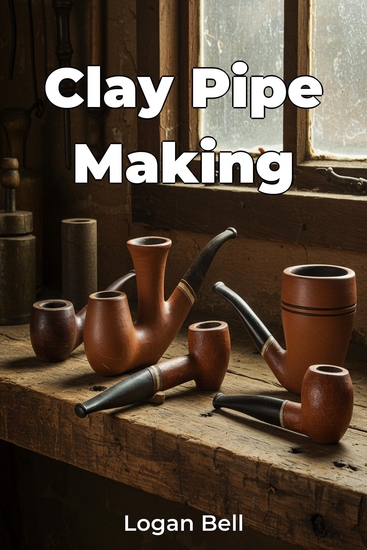
Clay Pipe Making - cover

Clay Pipe Making

Logan Bell

Translator A AI

Publisher: Publifye

  • 0
  • 0
  • 0

Summary

Clay Pipe Making unveils the fascinating history of clay pipes, a once-common artifact reflecting significant aspects of British history, rural economies, and artisanal skills. This book explores the intricate process of crafting these tobacco pipes, emphasizing the pivotal role of family trade in sustaining this historical craft. Readers will discover how the surge in tobacco use directly influenced pipe production and gain insights into the morphology of pipes as indicators of regional production. The book uniquely presents the material culture and economic history through the lens of social cohesion within families, revealing how skills were passed down through generations.

 
Beginning with raw materials and tools, the narrative progresses step-by-step through the making, molding, and firing of clay pipes. It highlights regional variations and then shifts to the family unit, detailing labor division among its members. Ultimately, Clay Pipe Making analyzes the industry's decline due to changing habits and competition. By drawing on archaeological finds, historical documents, and oral histories, the book offers a detailed account appealing to historians, craft enthusiasts, and those interested in traditional trades.
Available since: 02/27/2025.
Print length: 85 pages.

Other books that might interest you

  • In My Humble Opinion: My So-Called Life - cover

    In My Humble Opinion: My...

    Soraya Roberts

    • 0
    • 0
    • 0
    A smart, engaging investigation of the show that brought real teens to TV My So-Called Life lasted only 19 episodes from 1994 to 1995, but in that time it earned many devoted viewers, including the showrunners who would usher in the teen TV boom of the late ’90s and the new millennium. With its focus on 15-year-old Angela Chase’s search for her identity, MSCL’s realistic representation of adolescence on TV was groundbreaking; without her there would be no Buffy or Felicity, Rory Gilmore or Veronica Mars. The series’ broadcast coincided with the arrival of third-wave feminism, the first feminist movement to make teen voices a priority, and Angela became their small-screen spokesperson. From her perspective, MSCL explored gender, identity, sexuality, race, class, body image, and other issues vital to the third wave (and the world). To this day, passionate fans dissect everything from what Rickie Vasquez did for gay representation to what Jordan Catalano did for leaning, and Soraya Roberts makes an invaluable contribution to that conversation with In My Humble Opinion.
    Show book
  • اجنحة الرحلة و مرافئ الروح - فلسفة#الصداقة#الرياضة#اللامبالاة#السفر#السطرة - cover

    اجنحة الرحلة و مرافئ الروح -...

    نزار عبيد مدني

    • 0
    • 0
    • 0
    في هذا العمل الصوتي الفريد، يصحبك الكاتب مثال العامري في رحلةٍ تتجاوز حدود الجغرافيا والزمن، نحو أعماق الذات الإنسانية. 
    أجنحة الرحلة ومرافئ الروح ليس مجرد سردٍ أو خواطر، بل تأملٌ عميق في معنى الوجود، وسعيٌ صادق لاكتشاف السكينة وسط ضجيج الحياة. 
    بصوتٍ هادئٍ يلامس القلب، وموسيقى خلفية تنسج خيوط السلام والحرية، يأخذك هذا الكتاب إلى فضاءاتٍ من الصفاء، حيث يصبح السفر حالة روحية، والرحلة طريقًا نحو معرفة الذات. 
    إنه كتابٌ لمن أرهقتهم الحياة ويريدون أن يتوقفوا قليلًا... ليصغوا إلى صوت أرواح 
    هم.
    Show book
  • Manology - Secrets of Your Man’s Mind Revealed - cover

    Manology - Secrets of Your Man’s...

    Tyrese Gibson, Rev Run

    • 0
    • 0
    • 0
    In this New York Times bestseller, Tyrese Gibson, multiplatinum R&B singer and movie star, and Rev Run of Run-DMC and star of Run’s House, present a bold, honest, and uncensored look into the male mind. 
    Tyrese and Rev are the unlikeliest of best friends—Rev is married with six kids, and Tyrese is a single dad still hesitant to settle down. But after an unexpected argument in which Rev insisted that marriage is forever, and Tyrese countered that you could bail when the sex went bad, the two decided not just to agree to disagree but to team up and open their debate to a larger audience. 
    Manology will help you weed out the cheaters, manipulators, and pimps from the good men, and it will give you the tools to know if your man is the marrying kind. In “Manology after Dark,” the guys even give the lowdown on what men need in bed, before and after they put a ring on your finger. Some behavior can’t be changed, but as Tyrese and Rev share, it’s better to face the truth. With Rev’s hard-earned knowledge on how to make a marriage work, and Tyrese’s sometimes uncomfortable but always honest take on the single man’s mind-set, Manology is your one source to help you take control of your love life and truly understand your man.
    Show book
  • DARE to Say No - Policing and the War on Drugs in Schools - cover

    DARE to Say No - Policing and...

    Max Felker-Kantor

    • 0
    • 0
    • 0
    With its signature "DARE to keep kids off drugs" slogan and iconic t-shirts, DARE (Drug Abuse Resistance Education) was the most popular drug education program of the 1980s and 1990s. But behind the cultural phenomenon is the story of how DARE and other antidrug education programs brought the War on Drugs into schools and ensured that the velvet glove of antidrug education would be backed by the iron fist of rigorous policing and harsh sentencing. 


    Max Felker-Kantor has assembled the first history of DARE, which began in Los Angeles in 1983 as a joint venture between the police department and the unified school district. By the mid-'90s, it was taught in seventy-five percent of school districts across the United States. DARE received near-universal praise from parents, educators, police officers, and politicians and left an indelible stamp on many millennial memories. But the program had more nefarious ends, and Felker-Kantor complicates simplistic narratives of the War on Drugs. He shows how policing entered US schools and framed drug use as the result of personal responsibility, moral failure, and poor behavior deserving of punishment rather than something deeply rooted in state retrenchment, the abandonment of social service provisions, and structures of social and economic inequality.
    Show book
  • Letters to Gwen John - cover

    Letters to Gwen John

    Celia Paul

    • 0
    • 0
    • 0
    Celia Paul's Letters to Gwen John centers on a series of letters addressed to the Welsh painter Gwen John (1876–1939), who has long been a tutelary spirit for Paul. John spent much of her life in France, making art on her own terms and, like Paul, painting mostly women. John's reputation was overshadowed during her lifetime by her brother, Augustus John, and her lover Auguste Rodin. Through the epistolary form, Paul draws fruitful comparisons between John's life and her own: their shared resolve to protect the sources of their creativity, their fierce commitment to painting, and the ways in which their associations with older male artists affected the public's reception of their work. 


    Letters to Gwen John is at once an intimate correspondence, an illuminating portrait of two painters, and a writer/artist's daybook, describing Paul's first exhibitions in America, her search for new forms, her husband's diagnosis of cancer, and the onset of the global pandemic. Paul, who first revealed her talents as a writer with her memoir, Self-Portrait, enters with courage and resolve into new unguarded territory—the artist at present—and the work required to make art out of the turbulence of life. 


    Contains mature themes.
    Show book
  • Anunnaki The: The History and Legacy of the Ancient Mesopotamian Deities - cover

    Anunnaki The: The History and...

    Editors Charles River

    • 0
    • 0
    • 0
    Today the Mesopotamians and their religion are sources of curiosity, but thousands of years ago, the religions were integral parts of their lives. From their birth to their death, deities surrounded them, and whether their social interactions were on the level of a smaller city or that of a larger nation-state, deities played key roles in the social fabric of their society. Whereas the Israelites were one people who worshipped a single god, Mesopotamian religions hailed from many sources that spanned thousands of years.  
    	Myth content and structure also changed as different dynasties came and went from Babylon. When modern Assyriologists – the term for scholars who study ancient Mesopotamia – began compiling the myths of the region, they realized that many of the most popular myths had several versions and were often copied into multiple languages. Although myths are part of a culture’s religion, Mesopotamian people’s religious rituals were usually independent of any myth: rituals were a way for humans to connect and gain favor with their gods, while the myths explained the way things came to be, as well as elucidating moral elements of society.  
    	In ancient Mesopotamia, families formed the basis of local communities, and from that core, states, kingdoms, and empires often derived their identity and legitimacy. Of course, the family unit also played a crucial role in the development of religious beliefs and myths, and one of the most influential is the Anunnaki. Scores of religious texts from ancient Mesopotamia – written in Sumerian cuneiform and Akkadian cuneiform – relate how the Anunnaki were the second generation of gods and goddesses. However, scholars debate their abilities, roles, and even which deities were considered among the Anunnaki. Many texts describe the Anunnaki collectively as guardians of the Underworld, yet in other texts, they are mentioned as protectors of the heavens.
    Show book