Rejoignez-nous pour un voyage dans le monde des livres!
Ajouter ce livre à l'électronique
Grey
Ecrivez un nouveau commentaire Default profile 50px
Grey
Abonnez-vous pour lire le livre complet ou lisez les premières pages gratuitement!
All characters reduced
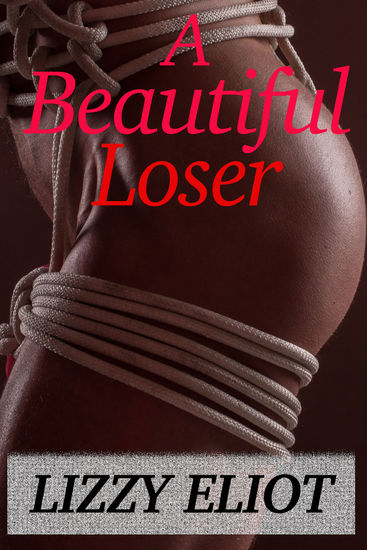
A Beautiful Loser - cover

A Beautiful Loser

Lizzy Eliot

Maison d'édition: _Boruma Publishing, LLC

  • 0
  • 0
  • 0

Synopsis

On a gambling trip to Reno Nancy loses big. To keep her husband from finding out she agrees to pay off her debt, coming back to screw Paul, the casino manager, or whoever he chooses. He”s rough and sexy, and she experiences the worlds of bondage and kink as he, his friends, and clients do her in every way. She starts looking toward her visits and longs to escape her ‘regular’ life.


~~~~~ PG Excerpt ~~~~~


I knew I’d catch hell. George had a thing about gambling being for stupid people and we couldn’t afford to buy another car. He’d have to borrow the money. I knew he’d treat me like I was an idiot for a long time.
 
Now I looked at Paul, hoping my sad story was in my eyes. “I can’t tell him.”
 
Paul shrugged. “Okay. How do you think you’ll avoid that?”
 
Not knowing made me feel weak. I sat back in the chair. “Couldn’t you give me a little time to get the money? I mean, you keep the title, just let me drive it home. I’ll sign a note that says it’s yours. You can notarize it. If I don’t get the money, then it’s yours. If I do, then everyone is happy.”
 
Paul shook his head. “This casino is owned by a corporation. The books are settled at the end of the week, every week. That’s tomorrow. The money has to be in the bank or the title to an asset in the safe. They don’t loan money and there are no exceptions.”
 
I felt like I was going to cry.
 
Paul got out of his chair and came around to sit on the desk, looking at me. “Think about it. If I agreed and you decided not to pay, we’d have to hire someone to repo the car. That increases our losses and I don’t get paid to lose the casino money.” Paul leaned forward and touched my hair. “I’ll bet you could get a personal loan. Such a beautiful loser must have friends.”
 
“What?”
 
“Get someone to loan you the money. Call friends or whatever.”
 
“At three in the morning?”
 
He grinned.
 
I looked at him. The guy seemed to like me a little. At least he wasn’t being an asshole about this and he knew how things worked. I couldn’t accept that there wasn’t some other way to work this out. “My husband will be home late tomorrow and I don’t dare go home without my car. Please, Paul, could you help me? You, not the casino?”
 
He tipped his head to the side, giving me a sly look. I think he was evaluating his leverage. “I suppose that might be possible.”
 
I grabbed at the straw he held out. “Would you?”
 
“Well, as it turns out, I got a bonus check last week and it’s sitting in the bank right now.” He touched his cheek and let his eyes run over me. “We might work something out.”
 
I knew I might be digging the hole I was in deeper. He could demand some outrageous interest rate or some shit, but I was desperate. I had to get through this. Later I’d work out how to get money to pay off the loan. But for now…
 
I gave him my most flirtatious smile. “Please?”
Disponible depuis: 11/01/2023.
Longueur d'impression: 41 pages.

D'autres livres qui pourraient vous intéresser

  • Failure by Design - The California Energy Crisis and the Limits of Market Planning - cover

    Failure by Design - The...

    Georg Rilinger

    • 0
    • 0
    • 0
    A new framework for studying markets as the product of organizational planning and understanding the practical limits of market design. 
      
    The Western energy crisis was one of the great financial disasters of the past century. The crisis began in April 2000, when price spikes started to rattle California’s electricity markets. Decades later, some blame economic fundamentals and ignorant politicians, while others accuse the energy sellers who raided the markets. In Failure by Design, sociologist Georg Rilinger offers a different explanation, one that focuses on the practical challenges of market design. The unique physical attributes of electricity made it exceedingly difficult to introduce markets into the coordination of the electricity system, so market designers were brought in to construct the infrastructures that coordinate how market participants interact. An exercise in social engineering, these infrastructures were intended to guide market actors toward behavior that would produce optimal market results and facilitate grid management. Yet, though these experts spent their days worrying about incentive misalignment and market manipulation, they unintentionally created a system riddled with opportunities for destructive behavior. Rilinger’s analysis not only illuminates the California energy crisis but also develops a broader theoretical framework for thinking about markets as the products of organizational planning and the limits of social engineering, contributing broadly to sociological and economic thinking about the nature of markets.
    Voir livre
  • The Forged Coupon - A Tale of Crime Consequence and Redemption - cover

    The Forged Coupon - A Tale of...

    Leo Tolstoy, Tim Zengerink

    • 0
    • 0
    • 0
    What if the smallest crime demanded the greatest reckoning? 
    Leo Tolstoy’s The Forged Coupon traces the life of a single counterfeit note as it crosses hands and wreaks havoc—until a final act of mercy halts its dark momentum.  
    In vivid scenes that span gambling dens, prison cells, and humble cottages, Tolstoy shows how evil compounds—and how compassion can reverse the tide. 
    What You’ll Hear in This Adaptation: 
    ●	An Unbroken Chain of Consequence – Follow the forged note from innocent prank to tragic violence. 
    ●	A Gallery of Human Portraits – Meet debt-ridden students, cunning traders, desperate laborers, and a humble monk. 
    ●	A Journey from Darkness to Light – Experience the turning point where forgiveness outshines revenge. 
    ●	A Listener-Friendly Modern Translation – Tolstoy’s final moral parable delivered with clarity and suspense. 
    Perfect for your next road trip into the heart of conscience.
    Voir livre
  • The Meme Humanoids - Modern Myths or Real Monsters - cover

    The Meme Humanoids - Modern...

    Lon Strickler

    • 0
    • 0
    • 0
    In 2012, an incredible phenomenon began to occur. Internet users, in earnest, began reporting frightening encounters with emaciated, pale, hairless humanoids that, for the most part, crawled on all fours. Internet users attempted to equate these entities with characters of Native American mythology, oblivious to the fact that the humanoids in these encounters bore a resemblance to the fictional Rake. Many witnesses suggested that they were "Skinwalkers," medicine men or witches of traditional Navajo lore who possess the ability to transform into animals. Others proposed that these emaciated humanoids were manifestations of the "Wendigo," a malevolent cannibalistic spirit of Cree and Algonquin legend. Others still began to invent new names for these creatures, such as "Fleshgaits" and "Crawlers," the latter evoking the 2005 movie entities that likely helped to inspire the Rake originally. 


    The humanoid encounters and sightings that are detailed in this book over varied glimpses into the phenomenon. Ask yourself—are these humanoids actual corporeal beings that are manifested by the human mind and perceivable by others? Or are we witnessing the nexus of an unknown and monstrous species of humanoid?
    Voir livre
  • The Survivor of the Holocaust - cover

    The Survivor of the Holocaust

    Jack Eisner

    • 0
    • 0
    • 0
    When Hitler's Nazis marched into Poland, it brought an abrupt, cruel end to Jack Eisner's childhood, shattered his loving family, and turned his peaceful Jewish community into a nightmarish world of atrocity and murder. Instead of entering the Warsaw Music Conservatory, to which he'd won a scholarship, Jack found himself climbing cemetery walls, leaping over rooftops, and tunneling through sewers with a gang of fellow teenagers to smuggle food, hope, and survival into his besieged home. 


    Pulse-pounding and chillingly graphic, Jack's story takes you into the terror of the Warsaw ghetto . . . to the clandestine meetings with Christian friends who risk their lives to help the teenagers . . . and alongside young rebels as they raise the flag with the Star of David in the final, unforgettable moments of the daring but doomed Warsaw uprising. 


    From the rubble of the ghetto to the horror of the concentration and slave labor camps, The Survivor of the Holocaust is both a stunning chronicle and a poignant true story of a young man sustained by his passionate desire to be reunited with the girl he loves. It also stands as captivating memorial to the 100 members of a single family who perished, told by one among them who—pitted against overwhelming odds—clung fiercely to their life-affirming message.
    Voir livre
  • This is Europe - The Way We Live Now - cover

    This is Europe - The Way We Live...

    Ben Judah

    • 0
    • 0
    • 0
    A Times, Financial Times and Telegraph Book of the Year 2023'Illuminates some of the great trends of our time' - Gideon Rachman, Financial Times'Vivid, urgent and unsettling' - Tom Holland, author of Dominion_____What does it now mean to call yourself European? Who makes up this population of some 750 million, sprawled from Ireland to Ukraine, from Sweden to Turkey? Who has always called it home, and who has newly arrived from elsewhere? Who are the people who drive our long-distance lorries, steward our criss-crossing planes, lovingly craft our legacy wines, fish our depleted waters, and risk life itself in search of safety and a new start?In a series of vivid but always empathetic portraits of other people’s lives, journalist Ben Judah invites us to meet them. Drawn from hours of painstaking interviews, these vital stories reveal a vibrant continent which has been transformed by diversity, migration, the internet, climate change, Covid, war and the quest for freedom.Laid dramatically bare, it may not always be a Europe we recognize – but this is Europe._____'An astonishing achievement' - Evening Standard'Brilliantly told . . . highly readable' - The Times
    Voir livre
  • Holy Roman Empire’s Conflicts with the Vatican The: The History of the Medieval Wars that Fractured Germany and Italy - cover

    Holy Roman Empire’s Conflicts...

    Charles River Editors

    • 0
    • 0
    • 0
    It has been famously pointed out that the Holy Roman Empire was neither holy, nor Roman, but it was also not an empire in the sense people expect when hearing the term. In theory, the emperor was the highest prince in Christendom, and his dominion extended the length and breadth of Western Europe. The empire had been created by the papacy in 801 when Pope Leo the Third famously crowned the supposedly unwitting Charlemagne in Saint Peter’s Basilica, intending to recreate the Western Roman Empire. In truth, the imperial power did not extend beyond central Europe, which by the beginning of the 16th century included Germany, northern Italy, and the Netherlands. Even in these lands, however, the emperor struggled to command obedience. His dominion over northern Italy was theoretical only, the cities of the Netherlands were deeply conscious of their ancient rights and privileges, and Germany had long ceased to be compliant. The latter had become a collection of principalities, dukedoms and bishoprics which vied with each other and pursued their own agendas. They were, however, united in only one sense: denying the emperor power and resisting attempts to centralize the government.  
    	At the same time, the secular sovereigns frequently butted heads with religious authorities back in Rome, and arguably none of the conflicts were as crucial as the War of the Keys and the Investiture Controversy. The tensions between the Holy Roman Empire and Church over the power to invest bishops with authority led to decades of civil war in Germany on the way to establishing the relationship between Church and state, elevating the status of the papacy and weakening the Holy Roman Empire. What is crucial in understanding the conflicts is to not view them with the benefit of hindsight. Most importantly, no nation as people recognize it today yet existed, as England, France, Germany, and Italy were largely geographical expressions, not national identities.
    Voir livre