
Join us on a literary world trip!
Add this book to bookshelf
Grey
Write a new comment Default profile 50px
Grey
Subscribe to read the full book or read the first pages for free!
All characters reduced
History of the Commune of 1871 - cover

History of the Commune of 1871

Lissagaray

Translator Eleanor Marx-Aveling

Publisher: e-artnow

  • 0
  • 0
  • 0

Summary

During the hardships of the Franco-Prussian War, working-class radicalism grew among soldiers. In March 1871, soldiers of the National Guard seized control of the city. They refused to accept the authority of the French government instead of attempting to establish an independent government. These events entered history under the name of the Paris Commune of 1871. The Commune governed Paris for two months. Their policies were directed toward a progressive, anti-religious system of social democracy, including the separation of church and state, self-policing, the remission of rent during the siege, the abolition of child labor, and the right of employees to take over an enterprise deserted by its owner. The Commune was eventually suppressed by the French national Army in May 1871. This book presents the history of Commune from the point of view of the participants.
Available since: 11/24/2023.
Print length: 479 pages.
Other books that might interest you

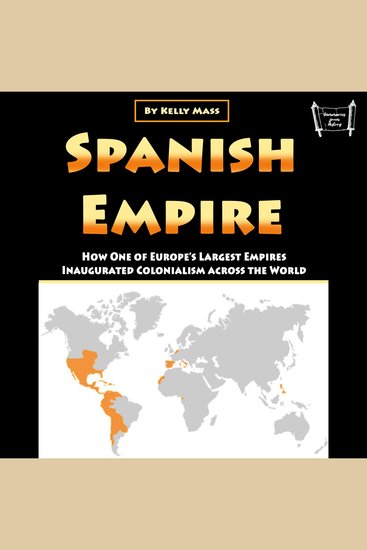
  • Spanish Empire - How One of Europe’s Largest Empires Inaugurated Colonialism across the World - cover

    Spanish Empire - How One of...

    Kelly Mass

    • 0
    • 0
    • 0
    The marriage of Ferdinand of Aragon and Isabella of Castile in the late 15th century laid the foundation for what would become the Spanish Empire. Their union created a personal alliance between the two powerful kingdoms, forming the basis for modern Spain. This confederation of the Crowns of Castile and Aragon brought together Iberia's economic and military strength under the House of Trastámara, although the two crowns remained legally distinct. The union proved significant because it enabled them to share governance over various regions and kingdoms, particularly in the eastern Mediterranean. 
    Their reign saw major successes, most notably the Christian reconquest of the Muslim Kingdom of Granada, completed in 1492. This victory not only unified the Iberian Peninsula but also earned Ferdinand and Isabella the title of "Catholic Monarchs," a recognition granted by Pope Alexander VI. While Isabella focused on consolidating power in Iberia, Ferdinand directed his attention toward expanding influence abroad, pursuing military campaigns in North Africa, France, and Italy. 
    Despite their achievements, the concept of "Early Modern Spain" as a coherent political entity can be somewhat misleading. The Habsburg monarchy that succeeded Ferdinand and Isabella was a hybrid structure, with no formal name to describe the territories collectively. During the Early Modern period, the term "Spain" often referred to the entire Iberian Peninsula in a geographical rather than a political sense, reflecting a continuation of medieval traditions.
    Show book
  • A Reading of the Inaugural Address of President Grover Cleveland - cover

    A Reading of the Inaugural...

    President Grover Cleveland

    • 0
    • 0
    • 0
    Stephen Grover Cleveland (March 18, 1837 – June 24, 1908), born in Caldwell, New Jersey, was the 22nd and 24th president of the United States, serving from 1885 to 1889 and from 1893 to 1897. He was the first Democrat to get elected to the presidency after the Civil War and the first U.S. president to serve nonconsecutive terms. Previous to the presidency, Cleveland was elected mayor of Buffalo in 1881, and governor of New York in 1882. The following is a reading of President Grant's inaugural address delivered on March 04, 1885.
    Show book
  • Neuropsychology - Cognitive Science and Subconscious Mind Mastery (2 in 1) - cover

    Neuropsychology - Cognitive...

    Marcio Ortíz, Miguel Vaquero

    • 0
    • 0
    • 0
    This title contains 2 books about similar topics, which are the following: 
    1: Your subconscious is a priceless potential repository of information, insight, and wisdom. But the majority of us never use that talent to its fullest. 
    Using hypnosis, you can access your subconscious. You can communicate with it immediately when under hypnosis. This can assist you in obtaining important knowledge and bringing about positive changes in your life. 
    Your subconscious is the area of your mind that generally escapes your awareness yet has a significant impact on how you live. 
    For instance, your subconscious has a role in controlling such essential bodily processes as breathing and heartbeat. 
    When you shake your head unconsciously, look away when lying, or suddenly get an inspiring thought "out of the blue," these are all signs that your subconscious is at work. 
    Additionally, you may not even be aware of the ideas and emotions stored in your subconscious, yet they can have a significant impact on your behavior and general well-being. 
    2: The study of the anatomy and operation of the nervous system and the brain is known as neuroscience. To map the brain mechanistically, neuroscientists draw on cellular and molecular biology, anatomy and physiology, human behavior and cognition, and other fields. 
    Each neuron, or brain cell, in an adult human has an estimated 100 billion connections to other neurons. The mapping of all the cell-to-cell communication networks—the brain circuits that process all ideas, feelings, and behaviors—remains one of the major difficulties of contemporary neuroscience. The resulting image that gradually forms is referred described as "the connectome". All learning is based on the brain's capacity to build new neural circuits and connections, or neuroplasticity".
    Show book
  • Beyond Good and Evil - cover

    Beyond Good and Evil

    Friedrich Wilhelm Nietzsche

    • 0
    • 0
    • 0
    Introducing "Beyond Good and Evil" by Friedrich Nietzsche – the transformative audiobook that will challenge your perspective, ignite intellectual curiosity, and awaken the philosopher within.Step into the mind of one of history's most influential thinkers as Nietzsche takes you on a profound journey through morality, truth, and the nature of human existence. This groundbreaking work, brought to life in captivating audio format, explores Nietzsche's bold and revolutionary ideas that continue to resonate in our modern world.Through powerful narration and thought-provoking content, "Beyond Good and Evil" delves deep into Nietzsche's critique of traditional moral values, dismantling societal constructs and calling for a reevaluation of our fundamental beliefs. With every chapter, you'll be confronted with Nietzsche's razor-sharp insights, challenging the very foundations upon which our civilization is built.Prepare to question your preconceived notions and embark on an intellectual adventure like no other. As Nietzsche dismantles conventional wisdom, he encourages you to forge your own path, to embrace personal freedom, and to transcend the limitations imposed by society. His words have the power to shatter paradigms and ignite a desire for profound self-discovery.This meticulously crafted audiobook ensures an immersive and engaging experience, drawing you into Nietzsche's world of intellectual rigor and unparalleled depth. Whether you're a seasoned philosopher or a curious explorer of new ideas, "Beyond Good and Evil" will captivate and inspire you.Listen to this extraordinary audiobook and allow Nietzsche's brilliant words to echo in your mind long after the final chapter. Open your mind to the possibilities of self-transformation, embrace the complexities of the human condition, and experience the timeless wisdom of Friedrich Nietzsche.Don't miss out on this exceptional opportunity to engage with one of the most profound philosophical works ever written
    Show book
  • Alien Gods of Ancient Times - cover

    Alien Gods of Ancient Times

    Raphael Terra

    • 0
    • 0
    • 0
    This audiobook has been recorded using Text to speech (TTS). 
     
    Aliens have been around since the dawn of time. Mankind has given them many names. Angels, ghosts, demons and more. We look to the skies and wonder, but the truth about aliens visiting planet earth is much more profound. It is so startling and so strange that nobody has thought to look in that particular direction. 
     
    Our ancestors developed ways of contacting these aliens and they called them gods. They were beings of light, shining ones, watchers. They were both good and bad, mirroring humanity. They gave great knowledge and after tens of thousands of years mankind suddenly had the ability to create civilization. We built huge monuments in their name and we recorded our contact with them in fables, myths, legends, folklore and religion. We even created grand myths, such as Atlantis, to explain it. 
     
    They were our gods and we worshipped them and recorded their powers, deeds and lives. These gods of the world were in fact not real gods, whatever that means. They were in fact alien invaders and we were the subjects of their rule. 
     
    This is the true story of the aliens in the ancient world.
    Show book
  • Tyrannosaurus Rex and Velociraptors: The History of the Cretaceous Period’s Most Famous Carnivores - cover

    Tyrannosaurus Rex and...

    Editors Charles River

    • 0
    • 0
    • 0
    The massively popular 1990 novel Jurassic Park by Michael Crichton and its subsequent movie adaptations led to a huge resurgence in interest in dinosaurs and the prehistoric world. That interest continues to the present day, even though most of the dinosaurs in Jurassic Park weren’t actually from the Jurassic period. Triceratops, Velociraptor, Tyrannosaurus Rex and the huge sauropods such as Brachiosaurus that feature in the book and movies all actually belong to the Late Cretaceous period, more than 40 million years after the end of the Jurassic. Regardless, certain kinds of dinosaurs remain instantly recognizable, and among them, the “king” is undoubtedly the Tyrannosaurus.  
    The first discovery of a Tyrannosaurus was made in 1902 and the largest carnivorous dinosaur ever found at the time quickly gripped the popular imagination. Even its name was dramatic - Tyrannosaurus Rex means “King of the Tyrant Lizards.” The T-Rex as it quickly became known didn’t appear until the last age of the Late Cretaceous period, the Maastrichtian, but when it did, it was the biggest and most terrifying of all the theropod predators.  
    	Thanks to the movie, there has been some unwitting confusion over the identity of the Velociraptor, and this confusion was due in large part to the fact the name sounds far more scary than the creature to which the name originally belonged. Moreover, the creature to which the label was applied in the novel and movie was actually a distant cousin named Deinonychus, but as the story goes, the author, Michael Crichton, thought “Velociraptor” sounded “more dramatic.” The actual Velociraptor lived not in the badlands of North America, but in the badlands of central-eastern Asia, and it was not nearly as intimidating as Deinonychus. In fact, the main species of genus Velociraptor - Velociraptor mongoliensis - was no bigger than a turkey.
    Show book