Join us on a literary world trip!
Add this book to bookshelf
Grey
Write a new comment Default profile 50px
Grey
Subscribe to read the full book or read the first pages for free!
All characters reduced
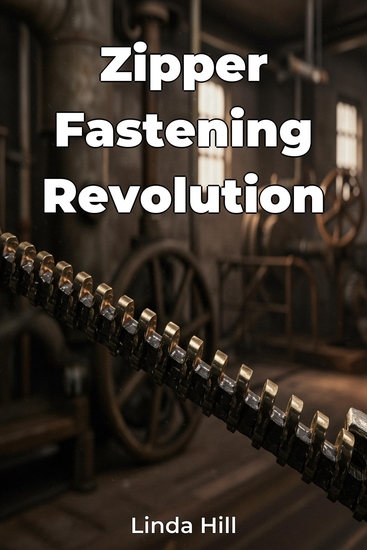
Zipper Fastening Revolution - cover

Zipper Fastening Revolution

Linda Hill

Translator A AI

Publisher: Publifye

  • 0
  • 0
  • 0

Summary

Zipper Fastening Revolution unveils the surprising history of the zipper, a seemingly simple fastening technology that profoundly impacted fashion, industry, and society. Far from being a straightforward invention, the zipper's journey involved overcoming significant technological hurdles and navigating complex social and economic landscapes. For instance, early versions of the zipper, known as "hookless fasteners," were unreliable and required considerable refinement before gaining widespread acceptance. The book explores how the zipper's success stemmed from strategic marketing alongside its practical advantages. 

 
The narrative progresses chronologically, starting with pre-zipper fastening methods and then moves through early prototypes developed by inventors like Whitcomb Judson and Gideon Sundback. Later chapters analyze the zipper's integration into mainstream fashion and its diverse applications, illustrating how this invention reshaped clothing design and mass production. By examining patent documents, advertisements, and firsthand accounts, Zipper Fastening Revolution provides a comprehensive look at this transformative technology. The book uniquely balances technical analysis with cultural insights, demonstrating how a simple device became an integral part of our daily lives.
Available since: 02/27/2025.
Print length: 61 pages.


Other books that might interest you

  • Nature - cover

    Nature

    Ralph Waldo Emerson

    • 0
    • 0
    • 0
    "Nature" is an essay written by Ralph Waldo Emerson, first published in 1836. In this essay, Emerson explores the idea of nature as a source of inspiration and knowledge for human beings. 
    Emerson argues that nature is a reflection of the divine and that by immersing oneself in nature, one can attain a deeper understanding of the world and oneself. He encourages individuals to embrace the beauty of nature and to seek solace in its tranquility. 
    Emerson also criticizes society's emphasis on material possessions and commercialism, arguing that it distracts individuals from the natural world and their own spiritual growth. He believes that by returning to nature, individuals can rediscover their true selves and find fulfillment in simplicity. 
    Overall, "Nature" is a celebration of the natural world and a call to return to a simpler, more authentic way of living. It continues to be a seminal work in the American transcendentalist movement and has inspired generations of readers to explore the beauty and wonder of the natural world
    Show book
  • The Integration Journey - A Student's Guide to Faith Culture and Psychology - cover

    The Integration Journey - A...

    William B. Whitney, Carissa...

    • 0
    • 0
    • 0
    There are numerous models, theories, and resources on integrating psychology and the Christian faith. But practicing integration in the real world is something else entirely. To move from theory to practice, we need learning informed by experiences, reflection on those experiences, and feedback from others. This integration process is a lifelong journey.
    William B. Whitney and Carissa Dwiwardani offer a fresh approach to integration as embodied, lived, and practical. These two seasoned teachers guide students through the process of theological reflection on psychology as part of their spiritual formation and vocation, requiring each person to incorporate their own stories, culture, and experiences. True integration, the authors contend, should work for justice in our churches, communities, and wider society, with particular attention to the marginalized and oppressed.
    Using guided exercises and prompts for reflection and discussion, The Integration Journey invites students to make their own contributions to constructing a culturally informed, organic model of integration that works for them. The goal of integrative reflection is ultimately to be shaped so that we can better love God and others and work toward God's kingdom here on earth.
    Show book
  • Candy Caning: A Kinky Holiday Story - cover

    Candy Caning: A Kinky Holiday Story

    L.A. Witt

    • 0
    • 0
    • 0
    Nate is dreading the annual Christmas visit with his family, during which they will ignore or insult his partner and Dominant.Stephen tries hard to take Nate’s mind off the trip with the promise—and threat—of a three-foot-long candy cane. It’s a race to see if Nate’s resolve or the candy cane will shatter first.
    Show book
  • Founding Brothers - The Revolutionary Generation and the Birth of America - cover

    Founding Brothers - The...

    Harry Montgomery

    • 0
    • 0
    • 0
    The events that led to one of the most infamous moments in early American history began with a series of escalating tensions between two towering figures of the revolutionary generation. At the heart of this saga were Alexander Hamilton and Aaron Burr, whose personal and political differences culminated in a duel that would forever change the course of their lives and the nation. The rivalry between these men had been simmering beneath the surface for years, driven by conflicting visions of America’s future and a deeply personal sense of pride and honor. As the nation struggled to define itself, the intensity of political passions mirrored the violence that would erupt on a fateful morning along the banks of the Hudson River. 
    Hamilton, a key architect in establishing the new republic’s financial system and a fervent advocate for a strong central government, had found himself at odds with the more cautious and opportunistic Burr. Their interactions were marked by fiery debates and personal insults, each encounter stoking the flames of discord. This tension reached its climax when a series of statements and challenges, amplified by the politically charged atmosphere of the day, left little room for reconciliation. In the culture of honor that prevailed at the time, retreating or appearing weak was not an option, and thus the challenge to a duel was seen as an unavoidable, albeit tragic, path to vindication. 
    On that brisk morning, amid a landscape still haunted by the memories of revolution and laden with the promise of a new beginning, both men prepared to face each other under strict codes of conduct. The duel was not just a matter of personal honor; it was emblematic of the turbulent and often dangerous era in which the young nation was emerging.
    Show book
  • The Little Book of Vaginas - cover

    The Little Book of Vaginas

    Anna Lou Walker

    • 0
    • 0
    • 0
    Vajayjay. Lady bits. Notorious V. A. G. 


    It's time we talked about vaginas. This pocket-sized book is here to debunk the myths and help you gain a better understanding of everything you were never taught, including: 


    ● The amazing things the vagina does from puberty to menopause 


    ● Advice on the most common complaints and how best to alleviate them 


    ● The vagina in pop culture—from the page to the stage 


    This succinct and celebratory guide separates fact from fiction and will change the way you think and talk about your wonder down under. 


    Contains mature themes.
    Show book
  • Ownership - The Evangelical Legacy of Slavery in Edwards Wesley and Whitefield - cover

    Ownership - The Evangelical...

    Sean McGever, Vincent E. Bacote

    • 0
    • 0
    • 0
    The latest book from the author of Evangelism: For the Care of Souls.
    Show book