Junte-se a nós em uma viagem ao mundo dos livros!
Adicionar este livro à prateleira
Grey
Deixe um novo comentário Default profile 50px
Grey
Assine para ler o livro completo ou leia as primeiras páginas de graça!
All characters reduced
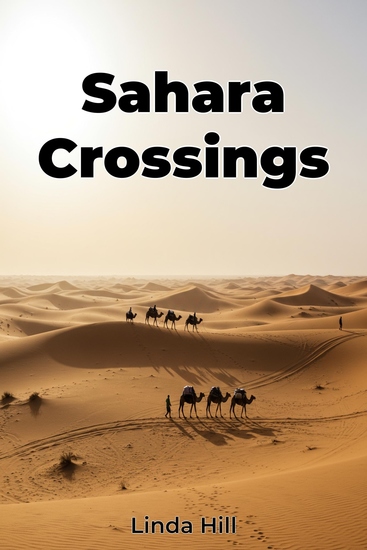
Sahara Crossings - cover
LER

Sahara Crossings

Linda Hill

Tradutor A AI

Editora: Publifye

  • 0
  • 0
  • 0

Sinopse

Sahara Crossings explores the transformative history of trans-Saharan trade routes and their profound impact on African societies. It reveals how these desert arteries fostered not only economic exchange but also cultural and political development, shaping empires like Ghana, Mali, and Songhai.

 
The book highlights the ingenuity of desert societies in adapting to harsh conditions, enabling the movement of valuable commodities such as gold, salt, and textiles across vast distances. The book examines the spread of Islam and the rise of powerful empires, emphasizing that the trade routes were more than just commercial pathways; they were vital conduits for cultural exchange and political influence.

 
By analyzing Arabic chronicles, archaeological findings, and other sources, Sahara Crossings challenges Eurocentric views of history, demonstrating Africa's significant role in global interconnectedness throughout the pre-colonial era.

 
The book unfolds by first detailing the geographical challenges and technological innovations, then explores the traded commodities and their impact, followed by case studies of major empires, and culminates with an analysis of the trade's decline and its enduring legacy.
Disponível desde: 19/03/2025.
Comprimento de impressão: 60 páginas.

Outros livros que poderiam interessá-lo

  • Operation Typhoon: The History of the Fight for Moscow between the Nazis and Soviets - cover

    Operation Typhoon: The History...

    Phaistos Publishers

    • 0
    • 0
    • 0
    After the Fall of France and the unsatisfactory Battle of Britain came to a close, Hitler turned to the east and issued Führer Directive 21, his secret order for the invasion of the Soviet Union, on 18 December 1940. Prior to this the Molotov-Ribbentrop Pact, a non-aggression agreement, had enabled the two countries to divide the spoils after the invasion of Poland that had triggered the Second World War. Hitler, however, had always regarded this agreement as nothing more than a temporary tactical maneuver. In the early part of the Second World War, the arrangement had suited the two nations, with the Soviet Union preoccupied with its own issues while Hitler continued his aggression in Western Europe, exporting manufactured goods to the Soviet Union in return for grain and oil. But they were never easy bedfellows since their ideological differences were diametrically opposed. 
    For his part, Stalin seems uncharacteristically trusting of Hitler despite Soviet intelligence reports and London warning him of Germany’s intentions. Operation Barbarossa caught him unprepared. Over three and a half million troops - eighty% of the German Army, attacked along a front almost 3,000 km, supported by 2,700 aircraft, the largest invasion force ever seen. Soviet forces were hastily dispatched to the frontier in huge numbers, but the Germans pushed through quickly and decisively, and within three weeks of the launch of Operation Barbarossa, Hitler’s initial objectives had been achieved. While a legend exists today that Hitler's strategic fecklessness destroyed Germany's chances, despite the wise objections of the Wehrmacht general staff (OKW), the actual situation in 1941 resembled the precise reverse of this familiar historical trope. It seems the Fuhrer retained his full strategic acumen in 1941, until he ill-advisedly adopted the suggestions of the OKW and diverted forces in a winter campaign to seize the Soviet capital, leading to the Battle of Moscow .
    Ver livro
  • Why You Should Go to Dubrovnik - cover

    Why You Should Go to Dubrovnik

    Mark Ferdinand

    • 0
    • 0
    • 0
    Dubrovnik is a city where time seems to stand still—yet its beauty and history evolve with every step you take. Known as the "Pearl of the Adriatic," Dubrovnik’s ancient stone walls, baroque churches, and terracotta rooftops create a landscape that’s as captivating as it is historic. Whether you're strolling along the iconic Stradun, relaxing by the crystal-clear waters, or wandering through the UNESCO World Heritage Old Town, the city feels like a living museum. 
    Mark Ferdinand guides you through the enchanting streets and scenic vistas of this Croatian gem. From the lush island of Lokrum to the grand medieval city walls, Dubrovnik is a place where the past and present coexist beautifully. With its rich culture, stunning views, and warm Mediterranean climate, you'll quickly understand why Dubrovnik is one of the most sought-after destinations in Europe.
    Ver livro
  • Healing in Your Hands - Self-Havening Practices to Harness Neuroplasticity Heal Traumatic Stress and Build Resilience - cover

    Healing in Your Hands -...

    PhD Kate Truitt, Steven J. Ruden

    • 0
    • 0
    • 0
    Written by Dr. Kate Truitt, a psychologist, neuroscientist, and trauma expert, Healing in Your Hands is the first book of its kind to integrate the neuroscience of trauma with cutting-edge research on self-havening—a groundbreaking technique that draws on the power of mindful touch to heal even the most profound traumatic stress. It weaves together powerful client stories, insights from the field of neuroscience, and personalized havening practices to create a complete self-healing program that anyone can use. 


    With the simple and effective tools in this book, you will learn how to: 


    ● Draw upon your brain's amazing ability to heal itself 


    ● Build a trusting relationship with your mind and body 


    ● Soothe your nervous system in moments of reactivity 


    ● Create feelings of safety, agency, and personal empowerment 


     . . . all with the palms of your own hands.
    Ver livro
  • The Siege of Stalingrad - The Turning Point in the War on the Eastern Front - cover

    The Siege of Stalingrad - The...

    Sage Winters

    • 0
    • 0
    • 0
    The Battle of Stalingrad stands as one of the most defining events of the 20th century, a turning point that shifted the trajectory of World War II. Situated along the banks of the Volga River, Stalingrad was not only a city of industrial and strategic importance but also a symbolic prize for both Adolf Hitler and Joseph Stalin. The ferocity and scale of the battle transformed it into a microcosm of the broader conflict between Nazi Germany and the Soviet Union.  
      
    When Germany launched Operation Barbarossa in June 1941, the Wehrmacht seemed unstoppable as it swept across the Soviet Union. Hitler’s ambitions of seizing Soviet territories were fueled by his vision of Lebensraum and the destruction of Bolshevism. By the summer of 1942, German forces were pressing deeper into the southern front, aiming to capture the oil fields of the Caucasus and secure Stalingrad as a vital stepping stone. For Hitler, Stalingrad held immense propaganda value, carrying the name of his adversary, Stalin. Its fall would signify not just a military triumph but a psychological blow to the Soviet people.  
      
    For the Soviet Union, the defense of Stalingrad became a matter of national survival and pride. Stalin’s orders to defend the city at all costs rallied both soldiers and civilians. The infamous directive “Not a step back!” underscored the desperation and determination of the Soviet war effort. As the battle unfolded, Stalingrad was transformed into a hellish landscape of rubble, where every building and street became a battlefield. 
    Ver livro
  • Presence - The Strange Science and True Stories of the Unseen Other - cover

    Presence - The Strange Science...

    Ben Alderson-Day

    • 0
    • 0
    • 0
    A psychologist’s journey to understand one of the most unusual experiences known to humankind: the universal, disturbing feeling that someone is there when we are alone 
     
    These experiences of sensing a “presence” when no one else is there have been given many names—the Third Man, guardian angels, shadow figures, “social” hallucinations—and they have inspired, unsettled, and confounded in equal measure. 
     
    While the contexts in which they occur are diverse, they are united by a distinct and uncanny feeling of visitation. But what does this feeling mean, and where does it come from? When and why do presences emerge? And how can we even begin to understand a phenomenon that can be transformative for those who  
    experience it, and yet so hard to put into words? 
     
    The answers to these questions lie in this tour de force, which takes readers through contemporary psychology, psychiatry, neuroscience, and philosophy.  
     
    Presence follows Ben Alderson-Day’s attempts—as a psychologist and a researcher—to understand how this experience is possible. What is a voice when it isn’t heard, and how otherwise do we know or feel that someone is in our presence? Is it a hallucination, a change in the working of the brain, or something else? 
     
    The journey to understand takes us to meet explorers, mediums, and robots, andallows us to step through real, imagined, and virtual worlds. Presence is the story of who we carry with us, at all times, as parts of ourselves.
    Ver livro
  • The Irish in the Resistance - The Untold Stories of the Ordinary Heroes Who Resisted Hitler - cover

    The Irish in the Resistance -...

    John Morgan, Clodagh Finn

    • 0
    • 0
    • 0
    'You simply couldn't stand by with your arms folded.'
    These were the words of Samuel Beckett who famously returned to France from a holiday in Ireland when World War II broke out. His clandestine work against the Nazi occupation of Europe is well documented, but there were many other ordinary Irish people who joined the underground network.
    Some took up arms. Others gathered intelligence, sheltered fugitives, committed acts of sabotage or broke codes. This new history tells the stories of those forgotten Irish men and women.
    Discover Captain John Keany from Cork, who parachuted into occupied Italy to help the local Resistance; Margaret Kelly, the Dublin founder of the world-famous Bluebell Girls cabaret troupe in Paris, who hid her Jewish husband; and Catherine Crean, the Irish governess born on Moore Street, Dublin, who was sent to a concentration camp for helping Allied airmen in Belgium.
    These, and many more stories, span the course of World War II and remind us of the power of individuals to make a difference.
    'An eye-opening account of how ordinary people caught up in extraordinary situations helped to fight the Nazis' David McCullagh
    'A truly important and groundbreaking book' Mary Kenny
    Ver livro