Join us on a literary world trip!
Add this book to bookshelf
Grey
Write a new comment Default profile 50px
Grey
Subscribe to read the full book or read the first pages for free!
All characters reduced
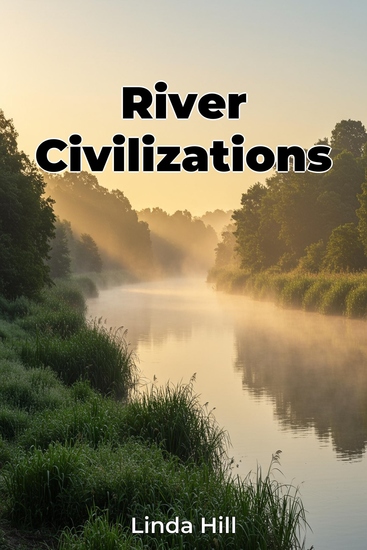
River Civilizations - cover

River Civilizations

Linda Hill

Translator A AI

Publisher: Publifye

  • 0
  • 0
  • 0

Summary

River Civilizations explores the profound impact of the Nile, Tigris-Euphrates, and Indus rivers on the rise of early complex societies. It examines how these waterways shaped agricultural practices, social structures, and political systems in Mesopotamia, Egypt, and the Indus Valley Civilization. The book argues that these rivers were instrumental in enabling large-scale irrigation, which led to surplus food production and population growth. Furthermore, these river systems facilitated trade and communication, fostering the exchange of ideas and technologies among different regions.

 
The book progresses by first introducing the unique geographical characteristics of each river valley. It then analyzes agricultural and technological innovations used to harness the rivers' power, like advanced irrigation systems. Finally, it delves into the resulting social, political, and cultural transformations, including urbanization and the development of writing. This approach highlights the interplay between environmental factors and human agency, challenging deterministic views of societal development.

 
By presenting a comparative and interdisciplinary perspective, River Civilizations moves beyond traditional narratives. It emphasizes the agency of ancient peoples in adapting to and transforming their environments, offering valuable insights into sustainable development, water management, and the intricate relationship between humanity and the natural world. The book's exploration of early civilizations provides a historical perspective on modern challenges like water rights and infrastructure.
Available since: 03/06/2025.
Print length: 81 pages.

Other books that might interest you

  • Takka Takka Bom Bom - An Intrepid War Correspondent's 50 Year Odyssey - cover

    Takka Takka Bom Bom - An...

    Al J. Venter

    • 0
    • 0
    • 0
    The world’s oldest still-active war correspondent shares the real stories behind half a century of headlines from the front lines.
    
    The world’s oldest still-active war correspondent, Al J. Venter, has reported from the front lines for well over half a century, witnessing the horrors humanity visits upon itself in twenty-five conflict zones across Africa, the Middle East, and Central Asia.
    
    In this memoir, Venter masterfully recounts his experiences, sharing the real stories behind the headlines and the sharp lessons he learned that enabled him to survive his countless exploits, ranging from exposing a major KGB operative in Rhodesia entirely by accident, and accompanying an Israeli force led by Ariel Sharon into Beirut, to gun-running into the United States.
    Show book
  • Chilling Secrets: The Manson Murders Unveiled - Unveil chilling truths! Dive into gripping audio lessons on the Manson Murders for ultimate suspense - cover

    Chilling Secrets: The Manson...

    Eamon Venton

    • 0
    • 0
    • 0
    Chilling Secrets: The Manson Murders Unveiled 
    ⭐⭐ Simplified Audio Guide with Explanations Included ⭐⭐ 
    Are you curious about the terrifying tales behind the infamous 1960s horror and want to dive deeper into the Manson Murders? 
    Looking for a detailed yet straightforward resource to uncover the chilling truths behind these historical crimes? 
    Your search ends here! 
    This audiobook serves as your definitive companion for deepening your understanding, applying your knowledge, and engaging with hands-on exercises. With this, you're geared for a thrilling exploration. 
    Updated for the latest revelations on the Manson Murders. 
    Key features of this enriched guide: 
    - Profound insights into the Manson Murders 
    - Detailed explanations uncovering the infamous events of the 1960s horror 
    - Effective strategies for understanding and tackling these chilling tales 
    Our guide distinguishes itself through comprehensive coverage, which is essential for a thorough understanding. Concepts aren't merely skimmed; they are delved into with precision. 
    Please note that this guide is purely an independent resource for your benefit. 
    Designed with a clear structure and easy-to-understand language, our audiobook ensures smooth transitions between topics. Say goodbye to dense jargon and welcome clear, precise, and technically accurate content. 
    So, why wait? Click the BUY NOW button, secure your guide, and begin your journey into the chilling secrets of the Manson Murders!
    Show book
  • Henry David Thoreau: On The Duty of Civil Disobedience - original title: Resistance to Civil Government - cover

    Henry David Thoreau: On The Duty...

    Henry David Thoreau

    • 0
    • 0
    • 0
    "That government is best which governs least" is the famous opening line of this essay. The slavery crisis inflamed New England in the 1840s and 1850s. The environment became especially tense after the Fugitive Slave Act of 1850. A lifelong abolitionist, Thoreau delivered an impassioned speech which would later become Civil Disobedience in 1848, just months after leaving Walden Pond. The speech dealt with slavery, but at the same time excoriated American imperialism, particularly the Mexican–American War. Thoreau asserts that because governments are typically more harmful than helpful, they therefore cannot be justified. Democracy is no cure for this, as majorities simply by virtue of being majorities do not also gain the virtues of wisdom and justice. The judgment of an individual's conscience is not necessarily inferior to the decisions of a political body or majority, and so "[i]t is not desirable to cultivate a respect for the law, so much as for the right. The only obligation which I have a right to assume is to do at any time what I think right.... Law never made men a whit more just; and, by means of their respect for it, even the well-disposed are daily made the agents of injustice." He adds, "I cannot for an instant recognize as my government [that] which is the slave's government also.
    Show book
  • Pandemic Perspectives - A filmmaker's journey in 10 essays - cover

    Pandemic Perspectives - A...

    Howard Burton

    • 0
    • 0
    • 0
    Directly inspired by award-winning author, physician and self-professed “biology watcher” Lewis Thomas, Howard Burton takes us on a thought-provoking tour of a wide range of social and scientific issues which he encountered through the process of making the documentary film, Pandemic Perspectives. Howard provides unique and fresh insights into a wide range of issues ranging from biology to politics to contemporary morality weaving together his interaction with a diverse array of international experts who participated in his film and his personal experiences as a physicist-turned-filmmaker.
    Show book
  • Summary of Shomari Wills’s Black Fortunes - cover

    Summary of Shomari Wills’s Black...

    Falcon Press

    • 0
    • 0
    • 0
    Buy now to get the main key ideas from Shomari Wills’s Black Fortunes 
      
    Journalist Shomari Wills’s great-great-uncle, John Mott Drew, was a millionaire. His father had been a slave, and his story made Shomari realize that African Americans’ early achievements are often little known. At the time, it was revolutionary for an African American to become rich. In Black Fortunes (2018), Shomari tells the success stories of America’s first black millionaires, including Mary Ellen Pleasant, Robert Reed Church, O.W. Gurley, Hannah Elias, Annie Turnbo Malone, and Madam C.J. Walker. They were often attacked and demonized for their race and achievements, but this did not stop them from securing their legacy. They built towns, cultures, and helped change the course of history for black people. 
     
    Show book
  • Earth in Flames - How an Asteroid Killed the Dinosaurs and How We Can Avoid a Similar Fate From Nuclear Winter - cover

    Earth in Flames - How an...

    Alan Robock, Owen Brian Toon

    • 0
    • 0
    • 0
    Sixty-six million years ago an asteroid as large as Mt. Everest hit what is now the Yucatan Peninsula at a speed ten times faster than the fastest rifle bullet. Debris from the impact blew into space, re-entered the atmosphere as a swarm of shooting stars that burned the global forests and grasslands, leaving behind a thin global layer containing rock from the asteroid and from Mexico, and smoke from the fires. This layer marks one of the greatest extinctions in Earth history including not just dinosaurs, but also fish, plankton, ammonites, and plants making up about 75% of the known species. 


    A nuclear war with just a few hundred of the world's 12,000 nuclear weapons targeted on densely populated cities could plunge Earth into the same types of conditions that the dinosaurs experienced. Even a war between India and Pakistan could kill 1 to 3 billion people from starvation due to agricultural failure, while 6 billion people might starve following a war involving Russia, NATO, and the U.S. 


    The book describes how the dinosaurs died, and how their deaths parallel what might happen to people after a nuclear war. The book reflects on the odds of future asteroid impacts, how to stop them, and ends with what the listeners personally and together can do to prevent a nuclear war, so that humans don't end up like the dinosaurs.
    Show book