Join us on a literary world trip!
Add this book to bookshelf
Grey
Write a new comment Default profile 50px
Grey
Subscribe to read the full book or read the first pages for free!
All characters reduced
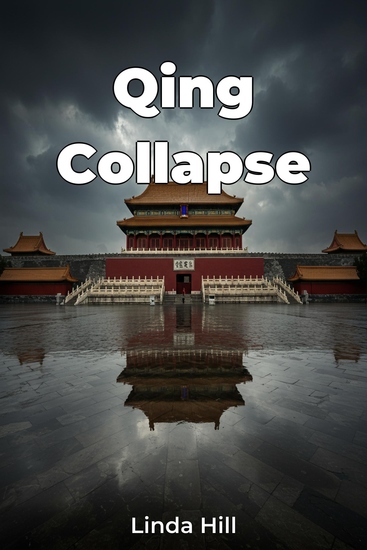
Qing Collapse - cover

Qing Collapse

Linda Hill

Translator A Ai

Publisher: Publifye

  • 0
  • 0
  • 0

Summary

Qing Collapse examines the multifaceted reasons behind the downfall of China's Qing Dynasty, a pivotal moment in world history. The book argues that the collapse wasn't due to a single cause but rather a combination of internal vulnerabilities and external pressures. Intriguingly, despite ruling for nearly three centuries, the dynasty struggled to adapt to challenges like the Opium Wars and internal rebellions such as the Taiping Rebellion, ultimately leading to its demise.

 
The book provides a nuanced perspective by analyzing the dynasty's political structure, economic system, and social fabric, highlighting inherent weaknesses like bureaucratic corruption. It progresses by exploring the impact of internal rebellions and foreign intervention, followed by an assessment of the Qing government's reform attempts and concluding with an analysis of the Xinhai Revolution. This approach provides a comprehensive understanding of why the Qing Dynasty could not withstand the combined forces of internal dissent and foreign encroachment, offering valuable insights into the dynamics of imperial collapse and the challenges of modernization.
Available since: 03/20/2025.
Print length: 62 pages.

Other books that might interest you

  • On to Stalingrad - Operation Winter Thunderstorm and the attempt to relieve Sixth Army December 1942 - cover

    On to Stalingrad - Operation...

    Horst Scheibert

    • 0
    • 0
    • 0
    In late November 1942, Soviet forces surrounded Paulus' Sixth Army in a pocket outside the Russian city of Stalingrad. In response the Germans planned a relief operation, Operation Winter Storm, intended to break through the Soviet forces and open the pocket, releasing the encircled units. The 6th Panzer Division was the spearhead of the German relief force. 


    The attack started on December 12th, 1942 and was aborted on December 23rd after heavy Soviet counterattacks. This failure sealed the fate of the German 6th Army in Stalingrad. 


    This account of the operation was first published in German in 1961, written by the well-respected military historian and retired German officer, Schiebert Horst. It covers the entire operation from the situation in mid-November through the two German offensives, the Soviet counteroffensive and ongoing fighting until early January.
    Show book
  • The Secret to Plato's Atlantis - cover

    The Secret to Plato's Atlantis

    JOHN FRANCIS ARUNDELL

    • 0
    • 0
    • 0
    Philosophy is the study of problems concerning matters as fundamental as existence, knowledge, values, reason, mind, and language. Pythagoras (c. 570–495 BC) is said to have coined the term. Philosophical methods were applied through questioning, critical discussion, rational arguments, and systematic presentations on questions like "Is it possible to know anything and to prove it?" Major areas in academic philosophy include metaphysics, epistemology, ethics, aesthetics, political philosophy, logic, philosophy of science, and the history of Western philosophy.
    Show book
  • The Seventymile Kid - The Lost Legacy of Harry Karstens and the First Ascent of Mount McKinley - cover

    The Seventymile Kid - The Lost...

    Tom Walker

    • 0
    • 0
    • 0
    The Seventymile Kid tells the remarkable account of Harry Karstens, who was the actual—if unheralded—leader of the Hudson Stuck Expedition that was the first to summit Mount McKinley in Alaska. All but forgotten by history, a young Karstens arrived in the Yukon during the 1897 Gold Rush, gained fame as a dog musher hauling U.S. Mail in Alaska, and eventually became the first superintendent of Mount McKinley National Park (now known as Denali National Park and Preserve). Aided by Karstens's own journals, longtime Denali writer and photographer Tom Walker uncovered archival information about the Stuck climb, and reveals that the Stuck "triumph" was an expedition marred by significant conflict. Without Karstens's wilderness skills and Alaska-honed tenacity, it is quite possible Hudson Stuck would never have climbed anywhere near the summit of McKinley. Yet the two men had a falling out shortly after the climb and never spoke again. In this book, Walker attempts to set the record straight about the historic first ascent itself, as well as other pioneer attempts by Frederick Cook and Judge Wickersham. 


    Fans of Alaska literature, American history, and mountaineering lore will love this adventurous biography of the largerthan-life "sourdough" Karstens, in which Alaska—its wilderness, its iconic mountain, and its pioneer spirit—looms large.
    Show book
  • Exit West by Mohsin Hamid (Book Analysis) - Detailed Summary Analysis and Reading Guide - cover

    Exit West by Mohsin Hamid (Book...

    Bright Summaries

    • 0
    • 0
    • 0
    Unlock the more straightforward side of Exit West with this concise and insightful summary and analysis!
    This engaging summary presents an analysis of Exit West by Mohsin Hamid, which imagines a world where doors can instantly transport people across the globe. The novel focuses on Saeed and Nadia, who are fleeing civil war in their native country and use the doors to travel to new countries, where the inhabitants' responses range from violent nativist riots to official clampdowns to acceptance and integration. Mohsin Hamid is a Pakistani writer and brand consultant. He is known in particular for his novels The Reluctant Fundamentalist, which was shortlisted for the 2007 Man Booker Prize, and Exit West, which was shortlisted for the 2017 Man Booker Prize and was named one of the New York Times' 10 Best Books of 2017.
    Find out everything you need to know about Exit West in a fraction of the time!
    This in-depth and informative reading guide brings you:
    •A complete plot summary
    •Character studies
    •Key themes and symbols
    •Questions for further reflection
    Why choose BrightSummaries.com?
    Available in print and digital format, our publications are designed to accompany you on your reading journey. The clear and concise style makes for easy understanding, providing the perfect opportunity to improve your literary knowledge in no time.
    See the very best of literature in a whole new light with BrightSummaries.com!
    Show book
  • The Last Empire - Essays 1992-2000 - cover

    The Last Empire - Essays 1992-2000

    Gore Vidal

    • 0
    • 0
    • 0
    The Last Empire is a collection of provocative, witty, and eloquent essays by Gore Vidal about all things USA. In more than two dozen essays, Vidal brings his keen intellect, experience, and razor-edged wit to bear on an astonishing range of subjects, offering incisive observations about terrorism, civil liberties, the CIA, Al Gore, and the Clintons—interwoven with a rich tapestry of personal anecdote, critical insight, and historical detail. Erudite, forever curious, argumentative, irascible, and often very funny, Gore writes that the United States is, "a unique society in which we have free enterprise for the poor and socialism for the rich." The Last Empire is a sweeping coda to the still-existing conflicted vision of the American dream—leaving no need to imagine what trenchant barbs Vidal would have uttered concerning the state and level of discourse of American society right now.
    Show book
  • Farewell Address Republican National Convention - cover

    Farewell Address Republican...

    Ronald Reagan

    • 0
    • 0
    • 0
    On August 15, 1988, in the Louisiana Superdome, Reagan delivered a message for economic freedom. We transformed our government from one that was consuming our prosperity into one that would get out of the way of those who create prosperity.  
    Reagan notes the “inflated rhetoric of our friends in Atlanta last month. But then, inflation is their specialty.” As John Adams said, “Facts are stubborn things.”  
    When we came to Washington, we suffered the worst back-to-back years of inflation in 60 years, interest rates over 21 percent, declining productivity, weekly wages, and family income, the highest tax bill in history, and a 21 percent misery index. 
    The Soviet Union invaded Afghanistan. Iran stormed our embassy and took Americans hostage. The world questioned our resolve. 
    We responded by cutting taxes and creating over 17 million jobs. Inflation is below 4 percent and interest rates cut in half. “I noticed they don’t call it Reaganomics anymore.”  
    We rebuilt our armed forces, and liberated Grenada. During our administration “not 1 inch of ground has fallen to the Communists.” We're working on the Strategic Defense Initiative to protect ourselves and our allies against nuclear terror. 
    Liberal elites resisted our defense buildup, our tax cuts, cutting fat out of government, and appointing judges committed to the Constitution. I’ve supported a balanced budget amendment and line-item veto, and every year the liberals said no.  
    We need Republican majorities in both houses. America needs George Bush. “Go out there and win one for the Gipper.” 
    God put this land between two great oceans to be found by people with a love of freedom, freedom of association, of worship, of hope and opportunity. Here, it’s sunrise every day with new opportunities and dreams to build. 
    Audio recording courtesy of the Ronald Reagan Presidential Library. 
    AspenLeafMedia.com
    Show book