Join us on a literary world trip!
Add this book to bookshelf
Grey
Write a new comment Default profile 50px
Grey
Subscribe to read the full book or read the first pages for free!
All characters reduced
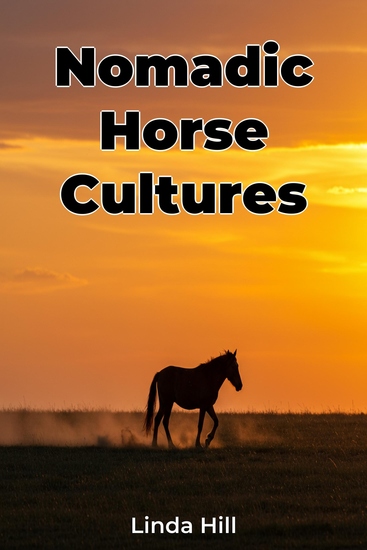
Nomadic Horse Cultures - cover

Nomadic Horse Cultures

Linda Hill

Translator A Ai

Publisher: Publifye

  • 0
  • 0
  • 0

Summary

Nomadic Horse Cultures explores the transformative impact of the horse on indigenous societies across Eurasia, Africa, and the Americas. It examines how the domestication of horses reshaped hunting practices, warfare, and social structures, leading to significant cultural adaptations. The book challenges traditional narratives by highlighting the agency of indigenous peoples in co-evolving with the horse, demonstrating how they actively integrated the animal into their existing lifestyles.For example, the adoption of the horse revolutionized hunting techniques, enabling more efficient hunting of bison and other large game. This study traces the horse's journey across continents, analyzing how various groups integrated it into their cultures. Early chapters focus on domestication and diffusion, while later sections delve into the horse's impact on warfare, examining the rise of horse-based warrior societies. It emphasizes the profound ways in which the horse spurred a re-organization of societies, economies, and belief systems. The book's multidisciplinary approach, drawing from archaeology, oral histories, and anthropology, provides a holistic understanding of human-animal relationships and cultural transformation in world history.
Available since: 03/29/2025.
Print length: 60 pages.

Other books that might interest you

  • My Time as a Second Class Citizen - cover

    My Time as a Second Class Citizen

    E. Stevens

    • 0
    • 0
    • 0
    Prison. The word conjures up thoughts of oppression, violence, and misery. An apt description. Follow along the personal experiences of a former police officer, who found out firsthand what it means when the law does not factor the intent of the criminal, forcing him to plead guilty to a crime that was unwittingly committed. From a corrupt system to vile living conditions, from apathetic corrections officers to a system that does nothing to rehabilitate men, learn one man’s experience just trying to survive the Michigan Department of Corrections…all while keeping his sanity, attempting to piece together a failing marriage and hoping to be reunited with a father he just met before it’s too late.
    Show book
  • Recovering from Child Abuse - Healing and Hope for Victims - cover

    Recovering from Child Abuse -...

    David Powlison

    • 0
    • 0
    • 0
    The damage you suffered may have been done in one terrible moment or over time. But the healing and the restoration will unfold at your pace, at a human pace. It unfolds as part of your story, and it unfolds over time.As a vulnerable child, instead of being protected, helped, and comforted, you were physically, emotionally, andor sexually abused. In CCEFs Recovering from Child Abuse: Healing and Hope for Victims by David Powlison, youll learn how to express your experience to God by composing your own personal liturgy. Pouring out your heart to God will begin the healing process and lead to the small growing steps of faith and restoration.
    Show book
  • Tarot for the Hard Work - An Archetypal Journey to Confront Racism and Inspire Collective Healing - cover

    Tarot for the Hard Work - An...

    Maria Minnis, Rashunda Tramble

    • 0
    • 0
    • 0
    Tarot has always been a powerful guide for introspection and inner work, so what better tool to use when we're ready to do the really hard work? Author Maria Minnis takes a radical new look at the Major Arcana in this tarot workbook, which provides listeners a unique, personal understanding of systemic racism—and what steps we can take to begin to dismantle it. This book says tarot can be a tool for action, one that may offer great satisfaction as well as great difficulty, all while pushing you out of your comfort zone. 


    You'll explore the Major Arcana to uncover how each archetype can help cultivate a freer, anti-racist world. It will consider the upright, or benevolent, aspects of each card and how listeners can use those themes to dismantle internalized racism, racism in our relationships, and racism in our communities. As you move from the Fool to the World card, you'll discover that everything we do ripples beyond us, and that there are practical ways to change our actions and perspectives. 


    This is a book that speaks to both white and BIPOC audiences. The author addresses the human community as a whole and how racism affects our relationships to each other, to our communities, and to our institutions. This book addresses how the energy can be turned around into self-awareness, self-love, and positive action.
    Show book
  • China's New Navy - The Evolution of PLAN from the People's Revolution to a 21st Century Cold War - cover

    China's New Navy - The Evolution...

    Xiaobing Li

    • 0
    • 0
    • 0
    A survey of Chinese naval operational history, Li's book focuses on the major battles and important engagements of Chinese naval operations from 1949-2009. His findings elucidate the origin of and changes of the People's Liberation Army Navy (PLAN) by examining its adaptation, modernization, and setbacks in the past sixty years. Based upon newly available Chinese sources and personal interviews with retired generals, admirals, and PLA officers, the work offers Chinese perspective on the study of PLAN war fighting history. The untold operational stories of the Chinese captains, boatswains, sailors, gunners, and naval pilots provide a firsthand look at a naval officer and his crew during the Cold War and beyond. They also indicate important lessons learned by the naval leaders who faced the enemies during a period when the PLAN underwent a complex transformation. 


    China's New Navy explains how the Chinese Navy's operational experience brought about its reform. It concludes that some early experiences are still relevant to Beijing's leaders as they consider specific strategic and operational challenges. Li redefines and adapts such strategic Cold War concepts as nuclear deterrence and local warfare to be meaningful in today's strategic context, one in which PLAN is ready to open fire first in a defensive offense against the other sea powers like the US Navy.
    Show book
  • Chimú Empire - The Kingdom of Chan Chan and the Lords of the Northern Coast - cover

    Chimú Empire - The Kingdom of...

    Rolf Hedger

    • 0
    • 0
    • 0
    The Chimú Empire, one of the most prominent pre-Columbian civilizations of the northern coast of Peru, flourished between the 9th and 15th centuries. This advanced civilization is known for its impressive urban centers, most notably the capital city of Chan Chan, which remains the largest adobe city in the world. At its height, the Chimú Empire controlled vast territories, from the southern border of the Moche Valley to the northern regions of present-day Ecuador. The empire was characterized by its highly structured society, advanced technology, and unique artistic traditions, which helped shape the cultural landscape of the Andean region. 
    The roots of the Chimú Empire trace back to the Moche culture, which had a significant influence on the development of the Chimú. However, the Chimú people took the foundational knowledge of their predecessors and expanded upon it, creating a powerful and sophisticated society. They established a series of city-states along the coast, which were eventually unified under the leadership of a single ruler, the Chimú king, who governed from Chan Chan. 
    The Chimú Empire’s political structure was highly organized, with a well-defined hierarchy that ranged from the elite rulers to the common people. The king, or "Sapa Chimú," was considered the most powerful figure, acting as both a political and spiritual leader. The empire was divided into regions, each overseen by local lords who managed administrative and religious duties within their territories. This hierarchical structure helped maintain control over the vast lands and resources of the empire.
    Show book
  • Dirty Linen - The Troubles In My Home Place - cover

    Dirty Linen - The Troubles In My...

    Martin Doyle

    • 0
    • 0
    • 0
    Martin Doyle, Books Editor of The Irish Times, offers a personal, intimate history of the Troubles seen through the microcosm of a single rural parish, his own, part of both the Linen Triangle – heartland of the North’s defining industry – and the Murder Triangle – the Badlands roamed by the Glenanne gang of security forces colluding with loyalist paramilarites. He lifts the veil of silence drawn over the horrors of the past, recording in heartrending detail the terrible toll the conflict took – more than 20 violent deaths in a few square miles – and the long tail of trauma it has left behind. He also conveys the texture of the times, the high streets where cars could not be left unattended, the newsflashes, the constant background buzz of threat and fear. 
    Neighbours and classmates who lost loved ones in the conflict, survivors maimed in bomb attacks and victims of sectarianism, both Catholic and Protestant, entrust him with their stories. Doyle marries his local knowledge with a literary sensibility and skilfully shows how the once dominant local linen industry serves as a metaphor for both communal division but also the solidarity that transcended the sectarian divide. 
    To those who might ask why you would want to reopen old wounds, the answer might be that some wounds have never been allowed to heal. It is by sharing our stories that we build a ridge of common ground from which good things can grow.
    Show book