Rejoignez-nous pour un voyage dans le monde des livres!
Ajouter ce livre à l'électronique
Grey
Ecrivez un nouveau commentaire Default profile 50px
Grey
Abonnez-vous pour lire le livre complet ou lisez les premières pages gratuitement!
All characters reduced
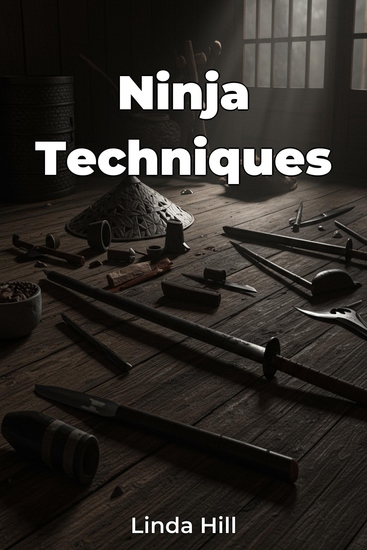
Ninja Techniques - cover

Ninja Techniques

Linda Hill

Traducteur A AI

Maison d'édition: Publifye

  • 0
  • 0
  • 0

Synopsis

Ninja Techniques explores the true history of the ninja in feudal Japan, moving beyond popular myths to uncover their real skills and societal role. It examines their expertise in espionage, sabotage, and assassination, revealing how these skills were crucial for survival and influence in a turbulent political landscape. The book highlights that ninjas often operated outside the strict samurai hierarchy, serving various lords and influencing key historical events through unconventional warfare.

 
The book's unique value lies in its commitment to separating fact from fiction. By drawing upon translated ninja manuals, historical chronicles, and archaeological evidence, it presents a balanced and evidence-based account. For example, ninja training involved not only combat but also disguise and infiltration techniques, reflecting their need for stealth and adaptability. This approach allows readers to understand the ninja's complex position within Japanese history and culture.

 
The book progresses by first establishing the historical context of feudal Japan. It then analyzes ninja training and techniques, explores their social and political roles, and finally examines their transformation into cultural icons. Ninja Techniques ultimately provides a deeper understanding of the ninja's lasting impact and global influence.
Disponible depuis: 10/03/2025.
Longueur d'impression: 63 pages.

D'autres livres qui pourraient vous intéresser

  • Brave Parenting - A Buddhist-Inspired Guide to Raising Emotionally Resilient Children - cover

    Brave Parenting - A...

    Krissy Pozatek

    • 0
    • 0
    • 0
    “Writing from her own extensive experience and psychological wisdom, Krissy shows us how children can develop the resilience, confidence, and creativity that enables them to find true joy in living.”—Tara Brach 
    How do we build resilient children who can handle life's challenges? 
    As parents, we often feel that our role is to protect our children from the world: to cushion them when they fall, to lift them over obstacles, and to remove sharp rocks from their path. But controlling a child’s entire environment and keeping all pain at bay isn’t feasible—we can’t prepare the world for our children, so instead we should focus on preparing our children for the world. 
     “The solution is not removing impediments from our children’s lives,” writes Krissy Pozatek, “it is compassionately encouraging them to be brave.” We need to show our kids how to navigate their own terrain. If our kids face small hurdles, small pains, at a young age and learn to overcome these obstacles, they will be much better equipped to face larger trouble later in life. 
     Early lessons in problem solving teach self-confidence and self-reliance—and show us that our kids are tougher than we think. Krissy draws her lessons from her experience guiding children in wilderness therapy and from her Buddhist practice—showing us that all life is as unpredictable as mountain weather, that impermanence is the only constant, and that the most loving act a parent can do is fearlessly ready their child to face the wilderness. For parents of children of all ages.
    Voir livre
  • Dutch History - The Age of Change in the Netherlands - cover

    Dutch History - The Age of...

    Kelly Mass

    • 0
    • 0
    • 0
    The following topics will be discussed in this combo of books: 
    1: In this book, we will shed more light on the Batavians, a people in history with much bravery, innovation, and determination to form a republic with freedom for its citizens, with opposing enemies they resisted. The Republic of the 7 United Netherlands was followed by the Batavian Republic. It started on January nineteenth, 1795, and ended on June fifth, 1806, with Louis I's succession to the Dutch throne. The political, financial, and social modifications that took place at the time of the Batavian Republic's short existence have left an enduring mark. The old Dutch Republic's confederal structure was completely changed by a unitary state. The constitution of 1798, which was developed for the first time in Dutch history, was really democratic. 
    2: The Netherlands had a great century in the 1600s, until it all ended about three-fourths along the way. Trading was all around, business was good. Their vast empire that reached across the world made money from spices, raw materials, metals, and so much more, with an extensive network of ships, merchants, and an entire army fleet. The Dutch Golden Era was a time in Dutch history varying circa from 1588 (the start of the Dutch Republic) to 1672 (the "Catastrophe Year"), throughout which Dutch trade, science, and art, and the Dutch armed force, were amongst the world's best. The Eighty Years' War, which ended in 1648, controls the first area. 
    3: Undoubtedly, Napoleon, the French revolutionist and emperor has left his mark on European history. His vast empire stretched all over the continent, his unique image and posture have been emulated by many, and his infamous defeat in Russia was a precursor of the defeat Hitler experienced for similar reasons.
    Voir livre
  • Christopher Columbus and the Afrikan Holocaust: Slavery and the Rise of European Capitalism - cover

    Christopher Columbus and the...

    John Henrik Clarke

    • 0
    • 0
    • 0
    Christopher Columbus and the Afrikan Holocaust: Slavery and the Rise of European Capitalism by John Henrik Clarke is a powerful look at how Columbus's voyages changed history.  
    Clarke explains how Columbus’s arrival in the Americas led to slavery, colonialism, and the suffering of African and Indigenous peoples. He explores how European wealth and power grew through the transatlantic slave trade and systemic oppression. This audiobook challenges traditional history and sheds light on the overlooked realities of global events. A must-listen for anyone seeking a deeper understanding of the past and its lasting effects.
    Voir livre
  • The Civic Bargain - How Democracy Survives - cover

    The Civic Bargain - How...

    Josiah Ober, Brook Manville

    • 0
    • 0
    • 0
    A powerful case for democracy and how it can adapt and survive—if we want it to 


    Is democracy in trouble, perhaps even dying? Pundits say so, and polls show that most Americans believe that their country's system of governance is being "tested" or is "under attack." But is the future of democracy necessarily so dire? In The Civic Bargain, Brook Manville and Josiah Ober push back against the prevailing pessimism about the fate of democracy around the world. Instead of an epitaph for democracy, they offer a guide for democratic renewal, calling on citizens to recommit to a "civic bargain" with one another to guarantee civic rights of freedom, equality, and dignity. That bargain also requires them to fulfill the duties of democratic citizenship: governing themselves with no "boss" except one another, embracing compromise, treating each other as civic friends, and investing in civic education for each rising generation. 


    Manville and Ober trace the long progression toward self-government through four key moments in democracy's history: Classical Athens, Republican Rome, Great Britain's constitutional monarchy, and America's founding. Comparing what worked and what failed in each case, they draw out lessons for how modern democracies can survive and thrive.
    Voir livre
  • Ecce Homo - cover

    Ecce Homo

    Friedrich Nietzsche

    • 0
    • 0
    • 0
    “Without music, life would be a mistake.”“It is not a lack of love, but a lack of friendship that makes unhappy marriages.” ...“That which does not kill us makes us stronger.”“I'm not upset that you lied to me, I'm upset that from now on I can't believe you.” 
    Nietzsche 
     
    The philosopher Friedrich Nietzsche's autobiography, Ecce Homo, was the last prose work that he wrote before his illness in 1889. Coming at the end of an extraordinarily productive year in which he had produced The Twilight of the Idols and The Antichrist, Nietzsche shuns any pretense at modesty with chapter titles include “Why I am so Wise”, “Why I am so Clever” and “Why I Write Such Excellent Books”. His translator Anthony M. Ludovici states, Ecce Homo “is not only a coping-stone worthy of the wonderful creations of that year, but also a fitting conclusion to his whole life, in the form of a grand summing up of his character as a man, his purpose as a reformer, and his achievement as a thinker. 
     
    Friedrich Wilhelm Nietzsche was a German philosopher, cultural critic and philologist whose work has exerted a profound influence on modern intellectual history. He began his career as a classical philologist before turning to philosophy.
    Voir livre
  • The History of Spain - Conquests Colonization and Powerful Monarchs - cover

    The History of Spain - Conquests...

    Secrets of History

    • 0
    • 0
    • 0
    Uncover the secrets of Spain's past with this amazing book!  
    From its earliest settlers to the modern era, discover the fascinating stories and cultures that have shaped Spain over the centuries. Learn how the country has developed through empires, wars, and revolutions, and how the unique culture of today has been shaped by its history.  
    Spanning centuries of conquest, revolution, and civil war, the book dives into the history of the Spanish people and their impact on the world around them. Along with discussing famous historical figures, such as Christopher Columbus and Queen Isabella I of Castile, it delves into lesser-known individuals and events that shaped Spain's history.  
    Get this book today and explore the captivating history of Spain!
    Voir livre