Join us on a literary world trip!
Add this book to bookshelf
Grey
Write a new comment Default profile 50px
Grey
Subscribe to read the full book or read the first pages for free!
All characters reduced
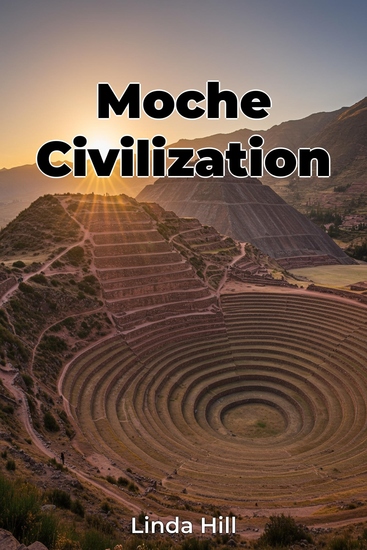
Moche Civilization - cover

Moche Civilization

Linda Hill

Translator A Ai

Publisher: Publifye

  • 0
  • 0
  • 0

Summary

"Moche Civilization" explores the fascinating pre-Columbian Andean society that thrived in ancient Peru for over six centuries. Going beyond the traditional view of the Moche as just a "warrior culture", the book delves into the intricate connections between their advanced irrigation systems, distinctive pottery, and societal structure. The Moche people were remarkably adept at environmental management, building sophisticated irrigation networks to cultivate crops in an arid landscape, demonstrating a crucial aspect of their ingenuity and helping sustain a thriving population.

 
The book examines the Moche's artistic prowess through their pottery, which served as a medium for religious expression, social hierarchy, and historical narratives. This pottery reveals a complex society with deeply ingrained beliefs and social strata.

 
The book is structured in four parts, beginning with the historical context, then progressing to their agricultural practices, artistic achievements, and finally, an exploration of their warrior ethos. This approach provides a holistic view of Moche society, its achievements, and its eventual decline. By drawing upon archaeological evidence and recent findings, the book offers a fresh perspective on the Moche, emphasizing the interconnectedness of their environmental adaptations, artistic traditions, and militaristic culture. It provides a nuanced understanding of their social, economic, and ideological systems, making it a valuable resource for students and anyone interested in ancient civilizations and pre-Columbian history.
Available since: 03/29/2025.
Print length: 66 pages.

Other books that might interest you

  • On Language - cover

    On Language

    John Grant

    • 0
    • 0
    • 0
    As one of the most strikingly original lyricists going, it's entirely unsurprising that John Grant has a life-long interest in language and languages—from the academic solace he found in his school days  upon discovering his talent for German, through to his love of Russian and the Icelandic language of his current home, Grant has found succour, relief and stimulation in words and how they work. In this fascinating interview with the writer Will Burns, John Grant's passion for language provides the foundations for hilarious and heartbreaking digressions on his own life, on politics, on history, on music and much more—John Grant On Language functions as a compelling and unique portrait of an artist in, and through, words.
    Show book
  • The Stoic Man's Guide - Daily Strategies for Modern Men: How to Embrace Timeless Stoicism for Happiness Resilience and Well-Being - cover

    The Stoic Man's Guide - Daily...

    William T. Harrison

    • 0
    • 0
    • 0
    Wrestling with life's greatest demands? Find answers within yourself with a little Stoic guidance. 
    Marcus Aurelius penned many of his incredible thoughts working off of Ancient Stoic teachings. It's unreal how you can still grasp his concepts and apply them to your daily problems! 
    Modern problems require modern Stoicism. Often, men find themselves as the first line of defense when it comes to family and professional problems. These circumstances are out of anyone's control, and just because you can "handle" it, doesn't mean you must sacrifice your security and happiness for it. 
    Stoicism guides you to find help, face adversity with grace, and build resilience over time. 
    Author William T. Harrison shows how the works of Ancient Greek philosophers are incredibly fluid and relatable to the 21st century man. Having navigated through difficult times, Harrison emerges revitalized and experienced. His publication presents you with exceptional Stoic strategies to work on individual growth, bold compassion, and a more meaningful life. 
    In The Stoic Man's Guide, find out how to: 
    ●      understand healthy masculinity 
    ●      connect rationality and emotional intelligence 
    ●      develop strong leadership skills 
    ●      practice personal accountability 
    ●      improve communication in relationships 
    ●      build compatible and healthy routines for life 
    And more! 
    Be a Stoic and utilize limited resources to your advantage. Transform the demanding energy of life into opportunistic challenges. 
    Take home a copy of The Stoic Man's Guide and uncover the strengths that have been within you all along!
    Show book
  • The Japanese Way of Parenting - And What It Taught Me About Raising (Mostly) Calm Caring Capable Kids - cover

    The Japanese Way of Parenting -...

    Lisa Katayama

    • 0
    • 0
    • 0
    In this fascinating half-memoir, half-parenting guide, Lisa Katayama shares her quest to raise her American kids using Japanese parenting principles which combine unconditional love with unwavering rules While Bringing Up Bébé introduced readers to the French way of raising obedient children who are seen but not heard, and Battle Hymn of the Tiger Mother shared an in iron-will parental approach to creating high-achieving kids, Lisa Katayama’s Parenting the Japanese Way brings the principles of Japanese parenting to Americans, emphasizing unconditional love, community, and harmony with nature, to nurture children who are well-behaved, respectful, and creative.  Japan is well known for its culture of respect, technological innovations, delicious food, peaceful vibes, and deep connection to nature. The source code to all of it is the way the Japanese view childhood--as a time of rigorous training for societal participation, where they learn from the start that are just one part of a larger whole. Katayama takes readers along with her as she travels back and forth from her motherland of Tokyo to the East Bay of California to expose her two American, mixed-race kids to the Japanese way of parenting. Readers will be inspired to take some of her insights--the importance of routine and ritual or the benefits of simplified spaces or the power in making everyday things cute  -- and adopt them into their own parenting, no matter where they live.
    Show book
  • Voices of Dissent - An Essay (Unabridged) - cover

    Voices of Dissent - An Essay...

    Romila Thapar

    • 0
    • 0
    • 0
    Written by one of India's best-known public intellectuals, this book is essential reading for anyone interested in India's fascinating history as well as the direction in which the nation is headed.
    
    People have argued since time immemorial. Disagreement is a part of life, of human experience. But we now live in times when any form of protest in India is marked as anti-Indian and met with arguments that the very concept of dissent was imported into India from the West. As Romila Thapar explores in her timely historical essay, however, dissent has a long history in the subcontinent, even if its forms have evolved through the centuries.
     
    In Voices of Dissent: An Essay, Thapar looks at the articulation of nonviolent dissent and relates it to various pivotal moments throughout India's history. Beginning with Vedic times, she takes us from the second to the first millennium BCE, to the emergence of groups that were jointly called the Shramanas-the Jainas, Buddhists, and Ajivikas. Going forward in time, she also explores the views of the Bhakti sants and others of the fifteenth and sixteenth centuries and brings us to a major moment of dissent that helped to establish a free and democratic India: Mahatma Gandhi's satyagraha. Then Thapar places in context the recent peaceful protests against India's new, controversial citizenship law, maintaining that dissent in our time must be opposed to injustice and supportive of democratic rights so that society may change for the better.
    Show book
  • The Erich Fromm Reader - Readings Selected and Edited by Rainer Funk - cover

    The Erich Fromm Reader -...

    Erich Fromm

    • 0
    • 0
    • 0
    “Fromm crossed the boundaries of traditional disciplines to expound his view on the alienation of man in an increasingly technological world.” —Newsweek Erich Fromm’s basic idea was to look at the individual as a social being, and to look at society as an ensemble of many individuals who have not only mutual ideas and convictions based on a common practice of life, but also a shared psychic structure. With his concept of “social character,” Fromm created a new interdisciplinary thinking presented in this compendium.The Erich Fromm Reader exhibits the true genius of an original thinker in seeing the connections between overlapping knowledge from many different fields. Here, interdisciplinarity is not only a lip service but the impact of Erich Fromm’s unique social psychological notion.  
    Show book
  • Pancho Villa - The Bandit That Fought in the Mexican Revolution - cover

    Pancho Villa - The Bandit That...

    Kelly Mass

    • 0
    • 0
    • 0
    Francisco Villa, better known as Pancho Villa, was a key figure in the Mexican Revolution, known for his transformation from a bandit to one of the revolution’s most influential commanders. Villa’s rise to prominence in the early 20th century marked him as a central player in the violent upheavals that reshaped Mexico’s political landscape. In 1911, Villa became a significant actor in the revolutionary violence that led to the overthrow of President Porfirio Díaz, ushering in Francisco I. Madero’s government. Villa, initially a leader of outlaw groups, aligned himself with Madero’s revolutionary cause, contributing to the instability that culminated in the fall of Díaz’s long-standing dictatorship. 
    The power dynamics in the revolution shifted again when General Victoriano Huerta attempted a right-wing coup in February 1913. As Madero’s government crumbled under Huerta’s forces, Madero led anti-Huerta soldiers in the Constitutionalist Army from 1913 to 1914. The civilian governor of Coahuila, Venustiano Carranza, became the leader of this anti-Huerta coalition. After Huerta’s eventual defeat and exile in July 1914, Villa and Carranza began to diverge politically. Villa, alongside other revolutionary leaders, assembled a gathering of generals in a bid to form a new government, but the resulting coalition was weak and inefficient. Though Villa and Emiliano Zapata, another revolutionary leader, were formally allied during this period, their partnership was largely theoretical. Both men supported land reform, but Villa’s reforms remained unrealized during his tenure of influence.
    Show book