Join us on a literary world trip!
Add this book to bookshelf
Grey
Write a new comment Default profile 50px
Grey
Subscribe to read the full book or read the first pages for free!
All characters reduced
Hero Constructs - cover

Hero Constructs

Linda Hill

Translator A ai

Publisher: Publifye

  • 0
  • 0
  • 0

Summary

"Hero Constructs" explores the fascinating intersection of history and myth by examining how ancient societies constructed their heroes. It argues that these heroic figures, far from being simple reflections of individual bravery, were carefully crafted representations of societal values, anxieties, and power structures. By analyzing narratives from ancient Greece, Mesopotamia, and Egypt, the book reveals how cultures used hero archetypes to shape collective identities and legitimize authority. For instance, figures like Gilgamesh and Achilles, though separated by time, both grappled with themes of mortality and leadership, reflecting the concerns of their respective societies.

 
The book begins by establishing theoretical frameworks for understanding heroism, drawing from anthropology, sociology, and literary criticism. It then progresses through detailed case studies, analyzing textual and archaeological evidence to uncover the socio-political context of each hero. "Hero Constructs" challenges traditional interpretations by emphasizing the ways in which heroic figures were shaped by their societies.

 
Ultimately, the book offers a comparative analysis, highlighting common themes and cultural variations, providing a nuanced understanding of heroism's enduring relevance in world history. This approach enables a deeper interpretation of ancient texts and artifacts, moving beyond romanticized notions to grasp the complex realities of the ancient world.
Available since: 05/06/2025.
Print length: 56 pages.
Other books that might interest you

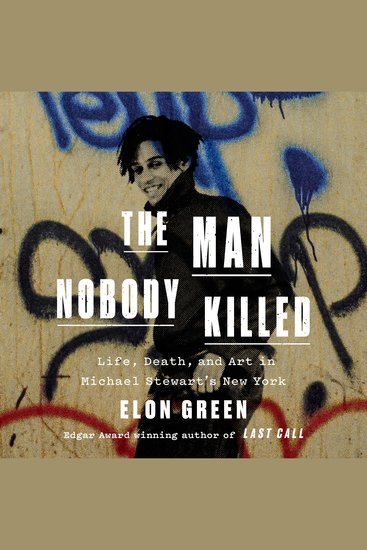
  • The Man Nobody Killed - Life Death and Art in Michael Stewart's New York - cover

    The Man Nobody Killed - Life...

    Elon Green

    • 0
    • 0
    • 0
    “Elon Green’s grimly vivid telling of this story and its aftermath in The Man Nobody Killed is part elegy for Stewart himself, part portrait of the city that failed him… The events recounted in Green’s swift, unsparing book are as timely as ever; one can only hope they still have the power to shock.” —The New York Times Book Review“A powerful reclamation.” —AudioFileThe first comprehensive audiobook about Michael Stewart, the young Black artist and model who was the victim of a fatal assault by police in 1983, from Elon Green, the Edgar Award-winning author of Last Call.This program, read by multi Audie award-winning narrator Dion Graham, features a bonus conversation between the author and gallerist Patrick Fox, who rented Michael Stewart studio space in New York City.At twenty-five years old, Michael Stewart was a young Black aspiring artist, deejay, and model, looking to make a name for himself in the vibrant downtown art scene of the early 1980’s New York City. On September 15, 1983, he was brutally beaten by New York City Transit Authority police for allegedly tagging a 14th Street subway station wall.Witnesses reported officers beating him with billy clubs and choking him with a nightstick. Stewart arrived at Bellevue Hospital hog-tied with no heartbeat and died after thirteen days in a coma. This was, at that point, the most widely noticed act of police brutality in the city's history. The Man Nobody Killed recounts the cultural impact of Michael Stewart’s life and death.The Stewart case quickly catalyzed movements across multiple communities. It became a rallying cry, taken up by artists and singers including Madonna, Keith Haring, Spike Lee, and Jean-Michel Basquiat, tabloid legends such as Jimmy Breslin and Murray Kempton, and the pioneering local news reporter, Gabe Pressman. The Stewart family and the downtown arts community of 1980s New York demanded justice for Michael, leading to multiple investigations into the circumstances of his wrongful death.Elon Green, the Edgar Award–winning author of Last Call, presents the first comprehensive narrative account of Michael Stewart's life and killing, the subsequent court proceedings, and the artistic aftermath. In the vein of The Short and Tragic Life of Robert Peace and His Name is George Floyd, Green brings us the story of a promising life cut short and a vivid snapshot of the world surrounding this loss. A tragedy set in stark contrast against the hope, activism, and creativity of the 1980’s New York City art scene, The Man Nobody Killed serves as a poignant reminder of recurring horrors in American history and explores how, and for whom, the justice system fails.A Macmillan Audio production from Celadon Books.
    Show book
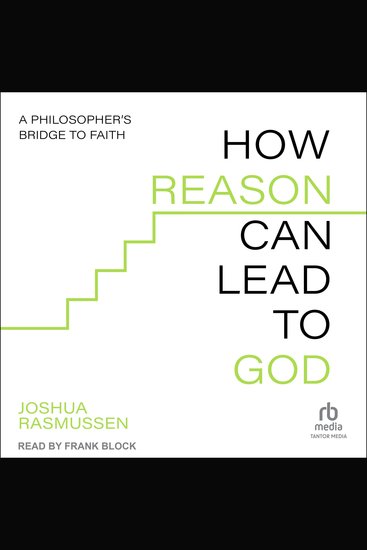
  • How Reason Can Lead to God - A Philosopher's Bridge to Faith - cover

    How Reason Can Lead to God - A...

    Joshua Rasmussen

    • 0
    • 0
    • 0
    Do you seek the truth? 


    Do you value reason, science, and independent thinking? Are you skeptical of beliefs that people maintain merely "on faith," yet you remain interested in the big questions of life? Do you hope there could be a greater purpose to the universe, if only that were realistic? 


    If so, then philosopher Joshua Rasmussen can encourage you in your journey. Beginning with his own story of losing faith and the belief in any ultimate purpose in life, he then builds a bridge to a series of universal truths about ultimate reality. Using only the instruments of reason and common experience, Rasmussen constructs a pathway—step by step, brick by brick—that he argues can lead to meaning and, ultimately, a vision of God.
    Show book
  • The Secret Files - Bill De Blasio The NYPD and The Broken Promises of Police Reform - cover

    The Secret Files - Bill De...

    Michael Hayes

    • 0
    • 0
    • 0
    ABOUT THIS BOOK... 
     
    An unprecedented breakdown of the NYPD’s powerful network of police unions, pro-police lawyers, and top brass who work relentlessly to shield police officers from any real accountability 
    For readers of long-form, hard-hitting journalistic exposés like We Own This City, a compelling look at how we do—and don't—hold police responsible in America, by an award-winning progressive reporter covering the NYPD police beat 
    In 2018, reporter Michael Hayes uncovered a major story about how the NYPD was not only turning a blind eye to police misconduct, but also allowing hundreds of officers with severe misconduct charges to remain on the force. In the aftermath of that story, then-Mayor Bill de Blasio attempted to reform the department only to abandon his plans. 
    While de Blasio may have suffered a political setback, it’s New Yorkers who are the true victims of this failure to deliver accountability and transparency. The state has a law that specifically prevents the public from learning about concealed police records. New Yorkers are increasingly distrustful of the police after witnessing their loved ones being targeted, brutalized, and murdered with near impunity. 
    Hayes takes readers inside decades of police corruption and controversial laws, chronicling the stories of the families and activists who have had enough. He makes a compelling case for the limits of reform in the aftermath of the major Black Lives Matter rallies following the murder of George Floyd and growing calls to defund the police.
    Show book
  • Hearty - On Cooking Eating and Growing Food for Pleasure and Subsistence - cover

    Hearty - On Cooking Eating and...

    Andrea Bennett

    • 0
    • 0
    • 0
    Thoughtful, wide-ranging essays exploring food as a source of pleasure, practical creativity, and sustenance
    		 
    Food is the primary way andrea bennett connects with the world. They worked in the restaurant industry for a decade, and though they don’t eat much meat and can’t eat gluten, they take as much pleasure in food as Jeffrey Steingarten, Anthony Bourdain, or Guy Fieri. When they want to show someone they care, they cook them a meal. The essays in Hearty offer a snapshot of the North American cultural relationship to food and eating. Hearty dives deep into specific foods, such as chutney, carrots, and ice cream, but also explores appetite and desire in food media, the art of substitution, seed saving and the triumphs and trials of being a home gardener, how the food system works (and doesn’t), and complex societal narratives around health and pleasure. Combining journalism, cultural commentary, and personal reflection, Hearty follows bennett’s curiosity into kitchens, gardens, fields, and factories, offering a compassionate and compelling perspective on food from seed to table.
    Show book
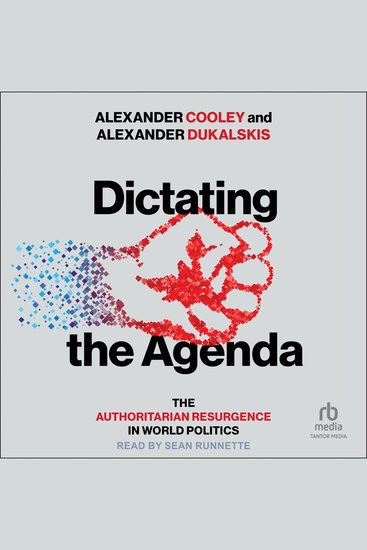
  • Dictating the Agenda - The Authoritarian Resurgence in World Politics - cover

    Dictating the Agenda - The...

    alexander cooley, Alexander...

    • 0
    • 0
    • 0
    Following the end of the Cold War, the world experienced a remarkable wave of democratization. Over the next two decades, numerous authoritarian regimes transitioned to democracies, and it seemed that authoritarianism as a political model was fading. But as recent events have shown, things have clearly changed. 


    In Dictating the Agenda, authors Alexander Cooley and Alexander Dukalskis reveal how today's authoritarian states are actively countering liberal ideas and advocacy surrounding human rights and democracy across various global governance domains. The transformed global context has unlocked for authoritarian states the possibility to contend with Western liberal soft power in new, traditionally "non-political" ways. Cooley and Dukalskis ultimately advance a theory of authoritarian snapback, the process in which non-democratic states limit the transnational resonance of liberal ideas at home and advance anti-liberal norms and ideas into the global public sphere. 


    Drawing from a range of evidence, this book doesn't just reveal the limits of the liberal influence taken for granted across the world. It offers a novel theory of how authoritarian governments figured out how to exploit and repurpose the same actors, tools, and norms that once exclusively promoted and sustained US-backed liberalism.
    Show book
  • Understanding Machiavelli’s The Prince - cover

    Understanding Machiavelli’s The...

    Denis Collin

    • 0
    • 0
    • 0
    Machiavelli has a reputation as an immoral thinker. His most famous work, The Prince, is oftemnm criticized as being a manual for political cunning and cynicism.
    On the contrary, Machiavelli invites us to face up to political and human reality. Faced with illusions and moralistic rhetoric, we must seek the truth and adopt a scientific approach to seriously reflect upon action.
    This introduction provides us with the keys to understanding The Prince, a foundational book of modern political thought, and the relevance of its teachings for our contemporary societies.
    Show book