Join us on a literary world trip!
Add this book to bookshelf
Grey
Write a new comment Default profile 50px
Grey
Subscribe to read the full book or read the first pages for free!
All characters reduced
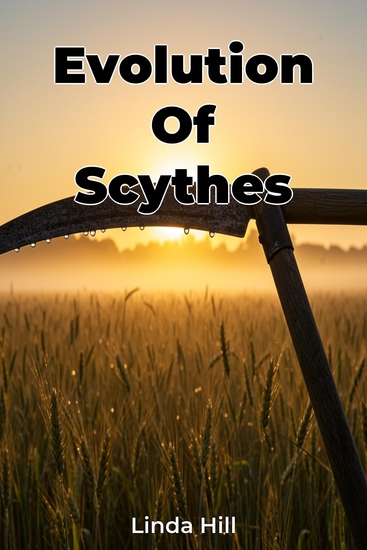
Evolution Of Scythes - cover

Evolution Of Scythes

Linda Hill

Translator A AI

Publisher: Publifye

  • 0
  • 0
  • 0

Summary

Evolution of Scythes explores the surprisingly influential history of the scythe, a tool that shaped agricultural practices, social structures, and even warfare. This book traces the scythe’s journey from its rudimentary origins to its widespread use as a primary harvesting implement across diverse cultures. Discover how this seemingly simple tool played a crucial role in the evolution of agricultural technology and profoundly impacted human civilization.

 
The book examines the scythe’s technological evolution, its socio-economic impact on rural societies, and its varied cultural symbolism. Beginning with the pre-scythe era and the tools that preceded it, such as sickles and reaping hooks, the book explores how environmental factors, social needs, and cultural adaptations shaped the scythe's form and function.

 
Through historical records, ethnographic studies, and cultural artifacts, Evolution of Scythes offers a holistic understanding of the scythe's enduring legacy. The book is carefully structured, first introducing the basic types of scythes and their components, before moving into their historical development. Later sections cover the socio-economic impacts, and then cultural dimensions, examining the symbolism of the scythe in art, literature, and folklore.

 
This interdisciplinary approach, combined with an accessible yet academically rigorous tone, makes this book a valuable read for anyone interested in agricultural history, technology, or the social and cultural history of rural life.
Available since: 02/21/2025.
Print length: 68 pages.
Other books that might interest you

  • A Rare Recording of President John F Kennedy’s Last Speech Before His Assassination - cover

    A Rare Recording of President...

    President John Fitzgerald Kennedy

    • 0
    • 0
    • 0
    On November 22, 1963, President John F. Kennedy made a speech to the Fort Worth, Texas, Chamber of Commerce; he was assassinated later that afternoon. Kennedy had traveled to the state to unite Texas Democrats where party leaders were feuding and extremists were contributing to political tensions. Kennedy knew an intra-party feud in Texas could jeopardize his chances of carrying the state for his 1964 re-election campaign.
    Show book
  • Doctor's In The: Treating America's Greatest Cyber Security Threat - cover

    Doctor's In The: Treating...

    Alan D. Weinberger, CJ Arlotta

    • 0
    • 0
    • 0
    About the Book 
    Many have compared the “Roaring Twenties” from the last century, to the 2020s of the 21st century. The new freedoms of this era (similar to 100 years ago) have caused disruptions, mainly as the Internet ‘flattens’ our world and accelerates outcomes that can be felt around the globe. One certainty, no matter how the new economic, political, and social structures will evolve, is the appearance of bad actors that will continue to use cyber warfare and cyber insecurity to their benefit. This book details in an easy-to-read format how we can best protect our “life, liberty and pursuit of happiness” in our new digital age.
    Show book
  • Thus Spoke Zaratustra - cover

    Thus Spoke Zaratustra

    Friedrich Nietzsche

    • 0
    • 0
    • 0
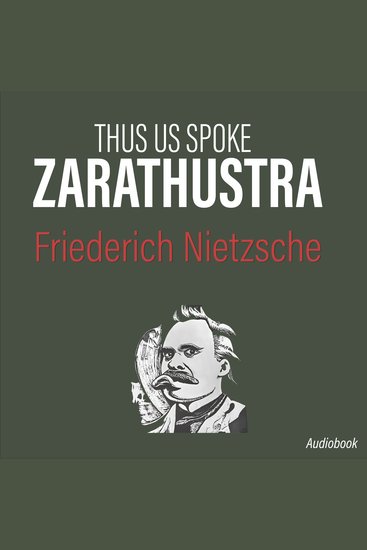
    "Thus Spoke Zarathustra" is a philosophical novel written by German philosopher Friedrich Nietzsche, first published in 1883. The book is divided into four parts and tells the story of a fictional character named Zarathustra, who is on a journey to share his philosophy with the people. 
    The book is often considered Nietzsche's masterpiece and explores themes such as the death of God, the will to power, and the Übermensch (or superman). Through Zarathustra's journey, Nietzsche presents his ideas on morality, religion, and the nature of humanity. 
    The character of Zarathustra is inspired by the historical figure of Zarathustra, who founded the ancient Persian religion of Zoroastrianism. However, Nietzsche's Zarathustra is not a religious prophet but a philosopher who seeks to share his wisdom with humanity. 
    The style of "Thus Spoke Zarathustra" is highly poetic and symbolic, often using metaphorical language to express complex philosophical ideas. The book has been highly influential in modern philosophy, literature, and art, and its impact can be seen in the works of many later thinkers, such as Martin Heidegger and Jean-Paul Sartre.
    Show book
  • Diadochi The: The History of Alexander the Great’s Successors and the Wars that Divided His Empire - cover

    Diadochi The: The History of...

    Editors Charles River

    • 0
    • 0
    • 0
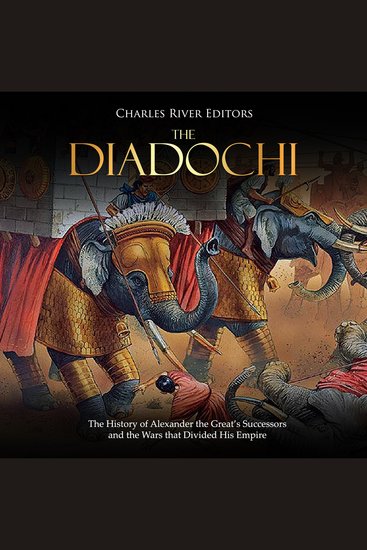
    On his deathbed, some ancient historians claimed that when he was pressed to name a successor, Alexander the Great muttered that his empire should go “to the strongest”. Other sources claim that he passed his signet ring to his general Perdiccas, thereby naming him successor, but whatever his choices were or may have been, they were ignored. Alexander’s generals, all of them with the loyalty of their own corps at their backs, would tear each other apart in a vicious internal struggle that lasted almost half a century before four factions emerged victorious: Macedonia, the Seleucid Empire in the east, the Kingdom of Pergamon in Asia Minor, and the Ptolemaic dynasty in Egypt. During the course of these wars, Alexander’s only heir, the posthumously born Alexander IV, was murdered, extinguishing his bloodline for ever. 
    Although it was an incredibly important period in world history, it is sometimes as confusing as it is frustrating for historians because the allegiances of the generals changed constantly and historical sources are often biased in some regards and utterly lacking in others. Although none of these men were able to replicate Alexander the Great’s territorial success, a few carved out sizable empires and were able to establish long-lasting political dynasties. Ptolemy I brought Egypt back to a central position of power in the region, and Seleucus I built a strong empire on the ruins of ancient Babylonia, but other generals, such as Perdiccas, were killed early on in the fighting and slipped into relative obscurity. Some of the Macedonian generals had a significant impact on the region during their lifetimes, but they left no heirs to carry on their political memories. 
    This audiobook chronicles how Alexander’s legendary conquests shaped the next several centuries, and how the successor generals carved out various empires.
    Show book
  • A Rare Recording of Mr Fred Rogers - cover

    A Rare Recording of Mr Fred Rogers

    Fred Rogers

    • 0
    • 0
    • 0
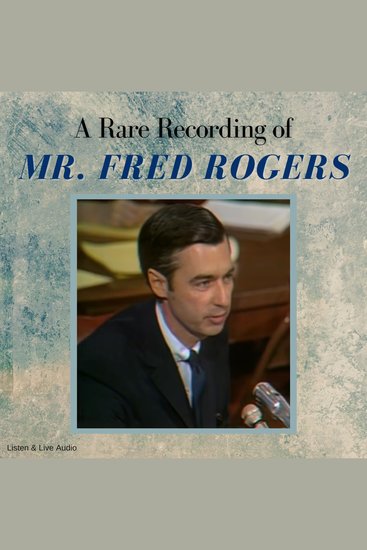
    On May 1, 1969, Fred Rogers, host of the (then) recently nationally syndicated children's television series, Mister Rogers' Neighborhood, testified before the Senate Committee on Commerce Subcommittee on Communications to defend $20 million in federal funding proposed for the newly formed non-profit Corporation for Public Broadcasting, which was at risk of being reduced to $10 million. Subcommittee chairman, Senator John Pastore (D-RI), unfamiliar with Fred Rogers, is initially indifferent towards him. Over the course of Rogers' 6 minutes of testimony, Pastore's demeanor gradually transitions to one of awe and admiration as Rogers speaks. 
     
    Fred McFeely Rogers (March 20, 1928 - February 27, 2003), better known as Mister Rogers, was an American television host, author, producer, and Presbyterian minister. He was the creator, showrunner, and host of the preschool television series Mister Rogers' Neighborhood, which ran from 1968 to 2001.
    Show book
  • Scott of the Antarctic - Performed by EDWARD FOX OBE in a dramatised setting - cover

    Scott of the Antarctic -...

    Mr Punch

    • 0
    • 0
    • 0
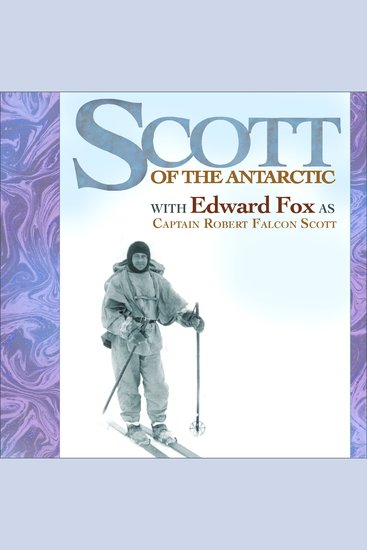
    Immerse yourself in the gripping story of Scott's ill-fated Antarctic expedition in "Scott of the Antarctic: The Diary of Captain Robert Falcon Scott," masterfully performed by the renowned Edward Fox. 
     
    This captivating audio production takes you on a journey through the courageous spirit of Scott and his crew, from their initial optimistic sea journey to Scott’s heartbreaking final entries, trapped in a blizzard just 11 miles from safety.  
     
    In 1911, Scott set out on a gruelling quest to reach the South Pole, only to discover he had been beaten to the pole by Norwegian explorer Amundsen. Facing bone-chilling temperatures and insurmountable odds, their harrowing tale unfolds. 
     
    Hear Captain Scott's own words from his diary discovered on his frozen body, stored within a weathered wallet, as he reflects on the indomitable hardihood, endurance, and courage of his companions. Don't miss this extraordinary Mr Punch Audiobook that will touch the hearts of every listener. 
     
    Also available as part of the CLASSIC LETTERS & JOURNALS BOX SET, a sixteen hour, seven-volume edition featuring the letters and journals of Lord Nelson, Charlotte Brontë, Scott of the Antarctic, Queen Victoria, Lord Byron, Jane Austen and Dorothy Wordsworth. Performed by Charles Dance, Imogen Stubbs, Edward Fox, Virginia McKenna, Robert Powell, Fiona Shaw and Jenny Agutter. 
     
    © & ℗ 2022 Mr Punch Audiobooks Ltd
    Show book