Join us on a literary world trip!
Add this book to bookshelf
Grey
Write a new comment Default profile 50px
Grey
Subscribe to read the full book or read the first pages for free!
All characters reduced
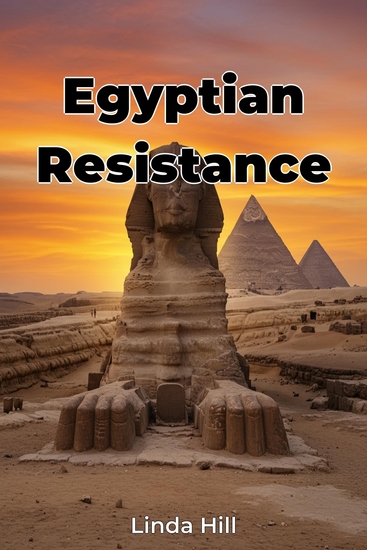
Egyptian Resistance - cover

Egyptian Resistance

Linda Hill

Translator A Ai

Publisher: Publifye

  • 0
  • 0
  • 0

Summary

Egyptian Resistance explores Egypt's long history of defying foreign rule, from the Persian conquests to the Ottoman era. It examines how Egyptians repeatedly rose against seemingly insurmountable odds, highlighting the nation's resilience and the enduring quest for sovereignty. The book reveals recurring patterns of foreign invasion and occupation that shaped Egypt's history and the internal factors fueling resistance movements. For example, resistance wasn't solely a reaction to external forces; it also reflected Egyptians' aspirations for self-determination and internal reform. The book analyzes key periods, including the Roman period, spotlighting cultural and religious tensions that sparked revolts. It also examines the Ottoman era, focusing on the dynamics of Ottoman governance and the emergence of various forms of resistance, from armed rebellion to cultural preservation. By exploring these historical contexts, the book argues that cycles of foreign domination and resistance have fundamentally shaped Egyptian national identity, fostering a deep-seated commitment to self-determination. Egyptian Resistance begins by setting the stage with Egypt's geographic, social, and political landscape, then progresses chronologically through the Persian, Roman, and Ottoman periods, concluding with the legacy and continued relevance of these movements.
Available since: 03/20/2025.
Print length: 52 pages.

Other books that might interest you

  • Triumph Over Turmoil - Thriving Beyond Abuse and Adversity - cover

    Triumph Over Turmoil - Thriving...

    Oscar. L. Allen Jr.

    • 0
    • 0
    • 0
    Triumph Over Turmoil: Thriving Beyond Abuse and Adversity tells the powerful story of Oscar.L. Allen, Jr, a man who turned his painful beginnings into a life of achievement. Born as the result of a tragic event, Oscar faced numerous challenges from the start. Growing up in a difficult environment, he encountered poverty, abuse, and the stigma of being an illegitimate child. Despite these obstacles, Oscar’s journey is one of hope and resilience. He shares how he dealt with the challenges of his upbringing, finding strength within himself and support from those around him. Through hard work and determination, he earned a B.A. Degree, Business Administration, and built a successful career in the insurance industry. This book is not just a personal narrative but a guiding light for others who have faced similar struggles. Oscar’s story serves as a reminder that, regardless of where you begin, it’s possible to rise above your circumstances. With honesty and clarity, he aims to inspire others to embrace their own journeys and to educate readers about the realities faced by many. Join Oscar on this remarkable path from pain to power, and discover the strength in survival.
    Show book
  • Overcoming Shame-Based Social Anxiety and Shyness - A CBT Workbook to Move Past Feelings of Self-Consciousness or Defectiveness and Live with Confidence - cover

    Overcoming Shame-Based Social...

    LICSW Larry Cohen, PhD Richard...

    • 0
    • 0
    • 0
    Do you struggle with shyness or social anxiety? Does the fear of being judged, embarrassed, or rejected interfere with your day-to-day life, or keep you from social gatherings, seeking out friendships, and pursuing romantic relationships? Shame is a major driving force behind shyness and social anxiety, and it stems from the core belief that you are fundamentally flawed or unlikable. Over time, this belief can have a devastating impact on life, work, and relationships. So, how can you boost your confidence, courage, and self-esteem? 


    Written by the cofounder of the National Social Anxiety Center and drawn from evidence-based cognitive behavioral therapy (CBT), this comprehensive guide empowers you with the tools you need to break the cycle of shame, shyness, and social anxiety, and finally overcome the self-sabotaging beliefs that are holding you back. You'll learn proven-effective skills for challenging self-critical thoughts, as well as strategies for addressing the shame at the root of your social fears. Finally, you'll discover how transforming negative beliefs about yourself is the key to minimizing anxiety, improving your mood, jump-starting your self-confidence, and protecting yourself against old, self-defeating thinking habits. With the strategies outlined in this guide, you can replace fear and shame with a more confident and capable you.
    Show book
  • France in the Early Middle Ages: The History of the Dynasties that Brought about the Kingdom of France - cover

    France in the Early Middle Ages:...

    Charles River Editors

    • 0
    • 0
    • 0
    The birth of Europe as people know it today was hardly an easy and effortless process. The end of antiquity was shaped by centuries of continuous wars, raids, and the falls and rises of empires. The most turbulent of these events happened at the beginning of the Middle Ages, from the 3rd-7th centuries CE. This was the time when the old slave society gave way to the feudal system that marked the latter Middle Ages, and it was also a period of battles between the Roman Empire and various barbarian peoples. The Roman Emperors waged wars, made and broke alliances, and bribed and negotiated with chieftains of various “barbarian” tribes to preserve the territorial integrity of their Empires. 
    After Julius Caesar conquered Gaul in the mid-1st century BCE, Augustus and his successors eventually began a program of Romanization that, in a remarkably short period of time, transformed Gaul into four provinces. All of these locales added enormously to the Roman Empire in terms of manpower, material goods and wealth. Even today, historians are amazed at how such a large population that was not without its own systems of administration and vibrant culture and tradition could so easily succumb to Rome’s pacification process, and to such an extent that, within short periods of time, the indigenous language and traditions of the Celtic peoples of Gaul were totally supplanted. The reasons why Rome was able to subjugate and then transform what was for that time an immense population of over 10 million people lie not only in its military superiority but its system of organization and its conscious program of Romanization.  
    	Ironically, even as Rome’s control over Gaul kept modern France fragmented, the medieval dynasties that sprouted up in the area looked up to the Romans as their predecessors, and in essence they would attempt to recreate the Roman Empire.
    Show book
  • Finding Joy on Death Row - Unexpected Lessons from Lives We Discarded - cover

    Finding Joy on Death Row -...

    Dewey Williams, Rev. Dr. Braxton...

    • 0
    • 0
    • 0
    Based on the sermon series that garnered top honors from Yale Divinity School, Finding Joy on Death Row is the powerful story of a broken preacher's transformative experience learning about joy from Death Row prisoners, combined with dramatic responses from more than twenty men currently sentenced to die. 


    In Finding Joy on Death Row: Unexpected Lessons from Lives We Discarded, Williams journeys into the hearts and minds of those sentenced to death, illuminating for listeners the ways in which the human spirit can suffer—and soar. Finding Joy on Death Row includes dozens of statements from those facing capital punishment. The testimonies and contemplations of those sentenced to die offer listeners a unique opportunity to hear from individuals whose lives are marked by their looming execution. And yet these prisoners have—in the midst of grim circumstances—managed to find joy. 


    As Williams serves and shepherds these prisoners, their own stories are unveiled. Williams's account of ministering within North Carolina's prison system and the handwritten statements are punctuated by glimpses into the author's own broken past. This important work will show listeners the power of joy to reach us all, the free and imprisoned alike.
    Show book
  • The Madman - His Parables and Poems - cover

    The Madman - His Parables and Poems

    Kahlil Gibran

    • 0
    • 0
    • 0
    The book explores themes of madness, love, spirituality, and the human condition. The essays are presented as the musings of a madman who wanders the streets and countrysides, speaking in riddles and offering cryptic insights into life and the nature of existence. Through the character of the madman, Gibran explores the idea that true wisdom and understanding can only be gained by stepping outside of societal norms and expectations, and by embracing the irrational and the seemingly incomprehensible. Overall, "The Madman" is a profound and moving work that challenges readers to question their own beliefs and assumptions about the world, and to embrace the madness and uncertainty that lies at the heart of the human experience. Read in English, unabridged.
    Show book
  • Byzantium and Constantinople: The History of the Ancient Greek City that Became the Byzantine Empire’s Capital - cover

    Byzantium and Constantinople:...

    Editors Charles River

    • 0
    • 0
    • 0
    Due to the importance of the Roman Empire and the offshoot Byzantine Empire, it’s often forgotten that Constantinople wasn’t chosen at random; in fact, the city already existed, and it lent its name to the empire that was subsequently centered there. Byzantium, known originally as Byzantion, was an ancient Greek city centuries before it became known as Constantinople, and the etymology of Byzantion/Byzantium is still unknown. It has been suggested that Byzantion is of Thracian origin and may be derived from the Thracian personal name Byzas, which means “he-goat.” Ancient Greek legend refers to King Byzas as the leader of the Megaran colonists and the founder of the city, but the earliest name for a city on the site is “Lygos,” which likely corresponds to an earlier Thracian settlement described by Pliny the Elder in his seminal work, Natural History: “On leaving the Dardanelles we come to the Bay of Casthenes, ...and the promontory of the Golden Horn, on which is the town of Byzantium, a free state, formerly called Lygos; it is 711 miles from Durazzo.” 
    Pliny went on to explain that Lygos was a Thracian settlement founded between the 13th and 11th centuries BCE. The site, however, was probably abandoned well before Megara founded Byzantion around 657 BCE across from Chalcedon on the Asiatic side of the Bosphorus. The city was briefly renamed Augusta Antonina in the early 3rd century CE by the Emperor Septimius Severus, who razed the city to the ground in 196 CE for supporting a rival contender in the civil war and had it rebuilt in honor of his son and successor, Marcus Aurelius Antoninus, known as Caracalla. This new name appears to have been quickly forgotten and abandoned, with the city reverting to Byzantium after the assassination of Caracalla in 217 CE, and that’s how it would be known when Constantine fatefully moved the seat of power there over a century later.
    Show book