¡Acompáñanos a viajar por el mundo de los libros!
Añadir este libro a la estantería
Grey
Escribe un nuevo comentario Default profile 50px
Grey
Suscríbete para leer el libro completo o lee las primeras páginas gratis.
All characters reduced
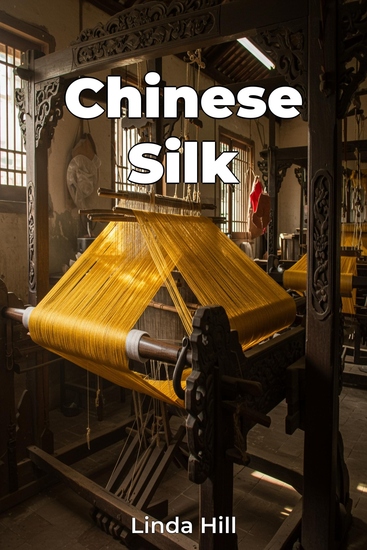
Chinese Silk - cover

Chinese Silk

Linda Hill

Traductor A AI

Editorial: Publifye

  • 0
  • 0
  • 0

Sinopsis

Chinese Silk explores the profound impact of silk from ancient China on world history. This book reveals how silk, far more than a mere fabric, became a catalyst for economic growth, cultural exchange, and diplomatic engagement. Silk production was a meticulous process, from the cultivation of silkworms to intricate weaving techniques, and it significantly shaped not only Chinese society but also global interactions along the Silk Road.

 
The book particularly emphasizes silk's role as a symbol of status and power, facilitating intercultural exchange and serving as a potent representation of Chinese civilization to the wider world. The book's approach integrates archaeological findings, historical texts, and artistic depictions to provide a comprehensive understanding of silk’s significance. Beginning with the origins of sericulture, it progresses through the technical aspects of production, the economic impact of trade, and finally, the cultural and diplomatic importance of silk.

 
The Silk Road section examines how silk fostered trade and the transmission of ideas between China and the West. By connecting economics, anthropology, and art history, Chinese Silk offers a nuanced perspective valuable to students, scholars, and general readers interested in Chinese and world history.
Disponible desde: 29/03/2025.
Longitud de impresión: 58 páginas.

Otros libros que te pueden interesar

  • The Wise-Woman Archetype - Menopause as Initiation - cover

    The Wise-Woman Archetype -...

    MD Jean Shinoda Bolen

    • 0
    • 0
    • 0
    Physician and Jungian analyst Jean Shinoda Bolen takes us to the horizon of our understanding about the special wisdom that comes to women after menopause on The Wise-Woman Archetype. Join the bestselling author of Goddesses in Everywoman as she plows ancient ground to uncover the roots of the sacred wise woman/crone archetype. Early societies, Bolen teaches, looked at menopause as a “withholding of the blood,” not to make a child as in youth, but to make wisdom. Bolen shows how women today can tap into this powerful archetype and reclaim their natural wisdom and authority.
    Ver libro
  • The Cancel Culture Panic - How an American Obsession Went Global - cover

    The Cancel Culture Panic - How...

    Adrian Daub

    • 0
    • 0
    • 0
    In this incisive new work, Adrian Daub analyzes the global spread of cancel culture discourse as a moral panic, showing that, though its object is fuzzy, talk of cancel culture in global media has become a preoccupation of an embattled liberalism. There are plenty of conservative voices who gin up worries about cancel culture to advance their agendas. But more remarkable perhaps is that it is centrist, even left-leaning, media that have taken up the rallying cry and really defined the outlines of what cancel culture is supposed to be. 


    From French crusades against "le wokisme" via British fables of the "loony left" to a German obsession with campus anecdotes to a global revolt against "gender studies": countries the world over have developed culture war narratives in conflict with the US, and, above all, its universities—narratives that they themselves borrowed from the US. 


    Who exactly is afraid of cancel culture? To trace how various global publics have been so quickly convinced that cancel culture exists and that it poses an existential problem, Daub compares the cancel culture panic to moral panics past, investigating the powerful hold that the idea of "being cancelled" has on people around the world.
    Ver libro
  • The Performer - Art Life Politics - cover

    The Performer - Art Life Politics

    Richard Sennett

    • 0
    • 0
    • 0
    An acclaimed sociologist's exploration of the connections among performances in life, art, and politics 


    In The Performer, Richard Sennett explores the relations between performing in art (particularly music), politics, and everyday experience. It focuses on the bodily and physical dimensions of performing, rather than on words. Sennett is particularly attuned to the ways in which the rituals of ordinary life are performances. 


    The book draws on history and sociology, and more personally on the author’s early career as a professional cellist, as well as on his later work as a city planner and social thinker. It traces the evolution of performing spaces in the city; the emergence of actors, musicians, and dancers as independent artists; the inequality between performer and spectator; the uneasy relations between artistic creation and social and religious ritual; the uses and abuses of acting by politicians. The Janus-faced art of performing is both destructive and civilizing.
    Ver libro
  • Unraveling the Hidden Language of Insidious Influence - "Elevate your understanding! Access captivating audio lessons that decode the hidden language of influence" - cover

    Unraveling the Hidden Language...

    Jasper Wainwright

    • 0
    • 0
    • 0
    Unraveling the Hidden Language of Insidious Influence 
    ⭐⭐ A Simplified Guide with Explanations ⭐⭐  
    Are you eager to advance your career and enhance your expertise by mastering the nuances of persuasive language?  
    In search of a thorough guide that encompasses all the essential elements to unlock the hidden power of persuasive language?  
    Your quest concludes here!  
    This audiobook is your ultimate companion for enhancing comprehension, applying your newfound skills, and engaging in practical exercises. With this resource, you are set for triumph.  
    Updated for the latest developments in persuasive language techniques.  
    Key features of this enriched guide include: 
    - In-depth insights into the power of persuasive language  
    - Comprehensive breakdown of essential concepts  
    - Effective strategies for mastering persuasive techniques  
    Our guide stands out with its all-encompassing coverage, ensuring you are well-prepared for success. Concepts are examined in detail, not just superficially touched upon.  
    Please note, this guide operates as an independent resource and is not affiliated with any official entity.  
    Crafted with a clear structure and accessible language, our guide to persuasive language ensures seamless transitions between topics. Say goodbye to convoluted jargon and embrace content that is clear, precise, and technically accurate.  
    So, why wait? Click the BUY NOW button, secure your guide, and embark on your journey to mastering the hidden language of persuasion!
    Ver libro
  • From the Inside Out - Harrowing Escapes from the Twin Towers of the World Trade Center - cover

    From the Inside Out - Harrowing...

    Erik O. Ronningen

    • 0
    • 0
    • 0
    Fifteen survivors of the September 11 attack on the World Trade Center share their dramatic stories of that fateful day. On September 11, 2001, tens of thousands in New York City awakened to a beautiful Tuesday morning. Just like any other day, they completed their morning routines and headed to work. For Erik Ronningen, that was his job with the Port Authority of New York and New Jersey at the World Trade Center. Ronningen had a big, career-changing meeting scheduled for 9 A.M.  At 8:46 A.M., Erik was on the seventy-first floor of the North Tower when American Airlines Flight 11 struck the building. As acrid smoke filled the building, he made his way downstairs, hoping to get to the Security Command Center in the basement of the South Tower. However, he was unable to reach it and was the last person to exit the South Tower alive . . .  In From the Inside Out, Ronningen shares the story of his harrowing escape, along with stories from fourteen other survivors. These gripping accounts chronicle individuals displaying courage and heroism when their ordinary day quickly became a fiery scramble for survival.
    Ver libro
  • Spanish Empire in the Americas The: The History of Spain’s Colonization across Central America and South America - cover

    Spanish Empire in the Americas...

    Editors Charles River

    • 0
    • 0
    • 0
    By the time Christopher Columbus started setting east from the New World, he had explored San Salvador in the Bahamas (which he thought was Japan), Cuba (which he thought was China), and Hispaniola, the source of gold. As the common story goes, Columbus, en route back to Spain from his first journey, called in at Lisbon as a courtesy to brief the Portuguese King John II of his discovery of the New World. King John subsequently protested that according to the 1479 Treaty of Alcáçovas, which divided the Atlantic Ocean between Spanish and Portuguese spheres of influence, the newly discovered lands rightly belonged to Portugal. To make clear the point, a Portuguese fleet was authorized and dispatched west from the Tagus to lay claim to the “Indies,” which prompted a flurry of diplomatic activity in the court of Ferdinand and Isabella. At the time, Spain lacked the naval power to prevent Portugal from acting on this threat, and the result was the hugely influential 1494 Treaty of Tordesillas. 
    The Treaty of Tordesillas was one of the most important documents of its kind of the age, for it established the essential parameters of the two competing empires, the first of the major European imperial entities. The Treaty of Tordesillas drew an imaginary line from pole to pole, running 100 leagues west of the westernmost islands of the Azores. According to the terms of a supporting papal bull, all the lands to the west of that belonged to Spain, and all of those to the east belonged to Portugal. What this meant in practical terms was that Portugal was given Africa and the Indian Ocean while Spain was granted all the lands to the west, including the Americas and the Caribbean, all collectively known as the “Indies,” or the New World. 
    Perhaps inevitably, a regional rivalry had developed as the Portuguese began to establish a colony in Brazil and push its boundaries southwards. 
    Ver libro