Join us on a literary world trip!
Add this book to bookshelf
Grey
Write a new comment Default profile 50px
Grey
Subscribe to read the full book or read the first pages for free!
All characters reduced
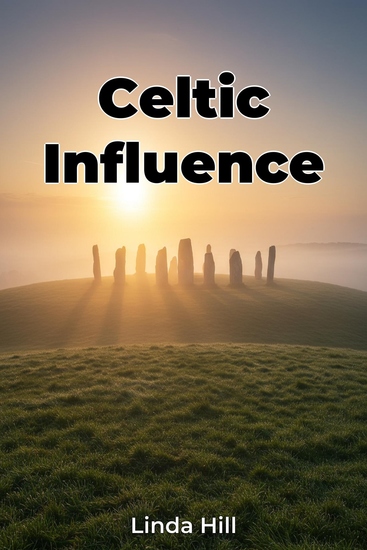
Celtic Influence - cover

Celtic Influence

Linda Hill

Translator A AI

Publisher: Publifye

  • 0
  • 0
  • 0

Summary

Celtic Influence explores the often-overlooked impact of Celtic tribes on European civilization, challenging traditional narratives that emphasize solely Roman or Germanic influences. The book delves into the linguistic heritage of Celtic languages, revealing how they've shaped modern languages like English and French. It also examines Celtic culture, from art and folklore to social structures and religious beliefs.

 
The book is structured to guide readers through the origins and dispersal of Celtic tribes across Europe, examining their interactions with the Roman Empire and Germanic kingdoms. Discoveries from archaeology and linguistics provide new insights into Celtic life, offering a comprehensive understanding of Celtic civilization from the Iron Age to the present day. 

 
By integrating archaeology, linguistics, and anthropology, Celtic Influence offers a holistic view, valuable for students, history enthusiasts, and anyone interested in Europe's cultural roots.
Available since: 03/20/2025.
Print length: 58 pages.

Other books that might interest you

  • CBT for Anger Management - Navigating Anger with Cognitive Behavioral Techniques - cover

    CBT for Anger Management -...

    Lydia Mann

    • 0
    • 0
    • 0
    CBT for Anger Management: Navigating Anger with Cognitive Behavioral TechniquesWelcome to 'CBT for Anger Management: Navigating Anger with Cognitive Behavioral Techniques,' your essential guide to unlocking the power of cognitive behavioral therapy (CBT) in addressing and transforming anger issues.In this audiobook, we embark on a journey of self-discovery and emotional regulation, using CBT as our compass. Explore the intricate web of anger triggers, thought patterns, and behaviors that often lead to emotional turbulence. With expert insights and practical techniques, you'll learn to navigate this complex landscape, regain control, and pave the way toward lasting calm and emotional balance.Discover the transformative potential of CBT as you delve into mindfulness, cognitive restructuring, and effective communication strategies. Whether you're dealing with everyday frustrations or seeking to address deeper-rooted anger issues, this audiobook equips you with the tools and wisdom needed to navigate the path to emotional resilience and well-being.Join us on this enlightening journey, and empower yourself to break free from the shackles of anger. 'CBT for Anger Management' is your trusted companion for a life characterized by emotional intelligence, healthy relationships, and inner peace.
    Show book
  • Letters to a Young Poet - cover

    Letters to a Young Poet

    Rainer Maria Rilke

    • 0
    • 0
    • 0
    Discover timeless wisdom and inspiration with "Letters to a Young Poet" by Rainer Maria Rilke, now available as an enriching audiobook. In this collection of letters, Rilke offers heartfelt advice and profound insights to a young aspiring poet, guiding them on their journey of creativity, self-discovery, and personal growth. 
    Through eloquent prose and intimate reflections, Rilke explores themes of love, solitude, and the artistic process, imparting invaluable lessons on the importance of patience, perseverance, and authenticity. Each letter serves as a beacon of encouragement and enlightenment, inviting listeners to embrace the beauty of life's uncertainties and embrace their innermost truths. 
    Perfect for poets, artists, and seekers of inspiration, "Letters to a Young Poet" offers a timeless treasure trove of wisdom and guidance. Whether you're navigating the challenges of creative expression or simply seeking solace in the written word, this audiobook provides a source of comfort, courage, and clarity. 
    So, if you're ready to embark on a transformative journey of self-discovery and artistic exploration, start listening to "Letters to a Young Poet" today and immerse yourself in the profound insights of Rainer Maria Rilke's timeless masterpiece.
    Show book
  • Byzantium: The History of the Ancient Greek City Before It Became Constantinople - cover

    Byzantium: The History of the...

    Editors Charles River

    • 0
    • 0
    • 0
    Byzantium may have reached its zenith during the Middle Ages as Constantinople, but it had previously stood out among Greek and other ancient cities for its wealth, size, and strategic location. It is probable that given the location, if the Megarans had not founded their city where they did, another Greek polis would have. It is equally probable that any city in that area would have enjoyed success from the wealth generated from its involvement in the key two-way trade between the Greek states and their numerous colonies around the Black Sea and the increasing general east-west trade between the Roman Empire and the exotic lands to the east.  
    Byzantium’s position as guardian of the Bosphorus gave it advantages that stood the city in good stead for thousands of years and consolidated the city as an intercontinental and international trading hub. Inevitably, such a vibrant international center produced many creative thinkers, and Byzantium was the birthplace or home to such figures as Homerus, a tragedian who lived in the early 3rd century BCE. Another overlooked figure was Philo, an engineer who lived from 280-220 BCE and is known as Philo Mechanicus. Although he was primarily an engineer, he was also a physicist and writer on mechanics. His most important work was the huge Syntaxis, which contained sections on general mathematics, mechanics, harbor construction, siege engine construction, pneumatics, mechanical toys, and coding for military use. The military sections Belopoeica and Poliorcetica survived, and they detailed how to build missiles, construct fortresses, and how to properly provision an army.
    Show book
  • Surviving Three Shermans - With the 3rd Armored Division into the Battle of the Bulge: What I Didn’t Tell Mother About My War - cover

    Surviving Three Shermans - With...

    Walter Boston Stitt Jr.

    • 0
    • 0
    • 0
    In 1943, eighteen-year-old Walter Stitt enlisted in the US Army, ready to serve his country. From his time in basic training at Fort Polk in Louisiana, throughout his time as a tank gunner in the 33rd Armored Regiment, to his post-injury service in England, he wrote home to the family he had left at home. 


    Unbeknown to him, his mother carefully numbered and saved the letters, treasuring them until her death. This book brings together the very different two versions of Walter's war: the version that a teenage soldier could reveal to his parents and younger siblings without scaring them or invoking the censor's pen, and the full and often terrifying details of serving as a tank loader and gunner in France, Belgium, and Germany, remembered so clearly eighty years later. Walter explains the forced omissions and partial truths his teenage self offered to comfort his family while he survived the destruction of three Sherman tanks, the death of three crew members, and two wounds. 


    Coming from West Virginia, Walter's Appalachian roots and values are apparent through the memories he held dear as a soldier and the values he clung to while fighting in one of the darkest periods of human history. His memoir recounts his experiences of serving during World War II while honoring those who served and made the ultimate sacrifice.
    Show book
  • The Cuban Missile Crisis - Brink of Nuclear War - cover

    The Cuban Missile Crisis - Brink...

    Nova Ashford

    • 0
    • 0
    • 0
    The Cuban Missile Crisis, one of the most critical moments in the Cold War, did not emerge in isolation but was the culmination of a decades-long geopolitical struggle between the United States and the Soviet Union. The context of this crisis lies deeply within the broader Cold War, which began shortly after the end of World War II. This period was marked by intense ideological rivalry, military standoffs, and a nuclear arms race that would define much of the second half of the 20th century. 
    The origins of the Cold War can be traced back to the conflicting political and economic ideologies of the two superpowers. The United States, championing capitalism and democracy, viewed the spread of communism, led by the Soviet Union, as a direct threat to global stability and democratic values. On the other hand, the Soviet Union, under the leadership of Joseph Stalin, sought to expand the reach of communism and solidify its control over Eastern Europe, which had been acquired as a result of the war. This division between the capitalist West and the communist East created a tense geopolitical environment that shaped every diplomatic interaction between the two powers. 
    In the early stages of the Cold War, several key events served to heighten the distrust between the U.S. and the Soviet Union. The Berlin Blockade in 1948, the Korean War in the early 1950s, and the formation of opposing military alliances like NATO (North Atlantic Treaty Organization) and the Warsaw Pact solidified the division of the world into two hostile camps. As both nations escalated their military capabilities, the nuclear arms race emerged as a central aspect of Cold War tensions. The development and stockpiling of nuclear weapons made the Cold War not just an ideological battle but also a dangerous game of survival, with the constant threat of global annihilation hanging over every political and military maneuver.
    Show book
  • The Shortest History of Migration - cover

    The Shortest History of Migration

    Ian Goldin

    • 0
    • 0
    • 0
    *Released early for the UK election.*
    
    From our earliest wanderings to the rise of the digital nomad, here is the story of human migration.
    
    For hundreds of thousands of years, the ability of Homo sapiens to travel across vast distances and adapt to new environments has been key to our survival as a species. Yet this deep migratory impulse is being tested as never before. By building ever stronger walls and raising barriers to progress, governments are harming the lives of migrants and threatening the future well-being of our societies.
    
    In The Shortest History of Migration, a visionary thinker tells a story of the movement of peoples that spans every age and continent and goes to the heart of what makes us human. Drawn from ancient records and the latest genetic research, it recounts strange, terrible and uplifting tales of migrants past and present, examining the legacies of empire, slavery and war.
    
    Finally, Goldin turns his attention to today's world, bringing together the evidence of history with the most recent data to suggest how we might create a more humane future -- one that allows us to reap the tremendous benefits that migration can offer.
    Show book