Join us on a literary world trip!
Add this book to bookshelf
Grey
Write a new comment Default profile 50px
Grey
Subscribe to read the full book or read the first pages for free!
All characters reduced
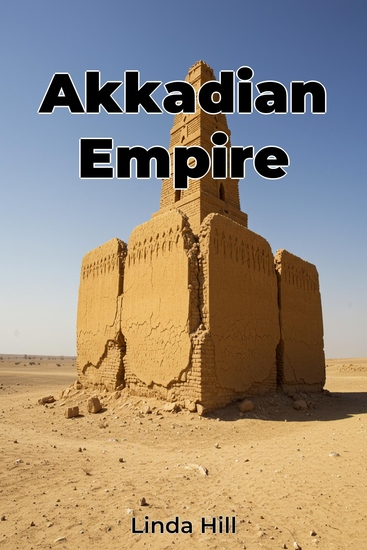
Akkadian Empire - cover

Akkadian Empire

Linda Hill

Translator A AI

Publisher: Publifye

  • 0
  • 0
  • 0

Summary

"Akkadian Empire" explores the rise and fall of the world's first empire in Mesopotamia, led by Sargon of Akkad. It examines how Sargon consolidated power from fragmented city-states through military strategies and administrative innovations, impacting Mesopotamian society and culture. The book argues that the Akkadian Empire's success hinged on balancing centralized control with regional autonomy, a balance disrupted by internal rebellions, external pressures, and environmental changes. Intriguingly, the empire standardized cuneiform script and integrated diverse religious traditions, showcasing its cultural influence. The book progresses by first examining the pre-Akkadian socio-political landscape, then delving into the Akkadian dynasty and its influence. Finally, it analyzes the factors leading to the empire's collapse. Drawing on cuneiform texts, archaeological finds, and environmental data, the book integrates environmental history with traditional political and social history, offering new insights into the complex interplay of factors that led to the Akkadian Empire's demise. By understanding the dynamics of this early empire, readers can gain valuable insights into state formation, imperial administration, and the consequences of political and environmental decisions.
Available since: 03/29/2025.
Print length: 61 pages.


Other books that might interest you

  • Soothing Music for Babies and Small Children - Gentle Sounds and Melodies for a Restful Sleep - cover

    Soothing Music for Babies and...

    Soothing Music for Babies and...

    • 0
    • 0
    • 0
    - Does your baby have a hard time falling asleep?- Are you looking for peaceful, soothing music your baby can fall asleep to ...-... but don't want to hear "Rock-a-Bye Baby" for the thousandth time?Enjoy modern lullabies that will reliably soothe you and your baby gently to sleep. To fall asleep, children need to feel safe. The soothing sleep music composed especially for babies and their parents helps you create a snug, secure atmosphere.The unique soundscapes (piano, keyboard, guitar) satisfy our human need for security and relaxation. They are based on scientific studies that demonstrate the positive effects of music on our sleeping habits. In combination with the music, you will also hear the sound of ocean waves gently lapping at the shore. Ocean sounds are well loved by babies as they simulate their pre-birth experience in the womb, which babies remember fondly. The sound of the waves comforts them and promotes even, harmonious breathing.This premium audiobook contains:Eleven unique sleep tracks with a running time of over 120 minutes, composed by certified music therapists and played at the same rhythm as the resting heart rate. In addition, there are comforting nature sounds that satisfy our human need for security and relaxation.Can't wait to play the music? Then download it now!**** NOTE: SEVERAL of the tracks on the audiobook are played briefly in the audio sample. ****
    Show book
  • Combat Trauma - A Personal Look at Long-Term Consequences - cover

    Combat Trauma - A Personal Look...

    James D Johnson

    • 0
    • 0
    • 0
    “In this incredibly courageous expose,” Vietnam veterans discuss the long-lasting effects of PTSD and their strategies for coping (Publishers Weekly). Though much has been written about the short-term experience of combat trauma, very few resources discuss how that trauma continues to impact individuals into later life. In this volume, retired Army Chaplain James D. Johnson relates how fifteen Vietnam veterans have been affected by the terror they experienced four decades ago, and how it continues to affect them today.   With candor and vivid detail, they reveal how their combat trauma symptoms still infect their thoughts, feelings, and behaviors on a daily basis. Their stories offer valuable insight for today’s soldiers returning from battle, as well as for their loved ones. The experiences shared here can help them address and cope with the ongoing challenges of PTSD.   Those who still carry these wounds will find that they are not alone, and that there are ways of dealing with the horror, no matter how long ago it took place.
    Show book
  • The White Bull - cover

    The White Bull

    Voltaire

    • 0
    • 0
    • 0
    Voltaire's The White Bull unfolds a satirical tale exploring the absurdities of power and society. Through wit and humor, Voltaire critiques the flaws of human nature and institutions. This short narrative reflects Voltaire's timeless commentary on tyranny, corruption, and the pursuit of enlightenment. In a clever and entertaining style, 'The White Bull' invites readers to reflect on the follies of the world, offering a poignant satire that remains relevant across epochs. Read in English, unabridged.
    Show book
  • Black Flags and Windmills - Hope Anarchy and the Common Ground Collective - cover

    Black Flags and Windmills - Hope...

    scott crow

    • 0
    • 0
    • 0
    When both levees and governments failed in New Orleans after Hurricane Katrina, an organization calling itself the Common Ground Collective formed to become the largest anarchist inspired organization in modern US history. In solidarity with people in New Orleans, Common Ground built medical clinics, distributed aid, formed neighborhood assemblies and created food security through community gardens. The group also defied unjust laws by resisting home demolitions, and defended communities from white militias and police brutality.  
    Black Flags and Windmills—equal parts memoir, history and organizing philosophy—maps the intertwining of Common Ground co-founder scott crow’s radical experiences and ideas with Katrina’s reality, vividly illustrating how people under extraordinary circumstances built local grassroots power and collective liberation. It is a story of resisting indifference, rebuilding hope amidst collapse, and struggling against the grain to create better worlds.
    Show book
  • It's All About The People - The Executive's Guide to Success in Leadership and Life - cover

    It's All About The People - The...

    Patrick L. Kunz

    • 0
    • 0
    • 0
    What do you stand for as a leader?Great leaders have clarity about their internal values. They communicate and lead with those values in mind every day. Author Pat Kunz writes about his leadership experiences as the president of a large professional services engineering/architecture firm in a straightforward and easy-to-read way.After decades at the helm of a leading company driving successful strategies and dramatic growth, he decided to capture and share his favorite leadership lessons. No matter what kind of organization you work in, this is a book that will demystify your leadership journey.Pat keeps it simple: values are what really matter. Teams that truly work are driven by enthusiasm, integrity, and respect.
    Show book
  • North of America - Loyalists Indigenous Nations and the Borders of the Long American Revolution - cover

    North of America - Loyalists...

    Jeffers Lennox

    • 0
    • 0
    • 0
    The story of the Thirteen Colonies' struggle for independence from Britain is well known to every American schoolchild. But at the start of the Revolutionary War, there were more than thirteen British colonies in North America. Patriots were surrounded by Indigenous homelands and loyal provinces. Independence had its limits. 


    Upper Canada, Lower Canada, New Brunswick, Nova Scotia, Newfoundland, and especially the homelands that straddled colonial borders, were far less foreign to the men and women who established the United States than Canada is to those who live here now. These northern neighbors were far from inactive during the Revolution. The participation of the loyal British provinces and Indigenous nations that largely rejected the Revolution—as antagonists, opponents, or bystanders—shaped the progress of the conflict and influenced the American nation's early development. 


    In this book, historian Jeffers Lennox looks north, as so many Americans at that time did, and describes how Loyalists and Indigenous leaders frustrated Patriot ambitions, defended their territory, and acted as midwives to the birth of the United States while restricting and redirecting its continental aspirations.
    Show book