Join us on a literary world trip!
Add this book to bookshelf
Grey
Write a new comment Default profile 50px
Grey
Subscribe to read the full book or read the first pages for free!
All characters reduced
Mental Endurance Secrets - cover

Mental Endurance Secrets

Lila Santoro

Translator A AI

Publisher: Publifye

  • 0
  • 0
  • 0

Summary

Mental Endurance Secrets explores how to cultivate unwavering focus and resilience, essential traits for thriving in today's demanding world. The book argues that mental fortitude isn't innate but a learnable skill, offering science-backed strategies to enhance willpower, perseverance, and cognitive resource management.

 
Did you know that understanding the limitations of willpower and learning to manage it effectively is key to preventing burnout? Or that perseverance can be developed through goal setting and a growth mindset?

 
The approach of the book is to provide a practical framework for building mental endurance, drawing upon research from cognitive psychology, sports psychology, and organizational behavior. It introduces fundamental concepts, then progresses to strategies for building perseverance through self-regulation. Finally, it culminates in techniques for managing stress and optimizing cognitive resources, highlighting applicable mindfulness practices.

 
This book distinguishes itself by emphasizing actionable strategies grounded in empirical research, making complex concepts accessible to a broad audience.
Available since: 03/15/2025.
Print length: 101 pages.

Other books that might interest you

  • How the West Became Antisemitic - Jews and the Formation of Europe 800-1500 - cover

    How the West Became Antisemitic...

    Ivan G. Marcus

    • 0
    • 0
    • 0
    In medieval Europe, Jews were not passive victims of the Christian community, as is often assumed, but rather were startlingly assertive, forming a Jewish civilization within Latin Christian society. Both Jews and Christians considered themselves to be God's chosen people. These dueling claims fueled the rise of both cultures as they became rivals for supremacy. In How the West Became Antisemitic, Ivan Marcus shows how Christian and Jewish competition in medieval Europe laid the foundation for modern antisemitism.Marcus explains that Jews accepted Christians as misguided practitioners of their ancestral customs, but regarded Christianity as idolatry. Christians, on the other hand, looked at Jews themselves—not Judaism—as despised. They directed their hatred at a real and imagined Jew: theoretically subordinate, but sometimes assertive, an implacable "enemy within." In their view, Jews were permanently and physically Jewish—impossible to convert to Christianity. Thus Christians came to hate Jews first for religious reasons, and eventually for racial ones. Modern antisemitism, based on the imagined Jew as powerful and world dominating, is a transformation of this medieval hatred. How the West Became Antisemitic is an ambitious new interpretation of the medieval world and its impact on modernity.
    Show book
  • Stealing My Religion - Not Just Any Cultural Appropriation - cover

    Stealing My Religion - Not Just...

    Liz Bucar

    • 0
    • 0
    • 0
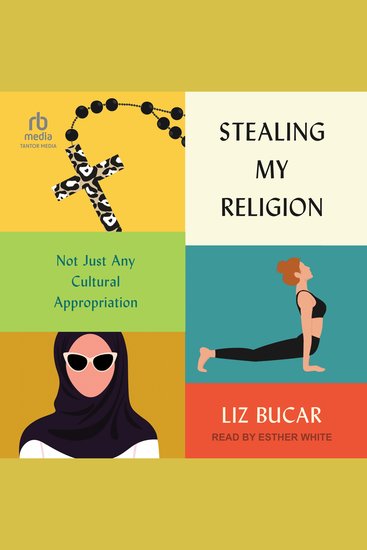
    We think we know cultural appropriation when we see it. Blackface or Native American headdresses as Halloween costumes—these clearly give offense. But what about Cardi B posing as the Hindu goddess Durga in a Reebok ad, AA's twelve-step invocation of God, or the earnest namaste you utter at the end of yoga class? 


    Liz Bucar unpacks the ethical dilemmas of a messy form of cultural appropriation: the borrowing of religious doctrines, rituals, and dress for political, economic, and therapeutic reasons. Does borrowing from another's religion harm believers? Bucar sees religion as an especially vexing arena for appropriation debates because faiths overlap and imitate each other and because diversity within religious groups scrambles our sense of who is an insider and who is not. 


    Stealing My Religion guides us through three revealing case studies—the hijab as a feminist signal of Muslim allyship, a study abroad "pilgrimage" on the Camino de Santiago, and the commodification of yoga in the West. Reflecting on her own missteps, Bucar comes to a surprising conclusion: the way to avoid religious appropriation isn't to borrow less but to borrow more—to become deeply invested in learning the roots and diverse meanings of our enthusiasms.
    Show book
  • A Rare Recording of Thomas Edison - cover

    A Rare Recording of Thomas Edison

    Thomas Eidson

    • 0
    • 0
    • 0
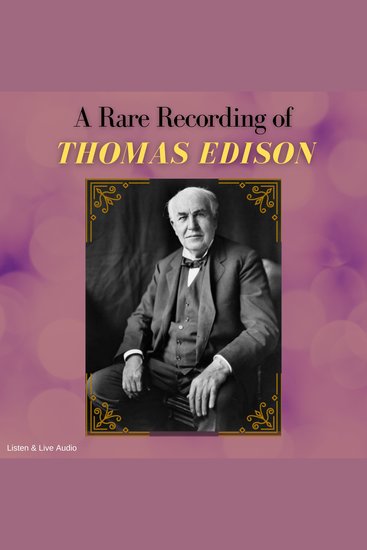
    Thomas Alva Edison, February 11, 1847 - October 18, 1931, was an American inventor and businessman. He developed many devices in fields such as electric power generation, mass communication, sound recording, and motion pictures. These inventions, which include the phonograph, the motion picture camera, and early versions of the electric light bulb, have had a widespread impact on the modern industrialized world. In this recording, Edison discusses some of his numerous inventions.
    Show book
  • Nazi Mysteries - cover

    Nazi Mysteries

    World History

    • 0
    • 0
    • 0
    World War II is the best described, most catalogued event in history. Thousands of books, hundreds of thousands of articles, and an abundance of documentaries and lectures describe the horrors of war, the battle strategies and, not least, the heroes who emerged from one of history’s most horrific wars. But despite this vast archive of information, puzzles still remain. As the years go by, myths bloom up alongside facts. Did Hitler really die in the his bunker? Or did he escape to South America in a state-of-the-art submarine? Where is the gold stolen from the victims of the Holocaust? Is it still hidden in secret mines in Eastern Europe? And what drove the German people to embrace the extremes of Nazism, anti-Semitism and dreams of world domination? Join with us as we try to find the answers to the great Nazi mysteries.World History invites you on a fascinating journey to bygone eras, allowing you to explore the greatest events in history. Take a trip back in time - to the frontlines of World War 2, to the Viking raids, and the religious rituals of ancient Egypt. World History is for everyone who would like to know more about the exciting and dramatic events of the past.
    Show book
  • The Cherokee - A History from Beginning to Present - cover

    The Cherokee - A History from...

    Hourly History

    • 0
    • 0
    • 0
    For many generations, the Aniyunwiya (meaning the “real people” or “principal people”) lived in harmony with the land they inhabited. They worshipped their ancestors and believed that every living thing—people, animals, trees, and plants—had a spirit and an important place in the world. Then, strangers arrived from lands far to the east. They brought with them new weapons and technologies, new diseases, a new religion, and a very different approach to the land and the animals and people who lived there. They even called the Aniyunwiya by a new name: the Cherokee. 
    This is the story of the Cherokee people, their history, culture, and beliefs, and what happened to them before and after they first encountered European explorers.
    Show book
  • Basic Alchemical Meditation - How the Alchemists Meditated - cover

    Basic Alchemical Meditation -...

    Dennis William Hauck

    • 0
    • 0
    • 0
    This is a Basic Alchemical Meditation compounded from meditative techniques used by alchemists such as Paracelsus, Basil Valintine, and Jakob Boehme. There are three general steps in the full meditation that correspond to the three phases of alchemy. The first phase is the Nigredo (darkening, death, and putrefaction of the ego), which consists of two operations in which one attempts to Disengage Physically and Disengage Mentally from the world. The second phase is the Albedo (whitening and purification) in which one achieves original innocence or Zero-state Consciousness. The third phase is Rubedo (reddening or empowered integration into a new level of being) that is found in continued Meditation in the Pure Light. 
         Overall, the first two phases represent a progressive resurrection and purification of the light of consciousness to prepare for the transformative, one-pointed “Meditation in the Pure Light” phase. In that phase, alchemists feel they are working with the logoic light to transform reality in not only the inner lab or soul but also in the objective material reality of their “laboratory” or outer world. 
         Whether you are a novice meditator or experienced, the following instructions should be helpful in achieving Meditation in the Pure Light. But feel free to follow your own path in meditation or customize these steps to fit your regimen. The most important lesson is to grasp is the dual nature of our reality—the spiritual and material realms in which we exist. The bridge between those two realms can only be found in the Pure Light—in what Paracelsus called the “True Imagination.”
    Show book