Join us on a literary world trip!
Add this book to bookshelf
Grey
Write a new comment Default profile 50px
Grey
Subscribe to read the full book or read the first pages for free!
All characters reduced
Meditation Therapy - cover

Meditation Therapy

Lila Santoro

Translator A AI

Publisher: Publifye

  • 0
  • 0
  • 0

Summary

Meditation Therapy explores the science-backed benefits of meditation for enhancing focus and aiding addiction recovery, presenting it not just as relaxation, but as mental training. It emphasizes how consistent meditation can alter neural pathways, improving attention and strengthening inhibitory control – crucial for navigating distractions and compulsive behaviors.

 
The book reveals how meditation affects attention networks in the brain, supported by neuroimaging studies showing changes in brain activation. It also delves into meditation's role in addiction recovery, presenting evidence of reduced cravings and better management of withdrawal symptoms.

 
The book begins by introducing mindfulness principles and meditation techniques, like mindfulness of breathing, before examining meditation's effects on the brain. It uniquely explores specific techniques tailored for various addictive behaviors, from substance abuse to compulsive internet use.

 
Drawing from neuroscience, cognitive psychology, and behavioral economics, it provides a comprehensive understanding of meditation's effects, supported by empirical research including randomized controlled trials.

 
Practical guidance is offered on incorporating meditation into daily life, with tips for overcoming challenges and tailoring the practice to individual needs.

 
The book progresses through core principles, effects on attention, applications in addiction recovery, and practical implementation, aiming to provide evidence-based insights for personal growth and improved well-being.
Available since: 03/12/2025.
Print length: 83 pages.

Other books that might interest you

  • The Killing of The Reavey Brothers - British Murder and Cover-Up in Northern Ireland - cover

    The Killing of The Reavey...

    Ken Murray, Eugene Reavey

    • 0
    • 0
    • 0
    In this gripping memoir, Eugene Reavey takes readers on a harrowing journey through the darkest chapter of his life during the Northern Ireland Troubles. Reavey relives the tragic night in 1976 when his three brothers—John Martin, Anthony, and Brian—were brutally murdered in their family home in Whitecross, South Armagh.
    As Reavey grapples with profound loss and an unrelenting quest for justice, he uncovers a web of treachery and collusion that shakes the very foundations of Northern Ireland's past.Through meticulous research and firsthand testimony, Reavey exposes the alarming truths behind the covert protection afforded to the notorious Glenanne Gang, a loyalist paramilitary group, by key institutions. He navigates a sinister labyrinth of threats and schemes orchestrated by the feared Ulster Defence Association (UDA) enforcer, Jimmy Craig, and confronts the shocking false allegations made by Democratic Unionist Party (DUP) Leader Ian Paisley in the House of Commons, which were challenged but never retracted.
    Perhaps the most chilling revelation is the Reavey family's accidental discovery of a staggering 84-year embargo on the release of crucial British files related to the murders. This startling find raises the question: why the silence?
    Reavey's compelling narrative captures the intrigue, drama, and profound human cost of the Troubles. It serves as a powerful testament to the lengths people will go to uncover the truth and the devastating impact of sectarian violence on families and communities. It is a searing chronicle of a society fractured by conflict and a family's unwavering determination to find answers in the face of unimaginable tragedy.
    This book is a must-read for readers of true crime, Northern Ireland history and stories of injustice and resilience. It is also perfect for fans of Patrick Radden Keefe's 'Say Nothing', Henry Hemmings 'Four Shots in the Night', and similar works that explore the human impact of The Troubles.
    Show book
  • Palestine - A Socialist Introduction - cover

    Palestine - A Socialist...

    brian bean, Sumaya Awad

    • 0
    • 0
    • 0
    Palestine: A Socialist Introduction systematically tackles a number of important aspects of the Palestinian struggle for liberation, contextualizing it in an increasingly polarized world and offering a socialist perspective on how full liberation can be won. 


    Through an internationalist, anti-imperialist lens, this book explores the links between the struggle for freedom in the United States and that in Palestine, and beyond. It examines both the historical and contemporary trajectory of the Palestine solidarity movement in order to glean lessons for today's organizers, and compellingly lays out the argument that, in order to achieve justice in Palestine, the movement has to take up the question of socialism regionally and internationally. 


    Contributors include: Jehad Abusalim, Shireen Akram-Boshar, Omar Barghouti, Nada Elia, Toufic Haddad, Remi Kanazi, Annie Levin, Mostafa Omar, Khury Petersen-Smith, and Daphna Thier.
    Show book
  • Plutocracy - The Rule of Wealth: How Economic Power Influences Political Decision-Making - cover

    Plutocracy - The Rule of Wealth:...

    Arlo Holders

    • 0
    • 0
    • 0
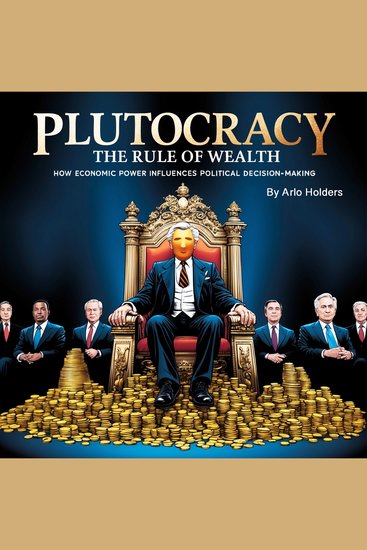
    Plutocracy, often described as the rule of wealth, refers to a political system in which economic elites hold significant influence over government decisions, shaping policies to favor their interests. This concentration of power is not limited to authoritarian regimes or monarchies but can also be observed in modern democracies, where wealth and power are deeply intertwined. In such systems, political decisions are often made in ways that protect and increase the wealth of the rich, while the needs and concerns of the broader population are sidelined. 
    The concept of plutocracy is not a recent phenomenon. Throughout history, societies have been dominated by a small group of wealthy individuals or families who controlled vast resources and used their wealth to influence political outcomes. Whether through the control of land, natural resources, or capital, the wealthy elite have been able to dictate the direction of national policies, often at the expense of the lower classes. From the Roman Empire to the monarchies of Europe, political power and economic power have often been inextricably linked. 
    In modern democracies, the influence of wealth on politics is more subtle but no less pervasive. Campaign financing, lobbying, and the revolving door between government and corporate sectors are just a few examples of how wealth can shape political agendas. Political campaigns are expensive, and politicians often rely on wealthy donors and interest groups to fund their campaigns. In return, these donors and groups expect favorable legislation or regulatory policies. As a result, the political system becomes more responsive to the needs of the wealthy, while the voices of ordinary citizens are drowned out.
    Show book
  • Plato's Apology - cover

    Plato's Apology

    Plato

    • 0
    • 0
    • 0
    Socrates is on trial for his life. He is charged with impiety and corrupting young people. He presents his own defense, explaining why he has devoted his life to challenging the most powerful and important people in the Greek world. The reason is that rich and famous politicians, priests, poets, and a host of others pretend to know what is good, true, holy, and beautiful, but when Socrates questions them they are shown to be foolish rather than wise.
    Show book
  • Forgotten War - The British Empire and Commonwealth’s Epic Struggle Against Imperial Japan 1941–1945 - cover

    Forgotten War - The British...

    Brian E. Walter

    • 0
    • 0
    • 0
    A new assessment of the British and Commonwealth contribution to the defeat of Japan in the Pacific.
    
    The monumental struggle fought against Imperial Japan in the Asia/Pacific theater during World War II is primarily viewed as an American affair. While the United States did play a dominant role, the British and Commonwealth forces also made major contributions—on land, at sea and in the air, eventually involving over a million men and vast armadas of ships and aircraft. It was a difficult and often desperate conflict fought against a skilled and ruthless enemy that initially saw the British suffer the worst series of defeats ever to befall their armed forces. Still, the British persevered and slowly turned the tables on their Japanese antagonists. Fighting over an immense area that stretched from India in the west to the Solomon Islands in the east and Australia in the south to the waters off Japan in the north, British and Commonwealth forces eventually scored a string of stirring victories that avenged their earlier defeats and helped facilitate the demise of the Japanese Empire.
    
    Often overlooked by history, this substantial war effort is fully explored in Forgotten War. Meticulously researched, the book provides a complete, balanced and detailed account of the role that British and Commonwealth forces played on land, sea and in the air during this crucial struggle. It also provides unique analysis regarding the effectiveness and relevance of this collective effort and the contributions it made to the overall Allied victory.
    Show book
  • A Rare Recording of T Lobsang Rampa - cover

    A Rare Recording of T Lobsang Rampa

    T. Lobsang Rampa

    • 0
    • 0
    • 0
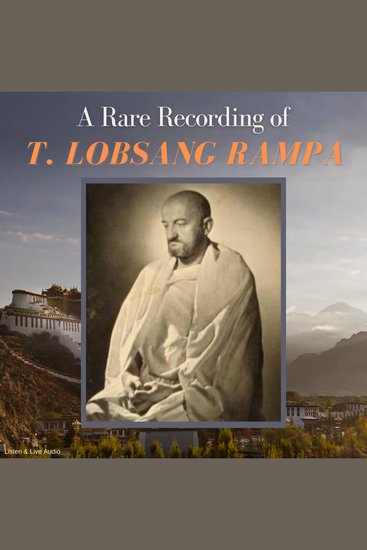
    T. Lobsang Rampa (April 8, 1910 - January 25,1981) was a bestselling author of books with paranormal and occult themes. He was born Cyril Henry Hoskin and claimed that his body hosted the spirit of a Tibetan lama by the name of T. Lobsang Rampa. His best-known book, "The Third Eye," was a global bestseller. He went on to write another 18 books on meditation, religion, and the occult. In this recording, Rampa teaches some basic meditation techniques.
    Show book