Join us on a literary world trip!
Add this book to bookshelf
Grey
Write a new comment Default profile 50px
Grey
Subscribe to read the full book or read the first pages for free!
All characters reduced
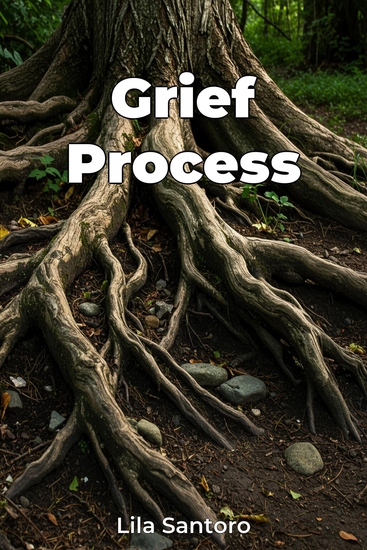
Grief Process - cover

Grief Process

Lila Santoro

Translator A AI

Publisher: Publifye

  • 0
  • 0
  • 0

Summary

Grief Process offers a comprehensive exploration of grief, emphasizing that it's a deeply personal and non-linear experience. Moving beyond traditional models, the book highlights the importance of self-compassion and tailored coping mechanisms. For example, while the stages of grief (denial, anger, bargaining, depression, acceptance) are discussed, the book stresses their fluidity and acknowledges that individuals may not experience them in a linear fashion. It also explores how cultural norms and societal expectations can influence grief expression. 

 
The book delves into diverse emotional responses associated with grief, such as sadness, anxiety, and guilt, providing insights into their origins through a psychological lens. It then focuses on practical coping mechanisms like self-care, mindfulness, and social support. Each chapter builds upon the previous, culminating in a framework for rebuilding emotional stability and finding meaning after loss. This approach aims to equip readers with tools for emotional healing and coping with loss, fostering emotional stability during bereavement. 

 
Grief Process sets itself apart by encouraging readers to explore their unique experiences and develop personalized coping strategies. By blending established psychological research, clinical case studies, and anecdotal evidence, the book provides a supportive and empathetic guide for navigating the grieving process.
Available since: 03/15/2025.
Print length: 105 pages.

Other books that might interest you

  • Hittites - History of the Ancient People in Asia Minor and Syria - cover

    Hittites - History of the...

    Kelly Mass

    • 0
    • 0
    • 0
    The Hittites were mentioned in the Bible. They were an Anatolian people that contributed to creating a kingdom in Kussara before 1750 BC, the Kanesh or Nesha kingdom between 1750 and 1650 BC, and finally an empire based upon Hattusa in north-central Anatolia around 1650 BC. Under uppiluliuma I, the empire reached its peak in the mid-14th century BC, when it ruled over much of Anatolia and areas of the northern Levant and Upper Mesopotamia.Between the 15th and 13th centuries BC, the Hattusa Empire, also called the Hittite Empire, defended control of the Near East with the New Kingdom of Egypt, the Middle Assyrian Empire, and the Mitanni Empire. The Middle Assyrian Empire ultimately emerged as the dominant power, took much of the Hittite Empire, and ransacked the rest by Phrygian newbies to the area. The Hittites separated into numerous self-governing Syro-Hittite countries around c. 1180 BC, at the time of the Late Bronze Age collapse, some of which stayed till the 8th century BC before giving up to the Neo-Assyrian Empire.I urge you to learn more about this fascinating people from the ancient world.
    Show book
  • Stories Dice and Rocks That Think - How Humans Learned to See the Future–and Shape It - cover

    Stories Dice and Rocks That...

    Byron Reese

    • 0
    • 0
    • 0
    What makes the human mind so unique? And how did we get this way? 


    This fascinating tale explores the three leaps in our history that made us what we are—and will change how you think about our future. 


    Look around. Clearly, we humans are radically different from the other creatures on this planet. But why? Where are the Bronze Age beavers? The Iron Age iguanas? In Stories, Dice, and Rocks That Think, Byron Reese argues that we owe our special status to our ability to imagine the future and recall the past, escaping the perpetual present that all other living creatures are trapped in. 


    Envisioning human history as the development of a societal superorganism he names Agora, Reese shows us how this escape enabled us to share knowledge on an unprecedented scale, and predict—and eventually master—the future. 


    Thoughtful and witty, this must-listen book unravels our history as an intelligent species in three acts. A fresh new look at the history and destiny of humanity, listeners will come away from Stories, Dice, and Rocks That Think with a new understanding of what they are—not just another animal, but a creature with a mastery of time itself.
    Show book
  • I Won't Shut Up - Finding Your Voice When the World Tries to Silence You - cover

    I Won't Shut Up - Finding Your...

    Ally Henny, Danielle Coke

    • 0
    • 0
    • 0
    Being Black in a society developed by white men to benefit white men means constantly pushing back against systems that were not constructed for your flourishing. White privilege. White cultural norms. White beauty standards. White noise. You're made to feel that your life doesn't matter, your opinions aren't valid, and your entire existence is too loud. It can feel like the whole world is telling you to shut up. 


    To these forces, Ally Henny is here to say, "No. I am a loud Black woman, and I won't shut up." Ally knows what it's like to navigate racism and racialized sexism, having spent most of her life in predominantly white spaces. She's not taking it anymore, and she's calling you to join her in resisting racism by speaking the truth—no matter the cost. In this compelling book, Ally tells her own story of finding her voice, pushing back against oppression, and embracing her unique perspective as a loud Black woman. And she invites you to find your voice in a world that tries to silence you. 


    If you're tired of feeling silenced, misunderstood, and abused by society, you'll find here powerful words of liberation that will empower you to find—and use—your voice.
    Show book
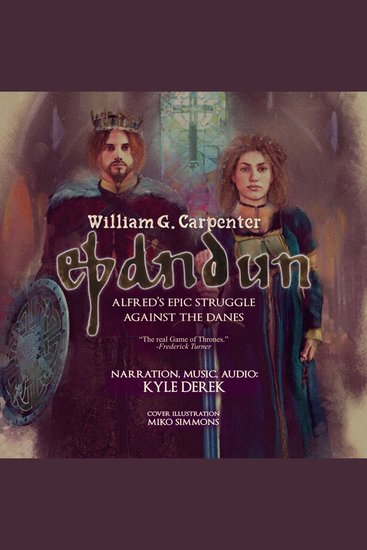
  • Eþandun - Alfred's Epic Struggle Against The Danes - cover

    Eþandun - Alfred's Epic Struggle...

    William G. Carpenter

    • 0
    • 0
    • 0
    The year is 878.  Young King Alfred struggles to regain his West Saxon kingdom from the invading pagan Danes led by Gormr (aka Guthrum, aka Godrum).   His kingdom overrun, Alfred joins Gormr's court disguised as a Welsh gleeman.  Gormr consults Alfred as a counselor and wizard, but resists Alfred's attempts to convert him.   Meanwhile Alfred learns that his lady and their children are Gormr's prisoners.  Escaping to the western fens, he leads a small army against the Danes.   The rest is history.  This is an epic poem set in the Old English culture of Christian warriors, i.e., Romanized Germanic former pagans, contending with contemporary Scandinavian Germanic pagans.  The great epic poet Frederick Turner (author of The New World, Genesis, and Apocalypse) called Eþandun "The real Game of Thrones."   Listen to actor-poet-producer Kyle Derek's heroic rendition of this book-length poem!
    Show book
  • Accidental Tyrant - The Life of Kim Il-Sung - cover

    Accidental Tyrant - The Life of...

    Fyodor Tertitskiy

    • 0
    • 0
    • 0
    Kim Il-sung was the enigmatic architect of North Korea. His life is an extraordinary tale of improbable success: once a barely educated guerrilla fighter, he rose to lead the nation at the young age of thirty-three. Against all odds, he established a horrifyingly stable dictatorial regime, one that still struggles to provide for its people, yet could obliterate Hollywood, Silicon Valley, and much of East Asia in nuclear strikes. 


    Based on extensive new sources in Korean, Russian, Chinese, and Japanese, Fyodor Tertitskiy tells the unlikely story of one of the twentieth century's most brutal but little-known dictators, from his early life in Japanese Korea to the lasting repercussions of his autocratic rule today. Tertitskiy showcases Kim's political prowess in gaining autonomy from the USSR; explores how his inept economic policy led to catastrophic famine; and highlights how he implemented a system of hereditary rule, paving the way for today's 'Supreme Leader', Kim Jong-un, to assume power and continue his grandfather's vision. 


    Accidental Tyrant serves as a stark cautionary tale, underscoring that the triumph of liberty is never guaranteed. Met with insufficient resistance, even the most unlikely leader can build a regime of repression and privation that long outlives its founder.
    Show book
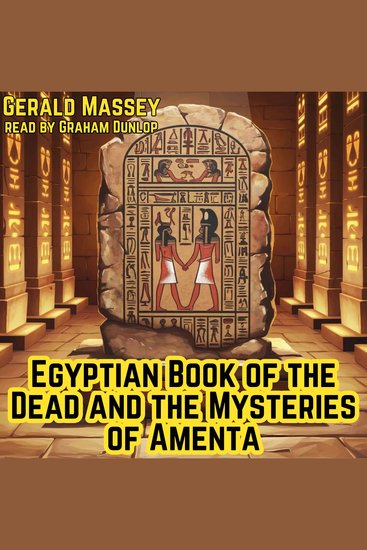
  • Egyptian Book of the Dead and the Mysteries of Amenta - Ancient Egypt the Light of the World Book 4 - cover

    Egyptian Book of the Dead and...

    Gerald Massey

    • 0
    • 0
    • 0
    There is no death in the Osirian religion, only decay and change, and periodic renewal; only evolution and transformation in the domain of matter and the transubstantiation into spirit. In the so-called death of Osiris it is rebirth, not death, exactly the same as in the changes of external nature. At the close of the day the solar orb went down and left the sun god staring blankly in the dark of death. Taht the moon god met him in Amenta with the eye of Horus as the light the was to illuminate the darkness of the subterranean world. –from “Egyptian Book of the Dead and the Mysteries of Amenta” It goes unappreciated by modern Egyptologists, but it is embraced by those who savor the concept of a “hidden history” of humanity, and those who approach all human knowledge from the perspective of the esoteric. Gerard Massey’s massive Ancient Egypt: The Light of the World–first published in 1907 and the crowning achievement of the self-taught scholar–redefines the roots of Christianity via Egypt, proposing that Egyptian mythology was the basis for Jewish and Christian beliefs. Here, Cosimo proudly presents Book 4 of Ancient Egypt, in which Massey discusses the Egyptian Book of the Dead as the “pre-Christian word of God,” and explores the idea that Amenta, the threshold to the Egyptian underworld, is the first overt expression of a human desire for a noncorporeal afterlife. Massey goes on to connect the “mystery of the mummy” to “the mystery of the Christ” by likening the Christian dogma of physical resurrection to the Egyptian impetus for mummification. Peculiar and profound, this work will intrigue and delight readers of history, religion, and mythology. British author GERALD MASSEY (1828-1907) published works of poetry, spiritualism, Shakespearean criticism, and theology, but his best-known works are in the realm of Egyptology, including A Book of the Beginnings and The Natural Genesis.
    Show book