

Join us on a literary world trip!
Add this book to bookshelf
Grey
Write a new comment Default profile 50px
Grey
Subscribe to read the full book or read the first pages for free!
All characters reduced
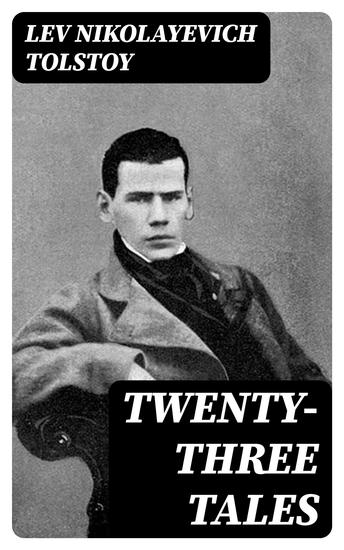
Twenty-three Tales - cover

Twenty-three Tales

Lev Nikolayevich Tolstoy

Translator Louise and Aylmer Maude

Publisher: DigiCat

  • 0
  • 0
  • 0

Summary

In "Twenty-three Tales," Lev Nikolayevich Tolstoy presents a compelling collection of short stories that encapsulate the breadth of human experience through a moralistic lens. Written in a clear and poignant style, these tales explore themes of love, faith, and redemption, often drawing from the depths of Russian folklore and spirituality. The tales invoke simplicity yet are imbued with profound philosophical insights, reflecting Tolstoy's deep-seated beliefs about morality and the human condition, resonating with the literary tradition of realism while also delving into the allegorical realm. Tolstoy, a towering figure in Russian literature and a prominent moral philosopher, spent much of his life grappling with profound existential and spiritual questions. His experiences as a soldier, landowner, and social reformer culminated in a unique worldview that deeply influenced his writing. The stories in "Twenty-three Tales" emerged during a period of personal transformation for Tolstoy, where he sought to reaffirm universal truths through storytelling that engages with the reader's ethical consciousness. This collection is essential for readers interested in the intersections of literature, ethics, and spirituality. Tolstoy's incisive narratives not only entertain but also challenge the reader to reflect on their personal beliefs and moral choices, making it a timeless exploration of humanity's quest for meaning.
Available since: 07/21/2022.
Print length: 214 pages.

Other books that might interest you

  • In the Penal Colony and Other Stories - cover

    In the Penal Colony and Other...

    Franz Kafka

    • 0
    • 0
    • 0
    Dive into the surreal and absurdist world of Franz Kafka with this compendium containing some of his most captivating short stories. 
     
    Including the deeply harrowing 'In the Penal Colony' and his breakthrough tale, 'The Judgement', as well as some of his lesser-known works, this newly translated assortment provides a unique look at one of the twentieth century's most visionary writers. 
     
    From isolating mountain journeys and unexpected accidents to strained family relationships, the stories within capture the human experience and offer unparalleled commentary on everything from the ordinary to the bizarre. Deeply introspective and brimming with wisdom, Kafka's writing is as eye opening today as when it was first published.
    Show book
  • To Build A Fire - cover

    To Build A Fire

    Jack London

    • 0
    • 0
    • 0
    To Build A Fire is the best known of all London's stories. It tells the story of a new arrival to the Klondike who stubbornly ignores warnings about the folly of traveling alone. He falls through the ice into a creek in seventy-below weather, and his survival depends on being able to build a fire and dry his clothes, which he is unable to do. The famous version of this story was published in 1908.
    Show book
  • The Solitary Summer - cover

    The Solitary Summer

    Elizabeth Von Arnim

    • 0
    • 0
    • 0
    Published in 1899, The Solitary Summer is a charming companion to von Arnim’s earlier novel Elizabeth and Her German Garden. As with its prequel, the novel is semi-autobiographical and in the form of a series of diary entries. The narrator decides to spend one summer alone in her country house far away from the demands and distractions of the world. She offers us a witty and lyrical account of a solitary summer, filled with reading and reflections on her beloved garden. However, her months removed from society turn out to be less solitary than planned: there is her husband, ‘the Man of Wrath’, to pacify, three young children to amuse, and the arrival of a regiment of soldiers. Light-hearted in tone, The Solitary Summer describes a voyage of self-discovery set against the idyllic backdrop of an ever- changing summer garden.
    Show book
  • Call of the Wild - cover

    Call of the Wild

    Jack London

    • 0
    • 0
    • 0
    The Call of the Wild is a novel by American writer Jack London. The plot concerns a previously domesticated and even somewhat pampered dog named Buck, whose primordial instincts return after a series of events finds him serving as a sled dog in the treacherous, frigid Yukon during the days of the 19th century Klondike Gold Rushes. Published in 1903, The Call of the Wild is one of London's most-read books, and it is generally considered one of his best.    Because the protagonist is a dog, it is sometimes classified as a juvenile novel, suitable for children, but it is dark in tone and contains numerous scenes of cruelty and violence. London followed the book in 1906 with White Fang, a companion novel with many similar plot elements and themes as The Call of the Wild, although following a mirror image plot in which a wild wolf becomes civilized by a mining expert from San Francisco named Weedon Scott.
    Show book
  • Water of Life The - Story Time Episode 57 (Unabridged) - cover

    Water of Life The - Story Time...

    Brothers Grimm

    • 0
    • 0
    • 0
    A king was dying. An old man told his sons that the water of life would save him. Each one set out in turn. The two older ones, setting out in hopes of being the heir, were rude to a dwarf on the way and became trapped in ravines. When the youngest son went the dwarf asked where he was going, and he told him. The dwarf told him it was in a castle, and gave him an iron wand to open the gates and two loaves to feed to the lions inside. Then he had to get the water before the clock struck 12 when the gates would shut again.
    Show book
  • The Law of Life - cover

    The Law of Life

    Jack London

    • 0
    • 0
    • 0
    "The Law of Life" is a short story by the American naturalist writer Jack London. It was first published in McClure's Magazine, Vol.16, March, 1901. In 1902, it was published in a collection of Jack London's stories, The Children of Frost, by Macmillan Publishers.
    This short story covers the last 5 hours of the old and dying Inuit chief Koskoosh. His tribe needs to travel in search of clothing and shelter so he is left to die because of his age and inability to see properly. Even his son has to leave him because he has a new family to feed and take care of.
    However, the old Koskoosh is not dissatisfied as he knows the law of life and his desires. He accepts his fate peacefully and starts to visualize the events of his past. The images of both great famine and times of plenty vividly comes to his mind. As an experienced person he contemplates nature and ultimately accepts its individualism.
    Show book
