Join us on a literary world trip!
Add this book to bookshelf
Grey
Write a new comment Default profile 50px
Grey
Subscribe to read the full book or read the first pages for free!
All characters reduced
Fiddler's farewell - cover

Fiddler's farewell

Leonora Speyer

Publisher: Good Press

  • 0
  • 0
  • 0

Summary

In "Fiddler's Farewell," Leonora Speyer adeptly weaves a tapestry of lyrical poetry that explores the transient nature of time and the profound interconnectedness of life through the metaphor of music. Drawing upon the rich tradition of modernist poetry, Speyer employs vivid imagery, haunting symbolism, and a keen ear for rhythm, allowing her readers to experience the emotional spectrum of joy, sorrow, and nostalgia. The poem serves as an elegy to both the art of music and the fleeting moments that define human experience, resonating deeply with themes of loss and remembrance within the broader context of early 20th-century literature. Leonora Speyer, an accomplished poet and violinist, was intricately linked to the avant-garde movements of her time, notably having been part of the literary circles that championed innovation in form and style. Her dual identities as an artist and musician profoundly influenced her writing, culminating in a masterpiece that reflects both personal introspection and broader existential questions. Speyer's interactions with prominent figures in the arts provided her with unique insights into the role of creativity in shaping human experience. "Fiddler's Farewell" is a must-read for anyone interested in the intersection of poetry and music, as well as those drawn to the emotional depth of modernist literature. Speyer's evocative language and profound themes will resonate with readers seeking both beauty and meaning in the transient moments of life, making this work a timeless addition to any literary collection.
Available since: 03/02/2025.
Print length: 140 pages.

Other books that might interest you

  • Mrs Dalloway (Legend Classics) - cover

    Mrs Dalloway (Legend Classics)

    Virginia Woolf

    • 0
    • 0
    • 0
    “He thought her beautiful, believed her impeccably wise; dreamed of her, wrote poems to her, which, ignoring the subject, she corrected in red ink.” 
    Mrs Dalloway is a novel that features two main characters and two different worldviews. On the one hand, there is Clarissa Dalloway, who being labelled as Mrs, symbolises her marital and social confinement. On the other, the readers meet Septimus Warren Smith, who is suffering from post-traumatic stress disorder. The lack of conventionally linear narrative and the stream of consciousness embedded in the text represents the author’s take on the complexities of human existence and the ambiguity of reality. While Septimus appears mad as the war memories are haunting him, Clarissa is assumingly sane, with her existential troubles being centred around the midlife crisis – both, however, share an astute sensibility about societal maladies of post-war Britain. Even though the two characters never meet, they are inextricably connected. The story takes a twist when Clarissa in her quintessential midlife meets her first love, Peter Walsh and Septimus madness takes a dramatic manifestation. Will Clarissa take any steps for the sake of her first love, or will she stay devoted to the societal pressure and her status as a statesman’s wife? What will become of Septimus’ madness? 
    The novel was developed from Woolf’s earlier short story entitled ‘Mrs Dalloway in Bond Street’. It takes you to the industrialised society, the hustle and bustle of London to represent the surface, the wrapper of modern society. The internal side is represented by ambiguous dark desires and fears of the characters. The passion and dramatic events in this whole novel take place over the course of a single day and the novel has been compared to poetry for being packed with meaning and intensity. How can a day change your whole life, how can a life built for years, crumble in the blink of an eye? This text is an exciting journey in itself with stylistic symbiosis, making it a true modernist classic. 
    The Legend Classics series:Around the World in Eighty DaysThe Adventures of Huckleberry FinnThe Importance of Being EarnestAlice's Adventures in WonderlandThe MetamorphosisThe Railway ChildrenThe Hound of the BaskervillesFrankensteinWuthering HeightsThree Men in a BoatThe Time MachineLittle WomenAnne of Green GablesThe Jungle BookThe Yellow Wallpaper and Other StoriesDraculaA Study in ScarletLeaves of GrassThe Secret GardenThe War of the WorldsA Christmas CarolStrange Case of Dr Jekyll and Mr HydeHeart of DarknessThe Scarlet LetterThis Side of ParadiseOliver TwistThe Picture of Dorian GrayTreasure IslandThe Turn of the ScrewThe Adventures of Tom SawyerEmmaThe TrialA Selection of Short Stories by Edgar Allan PoeGrimm Fairy TalesThe AwakeningMrs DallowayGulliver’s TravelsThe Castle of OtrantoSilas MarnerHard Times
    Show book
  • Little Boy Lost - cover

    Little Boy Lost

    Marghanita Laski

    • 0
    • 0
    • 0
    Marghanita Laski’s novel Little Boy Lost is as enthralling as it is heart-wrenching. A man grapples with questions of emotional responsibility, fatherhood, and memory. Laski describes a much-changed France, struggling to rebuild its morale after the ruin caused by wartime bombing and occupation.English writer Hilary Wainwright lost all trace of his young son when Lisa, his wife, was killed by the Gestapo in Paris. Several years later, an acquaintance travels to England with news that Hilary’s son may be alive in France. Doubting whether five-year-old Jean is indeed his, and determined not to feel vulnerable to love and tenderness again, Hilary travels to France to find the boy. Amidst a war-torn Northern French town, he gets to know young Jean, as well as the town’s inhabitants. In a matter of days Hilary must decide if this charming and intelligent child could be his own . . . and if he is prepared to take Jean home.Little Boy Lost is part of the Persephone Audiobook Collection, a series of forgotten classics including neglected fiction and non-fiction by women writers. First published in 1949, this edition includes a new afterword by Anne Sebba.
    Show book
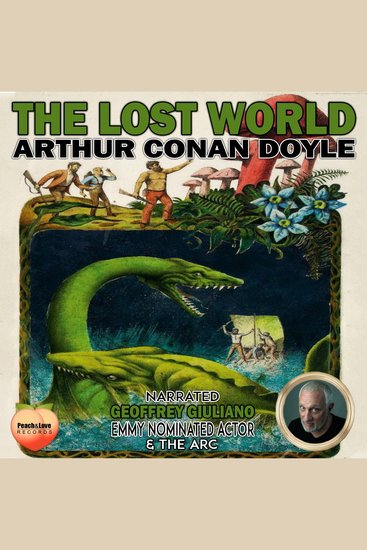
  • The Lost World - cover

    The Lost World

    Arthur Conan Doyle

    • 0
    • 0
    • 0
    "The Lost World" is a novel written by Sir Arthur Conan Doyle, the British author best known for creating the iconic detective Sherlock Holmes. Published in 1912, this adventure novel stands apart from Doyle's more famous detective fiction and is known for its exploration of the unknown and its contribution to the "lost world" literary genre. 
     
    The story is centered around the character of Professor Challenger, an eccentric and larger-than-life scientist who, like Sherlock Holmes, became one of Conan Doyle's memorable literary creations. Professor Challenger claims to have discovered evidence of prehistoric life in the Amazon rainforest and invites a group of individuals, including the narrator Edward Malone, to join him on an expedition to verify his findings. 
     
    The group embarks on a perilous journey into the uncharted and remote plateau in South America, where they encounter a world seemingly frozen in time. Dinosaurs and other prehistoric creatures roam the plateau, and the explorers must navigate not only the dangers of the natural world but also the challenges of their own personalities and relationships. 
     
    "The Lost World" is a pioneering work in the "lost world" subgenre of adventure fiction, which involves the discovery of isolated and prehistoric environments that time forgot. It predates other famous works in this genre, such as Edgar Rice Burroughs' "The Land That Time Forgot" and Sir Arthur Conan Doyle's contemporary H.G. Wells' "The Time Machine." 
     
    The novel combines elements of science fiction, adventure, and exploration with themes of human curiosity, bravery, and the clash between the modern world and the primeval past. It also touches on the ethical implications of encountering and documenting creatures thought to be extinct.
    Show book
  • At the Villa Rose - cover

    At the Villa Rose

    A.E.W. Mason

    • 0
    • 0
    • 0
    Harry Wethermill, the brilliant young scientist, a graduate of Oxford and Munich, has made a fortune from his inventions, and is taking a vacation at Aix-les-Bains. There he meets, and immediately falls in love with, the young and beautiful Celia Harland, who serves as companion to the aging but warm-hearted Madam Dauvray of Paris. All this is observed by Julius Ricardo, a retired financier from the City of London, who spends every August at Aix, expecting there to find a pleasant and peaceful life. Imagine his consternation when he learns that Mme. Dauvray has been brutally murdered, and imagine Harry Wethermill's consternation when he learns that every finger of suspicion is pointed at the now vanished Celia Harland. 
    Implored to do so by Wethermill, Ricardo asks his friend Inspector Hanaud, the great detective of the Paris Sûreté (who is also vacationing in Aix) to involve himself in the case so that the truth may come out. Hanaud agrees to do so (with the permission of the Aix police, of course), and goes to work. Will he be up to the job? And will Harry Wethermill ultimately be glad that he called in the great man? We can only wait to find out. But surely Hanaud will exercise his powerful little grey cells – one of several characteristics he shares with a famous Belgian detective of later decades, and indeed some scholars of mystery stories suggest that Agatha Christie, in her invention of Hercule Poirot, owes a debt to Mason and his invention of Inspector Hanaud. And indeed Julius Ricardo has than a passing resemblance to Arthur Hastings, Poirot's sidekick, who is invariably a few confused steps behind the detective
    Show book
  • Marriage à la Mode - cover

    Marriage à la Mode

    Katherine Mansfield

    • 0
    • 0
    • 0
    Marriage à la Mode is a 1921 short story by Katherine Mansfield. It was first published in The Sphere on 31 December 1921, and later reprinted in The Garden Party and Other Stories. - The title is a play on the phrase mariage à la mode in French, which means 'fashionable marriage'.
    William would usually buy his children sweets because he knows his wife won't let him buy them 'big donkeys and engines', as that would be unseemly. This time he buys fruit instead.
    Show book
  • The Story of Dr Dolittle - cover

    The Story of Dr Dolittle

    Hugh Lofting

    • 0
    • 0
    • 0
    Written by the British author Hugh Lofting, is the first of his Doctor Dolittle books, a series of children's novels about a man who learns to talk to animals and becomes their champion around the world. In this book, we are told how Dr John Dolittle came to learn the language of animals, and become and animal doctor. His journey to Africa to treat the sick Monkeys, and his return back to England. 
    Narrated by Michael Ward.
    Show book