



The Notebooks of Leonardo Da Vinci — Volume 1
Leonardo da Vinci
Publisher: Project Gutenberg
Summary
Sorry, we have no synopsis for this book right now. Sign in to read it on 24symbols.com
Available since: 01/01/2004.

Publisher: Project Gutenberg
Sorry, we have no synopsis for this book right now. Sign in to read it on 24symbols.com

Hi guys this is the AUGUST 2022 Magazine issue, which contains artists interviews to inspire artists, and so much more to help the artist in their art career,it contains artist interviews, art-related topics articles and question of the month, step of the month and social media updatesShow book
In this Oxford Guide to Film Musicals, author Hannah Lewis gives listeners fascinating new insights into the development, style, and reception of the 2016 film musical La La Land. Directed by Damien Chazelle with music by Justin Hurwitz, the film tells the story of a romance between an aspiring actress and jazz pianist as the two pursue their dreams in Los Angeles. It uses a vintage form to tell a modern story and its blend of nostalgia and realism made it an instant classic even as it prompted a range of critical and audience responses. Drawing on extensive personal interviews with director Damien Chazelle, composer Justin Hurwitz, choreographer Mandy Moore, and lyricists Benj Pasek and Justin Paul, the book explores La La Land's aesthetic approach to the film musical genre, particularly its engagement with and subversion of the classic Hollywood musical's stylistic and narrative expectations.


Lewis offers audiences ways of listening to the film's depiction of jazz, focusing especially on how race and genre intersect in its narrative. She also reveals new insights into the film's reception, showing how the critical response from its premiere to its place at the Academy Awards reflected broader cultural expectations and understandings of the film musical and its continued appeal for twenty-first century audiences.
Show book

At the time, it was unclear why the UK government targeted the Spiral Tribe travelling sound system. Even after arresting many key members and launching one of Britain's biggest court cases against them.
Was it really because they were a marauding horde of anarcho-techno-pirates, their outlandish music calling a generation to rise up in rebellion against conservatism, convention, and even consensus reality?
Or was it because, as pioneers of the 1990s free party movement, championing the new British breakbeat and European techno sound, they were reclaiming social space in warehouses and out under the stars?
Each weekend they pulled ever bigger crowds away from consumer culture. No superstar DJs, no door policy and everyone dancing together as equals. An inspiring, unifying force of creativity.
As Spiral Tribe's co-founder and visual artist (or as the Crown Prosecutor described him, 'the criminal ringleader' who'd helped 'mastermind' Britain's 'biggest ever illegal rave' at Castlemorton), Mark Angelo Harrison has a unique perspective to tell their inside story. He vividly charts their nomadic journey and the rapid escalation of their popularity - and notoriety.
From small squat-scene parties in London to enormous warehouse raves and free festivals. From one little overloaded van to the mighty convoy of matt-black military vehicles that instigated the teknivals of Europe.
Show book

By the time the Pleistocene Epoch ended around 12,000 years ago, Homo sapiens had become one of the most significant species on the planet. 	It was also near the end of that period of time that modern humans began to gradually populate what would become Europe, Asia, and the Americas, eventually becoming the inheritors of the Paleolithic era and the only human species to make it into the Neolithic era. 	The cold Pleistocene temperatures lowered water levels across the planet, exposing land that was not there before or after the period. At the same time, significant regions of the planet were very different during the Pleistocene, including Southeast Asia, particularly the modern islands of Bali, Borneo, Sumatra, and the Malay Peninsula, roughly equivalent to parts of Indonesia, Malaysia, and Thailand. This region, which modern scholars refer to as Sunda or Sundaland, was unique because all of it was connected by land, meaning today’s islands were once part of a contiguous subcontinent, and in terms of the people, flora, and fauna, it was very different than it is today.
Among the most significant water displacement phenomena in the Western world was Doggerland on the northern European continent. The notable inundation occurred in both a steady and eruptive fashion covering a vast stretch of former tundra, a land bridge between today’s British Isles and the European continent. The event brought about the modern English Channel and an expanded North Sea, and unlike the early supercontinents, the inundation of Doggerland took place after the appearance of people. Incrementally submerged since roughly 18,000 years ago as the climate warmed, the patch of sea between Britain and Europe is the subject of much recent scientific scrutiny.
Show book
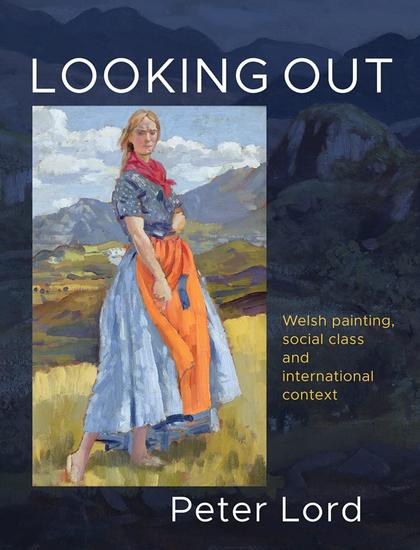
The six sequential essays in this collection provide a narrative of a century and a half of Welsh painting, written with an emphasis on issues of social class and national identity. Through his earlier writing, Peter Lord has contributed to the establishment of an historical tradition of Welsh painting, but because it does not feature in the wider story of Western art history as presently told, the work revealed continues to be perceived as marginal, existing in isolation from ideas and movements in other countries. These essays break new ground by discussing the concerns of Welsh painters not only in domestic terms but also in the context of the ways in which artists in other parts of Europe and in the United States reacted to the common underlying causes of those concerns. The author challenges the idea that the work of Welsh painters is relevant only to the evolution of their own communities and, through confident and detailed analysis, validates their pictures also in terms of the arts of other Western cultures.Show book

How to create your dream home for a low price, stop paying rent, and live comfortably in 9 weeks or less, even if you don't have any building experience
Your dream property is a shipping container away…
Written for novice and experienced DIY enthusiasts, this is an A-to-Z guide to ensure your success in turning a plain shipping container into a beautiful home.
In Shipping Container Homes Guide For Beginners, you'll discover:How to plan for the construction of your container home, get your finances in order, and save money, so you don't get stuck midwayThe how, what, and scope of container home regulations and zoning codes – featuring geo-specific requirements and the most favorable locationsAn in-depth understanding of the aesthetics, performance, and cost of different types of containers and how to inspect them before buyingHow to keep your home cozy irrespective of the season, including some innovative thermal control solutionsHow to prepare for the delivery of your new shipping container home for a seamless installation processThe best foundations for container homes to ensure they are correctly grounded for guaranteed strengthHacks to help prolong the lifespan of your container home, slow the depreciation rate, and maintain it in pristine condition
And so much more!
With over 300 million freight containers sitting empty at ports around the world, you have a rare opportunity to turn a large metal box into your seventh heaven.
Your cozy, peaceful space awaits – why wait any longer?
If you're ready for the feeling of home ownership, then scroll up and click the Add to Cart button.
Show book





