Join us on a literary world trip!
Add this book to bookshelf
Grey
Write a new comment Default profile 50px
Grey
Subscribe to read the full book or read the first pages for free!
All characters reduced
Leo Tolstoy: The Complete Novels (The Greatest Novelists of All Time – Book 4) - cover

Leo Tolstoy: The Complete Novels (The Greatest Novelists of All Time – Book 4)

Leo Tolstoy

Translator Constance Garnett, Louise Maude, C.J. Hogarth, Charles Theodore Hagberg Wright

Publisher: DigiCat

  • 0
  • 0
  • 0

Summary

In "Leo Tolstoy: The Complete Novels (The Greatest Novelists of All Time – Book 4)," readers are invited to immerse themselves in the profound narratives and intricate character studies that define Tolstoy's literary genius. This collection brings together his most celebrated works, including "War and Peace" and "Anna Karenina," showcasing Tolstoy's masterful use of realism, psychological insight, and moral exploration. The extensive range of themes such as love, conflict, and the search for meaning resonates within the broader context of 19th-century Russian literature, reflecting both the social upheaval of the time and the author's moral philosophy. Leo Tolstoy (1828-1910), a revered figure in the literary canon, was not only a novelist but also a social reformer and philosopher. His tumultuous life, marked by aristocratic privilege and profound spiritual crises, shaped his existential inquiries and ethical considerations. Tolstoy's experiences in the Russian military and his eventual conversion to pacifism and Christian anarchism deeply influenced his depiction of human motives and social ethics in his works. This anthology is essential for both scholars and general readers seeking to understand the depth of Tolstoy's thought and artistry. Each novel serves as a window into the human condition, making this collection not just a reading experience, but an exploration into humanity itself.
Available since: 11/23/2023.
Print length: 4658 pages.

Other books that might interest you

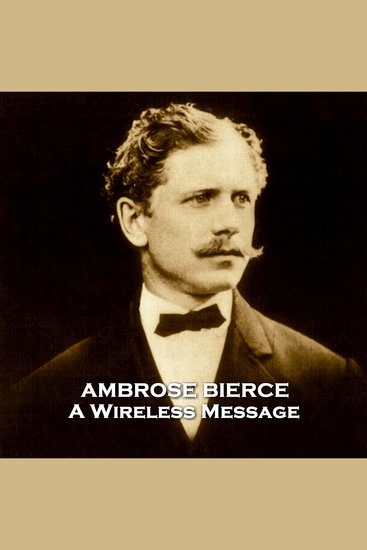
  • A Wireless Message - From their pens to your ears genius in every story - cover

    A Wireless Message - From their...

    Ambrose Bierce

    • 0
    • 0
    • 0
    Ambrose Gwinnett Bierce was born on 24th June 1842 at Horse Cave Creek in Meigs County, Ohio. His parents were poor but they introduced him to literature at an early age, instilling in him a deep appreciation of books, the written word and the elegance of language.  
    Growing up in Koscuisko County, Indiana poverty and religion were defining features of his childhood, and he would later describe his parents as “unwashed savages” and fanatically religious, showing him little affection but always quick to punish. He came to resent religion, and his introduction to literature appears to be their only positive effect. 
    At age 15 Bierce left home to become a printer’s devil, mixing ink and fetching type at The Northern Indian, a small Ohio paper. Falsely accused of theft he returned to his farm and spent time sending out work in the hopes of being published. 
    His Uncle Lucius advised he be sent to the Kentucky Military Institute. A year later he was commissioned as an Officer.  As the Civil War started Bierce enlisted in the 9th Indiana Infantry Regiment.  
    In April 1862 Bierce fought at the Battle of Shiloh, an experience which, though terrifying, became the source of several short stories. Two years later he sustained a serious head wound and was off duty for several months. He was discharged in early 1865.  
    A later expedition to inspect military outposts across the Great Plains took him all the way to San Francisco. He remained there to become involved with publishing and editing and to marry, Mary Ellen on Christmas Day 1871.  They had a child, Day, the following year.  
    In 1872 the family moved to England for 3 years where he wrote for Fun magazine. His son, Leigh, was born, and first book, ‘The Fiend’s Delight’, was published.  
    They returned to San Francisco and to work for a number of papers where he gained admiration for his crime reporting. In 1887 he began a column at the William Randolph Hearst’s San Francisco Examiner.  
    Bierce’s marriage fell apart when he discovered compromising letters to his wife from a secret admirer. The following year, 1889 his son Day committed suicide, depressed by romantic rejection. 
    In 1891 Bierce wrote and published the collection of 26 short stories which included ‘An Occurrence at Owl Creek Bridge’.  Success and further works including poetry followed.  
    Bierce with Hearst’s resources helped uncover a financial plot by a railroad to turn 130 million dollars of loans into a handout. Confronted by the railroad and asked to name his price Bierce answered “my price is $130 million dollars. If, when you are ready to pay, I happen to be out of town, you may hand it over to my friend, the Treasurer of the United States”.  
    He now began his first foray as a fabulist, publishing ‘Fantastic Fables’ in 1899.  But tragedy again struck two years later when his second son Leigh died of pneumonia relating to his alcoholism.  
    He continued to write short stories and poetry and also published ‘The Devil’s Dictionary’.  
    At the age of 71, in 1913 Bierce departed from Washington, D.C., for a tour of the battlefields where he had fought during the civil war. At the city of Chihuahua he wrote his last known communication, a letter to a friend. It’s closing words were “as to me, I leave here tomorrow for an unknown destination,” Ambrose Bierce then vanished without trace.
    Show book

  • History - cover

    History

    Isaac Asimov

    • 0
    • 0
    • 0
    "History" is a science fiction short story by American writer Isaac Asimov. It was first published in the March 1941 issue of Super Science Stories and reprinted in the 1972 collection The Early Asimov.
    Show book
  • Stories To Make You Cry - Sometimes you need a good cry - cover

    Stories To Make You Cry -...

    Anton Chekhov, Stephen Crane,...

    • 0
    • 0
    • 0
    When we read or listen, words can have a transforming effect.  Our mood can alter in the space of a few sentences from joy to sadness.  And not just our mood.  These words can affect us physically, they can engage our emotions and even in their sadness bring a lump to our throat and tears to our eyes.  Sometimes the relief can be palpable. 
     
    Our authors, from Anton Chekhov, Stephen Crane, Willa Cather, Katherine Mansfield and a wealth of others are well aware of what their talents will evoke.   Genius has many names.   
     
    1 - Short Stories To Make You Cry  - An Introduction 
    2 - Vanka by Anton Chekhov 
    3 - A Dark Brown Dog by Stephen Crane 
    4 - Suicides by Guy de Maupassant 
    5 - The Life of Ma Parker by Katherine Mansfield 
    6 - The District Doctor by Ivan Turgenev 
    7 - Paul's Case by Willa Cather 
    8 - Hands by Sherwood Anderson 
    9 - Silence by Leonid Andreyev 
    10 - The Stones of the Village by Alice Dunbar Nelson 
    11 - Hide And Seek or Pliatki by Fyodor Sologub
    Show book
  • Les Misérables: Volume 4: The Idyll in the Rue Plumet and the Epic in the Rue St Denis - Book 9: Whither are They Going? (Unabridged) - cover

    Les Misérables: Volume 4: The...

    Victor Hugo

    • 0
    • 0
    • 0
    Victor-Marie Hugo (26 February 1802 - 22 May 1885) was a French poet, novelist, essayist, playwright, and dramatist of the Romantic movement. During a literary career that spanned more than sixty years, he wrote abundantly in an exceptional variety of genres: lyrics, satires, epics, philosophical poems, epigrams, novels, history, critical essays, political speeches, funeral orations, diaries, and letters public and private, as well as dramas in verse and prose.
    BOOK 9: WHITHER ARE THEY GOING?: That same day, towards four o'clock in the afternoon, Jean Valjean was sitting alone on the back side of one of the most solitary slopes in the Champ-de-Mars. Either from prudence, or from a desire to meditate, or simply in consequence of one of those insensible changes of habit which gradually introduce themselves into the existence of every one, he now rarely went out with Cosette.
    Show book
  • Door in the Wall The (Unabridged) - cover

    Door in the Wall The (Unabridged)

    H. G. Wells

    • 0
    • 0
    • 0
    The eight stories here show Wells in various moods and foreshadow his celebrity. These are uncanny tales, resonating strangely, despite arising from ordinary thoughts, interactions, and memories. Wells shows just how fantastic the everyday can be, if one only pauses to reflect on missed chances, suggestions of what might have been, bleak premonitions of blessed futures whose utopian promise is destroyed by new forms of war.
    Show book
  • Grimm's Fairy Tales - A Collection of Classic Bedtime Stories for Kids & Adults - cover

    Grimm's Fairy Tales - A...

    The Brothers Grimm

    • 0
    • 0
    • 0
    Ready to turn bedtime into the most magical part of your day? Dive headfirst into a world of wonder, danger, laughter, and heart with Grimm’s Fairy Tales: A Collection of Classic Bedtime Stories for Kids & Adults! This isn’t just an audiobook — it’s a dazzling journey through enchanted forests, royal palaces, and mysterious villages where anything is possible and every story bursts with adventure. Cheer for brave Hansel and clever Gretel, gasp as Little Red Riding Hood faces the big bad wolf and celebrate the power of love and courage with Sleeping Beauty and the Frog Prince. These legendary tales don’t just entertain — they ignite the imagination, teach timeless life lessons, and fill every listener with joy, hope, and wonder. Whether you’re sharing them with a child or rediscovering them for yourself, each story is a cozy escape into a world where good triumphs, magic is real, and dreams truly do come true. So snuggle in, press play, and let the magic of Grimm sweep you away tonight!
    Show book