Join us on a literary world trip!
Add this book to bookshelf
Grey
Write a new comment Default profile 50px
Grey
Subscribe to read the full book or read the first pages for free!
All characters reduced
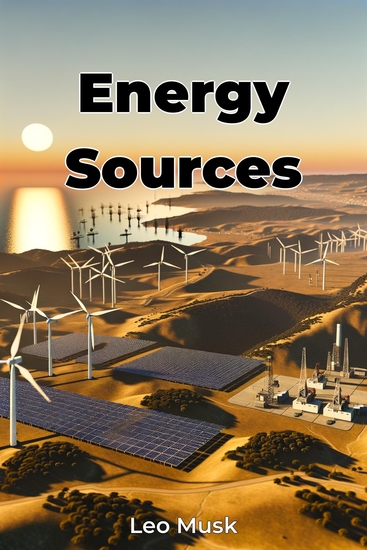
Energy Sources - cover

Energy Sources

Leo Musk

Publisher: Publifye

  • 0
  • 0
  • 0

Summary

"Energy Sources: Mapping the Future of Power" offers a comprehensive exploration of the global energy landscape, leveraging Geographic Information Systems (GIS) and remote sensing technologies to provide unique insights into our power production and consumption patterns. This book examines conventional fossil fuels, renewable energy sources, and emerging technologies, emphasizing the crucial role of a diversified energy portfolio in ensuring energy security and sustainability.

 
The authors present a systematic journey through the energy sector, starting with key concepts and progressing to detailed analyses of major energy sources. They utilize satellite imagery, geological surveys, and energy consumption data to support their arguments, offering readers a visual and data-driven understanding of complex energy systems.

 
The book's unique approach lies in its application of cutting-edge GIS and remote sensing technologies to energy resource management, demonstrating how these tools can optimize renewable energy installations, monitor power plant efficiency, and predict future energy demands.

 
By bridging multiple disciplines and presenting information in an accessible yet academic style, this book serves as an invaluable resource for researchers, policymakers, and informed citizens interested in the future of energy. It not only provides a solid foundation in energy systems but also offers practical insights into the application of geospatial technologies in this critical sector, making it particularly useful for students and professionals in the fields of energy, environmental science, and GIS.
Available since: 10/15/2024.
Print length: 193 pages.


Other books that might interest you

  • AI's Impact: Unraveling Economic Secrets for Global Thriving - "Unlock economic insights with captivating audio lessons that empower your global success and understanding of AI's influence!" - cover

    AI's Impact: Unraveling Economic...

    Ronan Ashby

    • 0
    • 0
    • 0
    AI's Impact: Unraveling Economic Secrets for Global Thriving  
    ⭐⭐ Simplified Guide & Explanations Included ⭐⭐ 
    Are you eager to advance in your career and enhance your understanding of tomorrow’s economy amidst unforeseen financial shifts? 
    Looking for a comprehensive resource that covers everything you need to thrive in today’s economic landscape? 
    Your quest ends here! 
    This guide is your ultimate companion for deepening comprehension, applying practical skills, and engaging in meaningful exercises. With this resource, you are set up for success. 
    Updated to reflect the latest trends and insights for 2025. 
    Key features of this enriched guide: 
    - In-depth insights into the intricacies of tomorrow's economy and its impacts 
    - Thorough explanations of economic principles  
    - Effective strategies for preparing for unexpected financial changes 
    Our guide stands out through its extensive coverage, which is crucial for your success. Concepts are not just glossed over; they are explored in detail with clarity. 
    Please note that this guide is an independent resource and not affiliated with any official economic entity. 
    Crafted with a clear structure and straightforward language, our guide guarantees smooth transitions between topics. Bid farewell to complicated jargon and embrace clear, accurate, and technically sound content. 
    So, why hesitate? Click the BUY NOW button, secure your guide, and embark on your journey to mastering tomorrow’s economy! 
    With this guide, prepare to face the challenges of a dynamic economic environment!
    Show book
  • Strategy Games Cheat Code - cover

    Strategy Games Cheat Code

    Santi Hollis

    • 0
    • 0
    • 0
    Strategy Games Cheat Code: The Comprehensive Guide on How to Become an Expert in Strategy GamesHumans by nature love to strategize. The evolution of the race is primarily because humans strategized and conceptualized things. A particular amount of well-defined and concrete planning is involved, combined with the right action that will lead to the strategy’s success. This very kind of logical thinking is also applicable to the world of today’s strategy games.Strategy games are games in which the outcome is determined based on the choices made by the player. Games of this kind can be won using tactics instead of technical proficiency or force. Checkers and chess are examples of strategy games as well as other kinds of board games. Strategy games are also considered among the most famous genres of video games which encompass several types.In this audiobook, you will learn The Comprehensive Guide on How to Become an Expert in Strategy Games! So what are you waiting for, download a copy of Strategy Games Cheat Code today!
    Show book
  • Walking with Spring - cover

    Walking with Spring

    Earl V. Shaffer

    • 0
    • 0
    • 0
    In 1948, the Appalachian Trail had been a continuous, 2,000-mile footpath for eleven years, but no one had walked its length alone in a continuous journey—until Earl Shaffer, a quiet Pennsylvanian, became a hiking legend and the first of what is now more than 5,500 A.T. "thru-hikers," walking from Georgia to Maine as spring arrived to each area. In 1998, he hiked again as a 50th-anniversary celebration, to far greater publicity. This is the lyrical account of his fabled 1948 walk. 


    Written soon after the first of his three thru-hikes, Walking with Spring chronicles Shaffer's adventures along a path that at the time was showing neglect of the war years and has since been rerouted significantly to its permanent location. His simply stated story has served as an inspiration for more than 9,000 men and women who have since followed in his footsteps . . . and many more who have tried.
    Show book
  • Reaching the Moon: The History of the NASA Programs that Led to the Successful Apollo Missions - cover

    Reaching the Moon: The History...

    Editors Charles River

    • 0
    • 0
    • 0
    The Apollo Program is the most famous and celebrated in American history, but the first successful landing of men on the Moon during Apollo 11 had complicated roots dating back over a decade, and it also involved one of NASA’s most infamous tragedies. From 1959-1963, the United States worked toward putting satellites and humans into orbit via the Mercury program, but Eisenhower’s administration was already designing plans for the Apollo program by 1960, a year before the first Russian orbited the Earth and two years before John Glenn became the first American to orbit the Earth. 
    At the same time, America would begin missions to the Moon as early as 1958. On March 27, 1958, Secretary of Defense Neil McElroy announced a lunar project for the International Geophysical Year, consisting of three Air Force launches followed by two Army launches of a JPL-designed lunar probe. ARPA directed the Air Force to launch its probes "as soon as possible consistent with the requirement that a minimal amount of useful data concerning the Moon be obtained." 
    Throughout the 1960s, NASA would spend tens of billions on missions to the Moon, the most expensive peacetime program in American history to that point, and Apollo was only made possible by the tests conducted through earlier missions, including the historic Ranger Program. Conceived as an early part of the attempt to land a man on the Moon, Ranger was designed to photograph the lunar surface in preparation for future landings. Until Ranger, images of the Moon were only available through Earth-based telescopes, which lacked the detail necessary to determine safe sites for landing a spacecraft. Ranger aimed to fill in that gap of knowledge, and like many of NASA’s missions during the 1960s, the program exemplified both the successes and the failures of the agency’s early years.
    Show book
  • Straight To Deep Sleep: A Guided Sleep Meditation To Help You Fall Into A Deep Restful Healing Sleep - cover

    Straight To Deep Sleep: A Guided...

    Center for Sleep Disorders

    • 0
    • 0
    • 0
    Would you like to fall asleep faster, sleep more deeply, and easily?  
     
    - reduce stress and manage anxiety?  
    - take back control over your life 
    - learn how to navigate through loss, a relationship ending, and narcissistic relationship behaviours? 
     
    Discover how this deep sleep meditation can help you naturally overcome your insomnia. 
     
    No longer do you need to toss and turn endlessly stuck in overthinking cycles, knowing you won’t get any sleep that night. 
     
    All you need to do is put on your headphones, listen to this meditation and let our narrator do the rest! 
     
    Here’s a tiny example of what’s inside: 
     
    •	Gentle guided sleep meditation, 
    •	Soothing nature sounds, 
    •	Calming Solfeggio Music for better sleep, 
    •	Positive thoughts you can listen to anytime you want to retrain your subconscious for lasting results. 
     
    Listen to this program on a low volume to ensure uninterrupted sleep once you drift off, for at least 21 consecutive days to ensure the best possible effect. We recommend using headphones, because this audiobook combines many acoustic levels that enhance the effect. 
     
    Trouble sleeping does not have to be a norm for you. If sleeping problems plague you, it's time to try this all-natural sleep aid and put this guided sleep meditation to work for you. Soon sleeplessness will be a distant memory as you doze off, sleep well, and wake up refreshed.
    Show book
  • Theoretical Physics - Exploring Advanced Concepts in Physics - cover

    Theoretical Physics - Exploring...

    Mark Hedges

    • 0
    • 0
    • 0
    Theoretical physics is the foundation of our understanding of the universe, providing the mathematical framework that describes physical laws and fundamental interactions. Unlike experimental physics, which relies on observation and experimentation, theoretical physics develops models and equations that predict and explain phenomena, often extending beyond what can currently be tested. From Newton’s laws to Einstein’s theories and quantum mechanics, the field has evolved to encompass a vast range of concepts that shape modern science. 
    Mathematics plays a crucial role in theoretical physics, serving as the language through which physical principles are expressed. Equations such as Newton’s second law, Maxwell’s equations, and Schrödinger’s equation provide precise descriptions of motion, electromagnetism, and quantum mechanics, respectively. The ability to abstractly represent nature through mathematical formalisms allows physicists to derive new predictions and unify disparate concepts. For example, Einstein’s field equations of general relativity describe how mass and energy curve spacetime, leading to predictions of gravitational waves and black holes, both of which were later confirmed through experiments. 
    A key principle in theoretical physics is symmetry, which governs many of the fundamental laws of nature. Symmetries in physical systems often correspond to conservation laws, a relationship formalized by Noether’s theorem. For instance, the symmetry of time invariance leads to the conservation of energy, while spatial symmetry results in the conservation of momentum.
    Show book