Join us on a literary world trip!
Add this book to bookshelf
Grey
Write a new comment Default profile 50px
Grey
Subscribe to read the full book or read the first pages for free!
All characters reduced
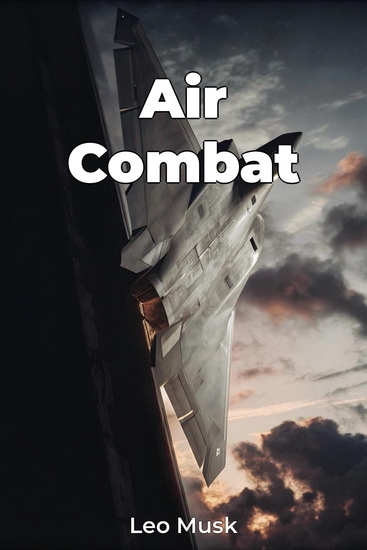
Air Combat - cover

Air Combat

Leo Musk

Translator A AI

Publisher: Publifye

  • 0
  • 0
  • 0

Summary

Air Combat offers a comprehensive exploration of aerial warfare's evolution, from rudimentary biplanes to today's sophisticated fighter jets and drone warfare. Highlighting the transformation of air combat tactics, aircraft design, and the strategic importance of air power, the book emphasizes how technological innovation reshaped the balance of power. One intriguing aspect is the integration of previously declassified materials, providing fresh insights into strategic decisions behind air power development. The book progresses chronologically and thematically, beginning with World War I's primitive aircraft and pioneering tactics.

 
It analyzes the interwar period and World War II, detailing the rise of monoplane fighters and strategic bombing campaigns. Further, it examines the Cold War era, jet-powered aircraft, and air-to-air missiles, concluding with modern air combat, stealth technology, and drone warfare. This approach makes the book valuable for understanding the dynamics of modern warfare.
Available since: 02/17/2025.
Print length: 70 pages.

Other books that might interest you

  • Lenin - Responding to Catastrophe Forging Revolution - cover

    Lenin - Responding to...

    Paul LeBlanc

    • 0
    • 0
    • 0
    Vladimir Lenin lies in a tomb in Moscow's Red Square. History has not been kind to this Russian leader, his teachings reviled by modern mainstream politics. But in today's capitalist society, riven by class inequality and imperialist wars, perhaps it is worth returning to this communist icon's demand for "Peace, Land and Bread", and his radical understanding of democracy. 


    Lenin was wrestling with the question of "what is to be done?" when facing the catastrophes of his own time. Against the odds, the Bolshevik party succeeded in rejecting both the corrupt and decaying Romanov dynasty, as well as the capitalist economic system which had started to take root in Russia. 


    To understand how this happened, and what we can learn from him today, Paul Le Blanc takes us through Lenin's dynamic revolutionary thought, how he worked as part of a larger collective, and how he centered the labor movement in Russia and beyond, uncovering a powerful form of democracy that could transform our activism today.
    Show book
  • Famous Lost Cities of Antiquity The: The History of Large Settlements in Ancient Egypt Greece and the Middle East that Suddenly Disappeared - cover

    Famous Lost Cities of Antiquity...

    Editors Charles River

    • 0
    • 0
    • 0
    Throughout the millennia since the pharaohs ruled Egypt, peasants have routinely used remnants of ancient monuments for new housing structures, implements, and even fertilizer, and the situation is even more pronounced closer to the Mediterranean coast. Cities that once were major ports where the various branches of the Nile River flowed into the Mediterranean are now miles off the coastline, under hundreds of feet of water. The existence of these cities was known thanks to Egyptian and Greek historical sources, but their locations could never be positively identified until the advent of modern marine technology. In 1996, adventurer and scholar Franck Goddio identified what he believed was a major site just off the Mediterranean coastline in the Abu Qir Bay, east of Alexandria. It turned out Goddio had discovered the ancient city of Heracleion. 
    If it were not for some very fortunate events and circumstances, the modern world might never have known about Mari. For a period of just under 100 years, the city of Mari in northern Mesopotamia-eastern Syria was one of the most, if not the most, important cities in the Near East. Founded by semi-nomadic Amorite tribes, Mari was gradually transformed over the span of centuries from a sleepy stop along the Euphrates River to the premier power in Near East during the early 2nd millennium BCE. 
    Ubar continued to fascinate people around the world, and it seemed as though its secrets would remain hidden beneath the Arabian sands until the 1980s, when a photojournalist named Nicholas Clapp eventually turned his interest into a full-time endeavor to find Ubar and put together a team of adventurers and archaeologists. Working backwards from the few scant historical and geographical accounts that portray Ubar as a prosperous city or kingdom in the centuries before Islam, Clapp narrowed their search to a location on the edge of the Arabian Desert and it is there that they believed they found Ubar
    Show book
  • Becoming a Fully Aligned Student-Centered Organization - A Guide for School Leaders - cover

    Becoming a Fully Aligned...

    Kevin Stoller

    • 0
    • 0
    • 0
    Dr. Alicia Ramirez can’t take it anymore. The district’s disconnected decision-making, endless meetings, and reactive processes are robbing her of the success she had envisioned. With operational chaos looming, she hears of another superintendent whose role has been transformed by embracing new processes. Could it be that simple?Follow along as Dr. Ramirez discovers the practical, proven Fully Aligned Student-Centered Organization, or FASCO™, system. Then, walk through the hands-on instruction manual detailing the tools that transform Dr. Ramirez’s district—and her life.If you’re ready to create an environment where student needs and growth are central to every decision, pick up a copy of Becoming a Fully Aligned Student-Centered Organization today.
    Show book
  • Admiral Chester W Nimitz: The Life and Legacy of the US Pacific Fleet's Commander in Chief during World War II - cover

    Admiral Chester W Nimitz: The...

    Charles River Editors

    • 0
    • 0
    • 0
    “It is the function of the Navy to carry the war to the enemy so that it is not fought on U.S. soil.” – Admiral Nimitz  
    	All Americans are familiar with the “day that will live in infamy.” At 9:30 a.m. on Sunday, December 7, 1941, Pearl Harbor, the advanced base of the United States Navy’s Pacific Fleet, was ablaze. It had been smashed by aircraft launched by the carriers of the Imperial Japanese Navy. All eight battleships had been sunk or badly damaged, 350 aircraft had been knocked out, and over 2,000 Americans lay dead. Indelible images of the USS Arizona exploding and the USS Oklahoma capsizing and floating upside down have been ingrained in the American conscience ever since. In less than an hour and a half the Japanese had almost wiped out America’s entire naval presence in the Pacific.  
    	Despite fighting in North Africa and the Atlantic, the United States still had the resources and manpower to fight the Japanese in the Pacific. Though the Japanese had crippled the American fleet at Pearl Harbor, its distance from Japan made an invasion of Pearl Harbor impossible, and Japan had not severely damaged important infrastructure. Thus, the United States was able to quickly rebuild a fleet, still stationed at Pearl Harbor right in the heart of the Pacific. This forward location allowed the United States to immediately push deeply into the Pacific theater. 
    	The Americans would eventually push the Japanese back across the Pacific, and one of the most instrumental leaders in the effort was Admiral Chester W. Nimitz, who commanded the U.S. Pacific Fleet and helped coordinate joint operations with the legendary General Douglas MacArthur, the Supreme Commander, Southwest Pacific Area. The ensuing strategies would lead to decisive operations at places like Midway, Iwo Jima, Okinawa, and others before the use of the atomic bombs compelled Japan’s surrender in August 1945. 
    Show book
  • Professor jiang: jiang xueqin the whiteboard prophet - cover

    Professor jiang: jiang xueqin...

    Steve Nico Williams

    • 0
    • 0
    • 0
    PROFESSOR JIANG: JIANG XUEQIN THE WHITEBOARD PROPHET tells the astonishing true story of the Chinese‑Canadian high school teacher who saw the future no one else could see. In May 2024, Jiang Xueqin stood before a whiteboard in a Beijing classroom and calmly explained why a U.S. war with Iran would end in catastrophe. His students barely listened. The video he uploaded that night received zero views. Two years later, with American warships burning in the Strait of Hormuz and the world hurtling toward a conflict Washington could not win, that same grainy footage exploded—viewed forty million times and counting. Suddenly the quiet educator became Professor Jiang, the Whiteboard Prophet whose unflinching analysis of terrain, logistics, and the ancient Athenian disaster in Sicily had predicted the unthinkable. This landmark biography traces Jiang Xueqin from his childhood scrubbing dishes in a Toronto kitchen and his lonely years at Yale to his deportation from China and his improbable return as the architect of a new kind of education. At the heart of the book lies the Whiteboard Prophet’s revolutionary “Predictive History” framework—a way of seeing the patterns that shape wars, economies, and our own daily decisions. Part geopolitical thriller, part immigrant odyssey, part manual for thinking clearly in a chaotic age, PROFESSOR JIANG is the definitive portrait of the man who taught the world to look at the map before it marched into the mountains of Iran. For anyone wondering what happens next in the Strait of Hormuz and beyond, Jiang Xueqin’s story is essential reading.
    Show book
  • Beyond the Secret Garden - The Life of Frances Hodgson Burnett - cover

    Beyond the Secret Garden - The...

    Ann Thwaite, Jacqueline Wilson

    • 0
    • 0
    • 0
    Frances Hodgson Burnett's favorite theme in her fiction was the reversal of fortune, and she herself knew extremes of poverty and wealth. Born in Manchester in 1849, she emigrated with her family to Tennessee because of the financial problems caused by the cotton famine. From a young age she published her stories to help the family make ends meet. Only after she married did she publish Little Lord Fauntleroy that shot her into literary stardom. 


    On the surface, Frances' life was extremely successful: hosting regular literary salons in her home and travelling frequently between properties in the United Kingdom and America. But behind the colorful personal and social life, she was a complex and contradictory character. She lost both parents by her twenty-first birthday, Henry James called her "the most heavenly of women" although avoided her; prominent people admired her and there were many friendships as well as an ill-advised marriage to a much younger man that ended in heartache. Her success was punctuated by periods of depression, in one instance brought on by the tragic loss of her eldest son to consumption. 


    Ann Thwaite creates a sympathetic but balanced and eye-opening biography of the woman who has enchanted numerous generations of children.
    Show book