Join us on a literary world trip!
Add this book to bookshelf
Grey
Write a new comment Default profile 50px
Grey
Subscribe to read the full book or read the first pages for free!
All characters reduced
In the Wilds of South America - Exploring the untamed beauty and culture of South America through captivating travel essays - cover

In the Wilds of South America - Exploring the untamed beauty and culture of South America through captivating travel essays

Leo E. Miller

Publisher: Good Press

  • 0
  • 0
  • 0

Summary

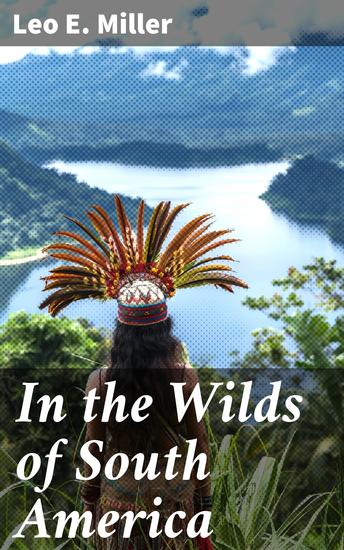
In 'In the Wilds of South America,' Leo E. Miller offers a breathtaking exploration of the diverse ecosystems and indigenous cultures of South America, infusing the narrative with a blend of vivid description and meticulous observation. Through his immersive prose, Miller transports the reader into untamed jungles and sprawling landscapes, revealing the intricate interconnections between environment and humanity. The book stands as a significant contribution to the early 20th-century literature on natural history and exploration, reflecting a genre deeply concerned with environmental conservation in an era of rapid industrial change. Leo E. Miller, an influential naturalist and biologist, possessed a profound fascination with South America that stemmed from his early academic pursuits in the natural sciences. His firsthand experiences as an explorer equipped him with the insight needed to capture the essence of both the region's breathtaking biodiversity and the cultural practices of its indigenous peoples. This intimate understanding of his subject matter is evident throughout the book, as he conveys not just the beauty of the landscapes but also the wisdom of the people who inhabit them. Whether you are an avid naturalist or simply seeking an enriching literary journey, Miller's 'In the Wilds of South America' promises to captivate and educate. Its lyrical style and rich observations invite readers to reflect on our responsibility to the environment while appreciating the rich tapestry of life in one of the world's most biodiverse regions.
Available since: 11/15/2023.
Print length: 409 pages.
Other books that might interest you

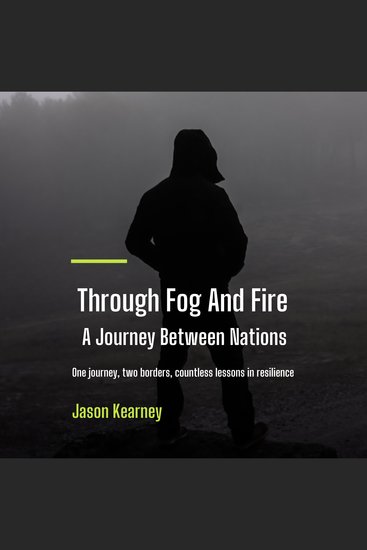
  • Through Fog and Fire - A Journey Between Nations - cover

    Through Fog and Fire - A Journey...

    Jason Kearney

    • 0
    • 0
    • 0
    Through Fog and Fire: A Journey Between Nations 
    In this gripping short story, Jason Kearney takes us on a single day’s journey that will linger in your memory long after the final word. Set against the backdrop of Eastern Europe, this is more than just a tale of travel—it’s an odyssey through the raw, unfiltered challenges of life on the road. 
    When Jason and his companion Monique set out to cross the border from Romania into Bulgaria, they are met with obstacles that test their resilience, courage, and trust in each other. From corrupt officials demanding bribes to wild dogs pursuing him across frozen landscapes, Jason weaves a vivid narrative of survival, defiance, and the power of human connection. 
    A tale of suspense and heart, Through Fog and Fire is not just a story of borders crossed but of lessons learned and strength discovered. Poetic, reflective, and deeply personal, this short story is a journey in itself—through the fog of uncertainty and the fire of challenge. 
    Will they make it through? Turn the page to find out.
    Show book
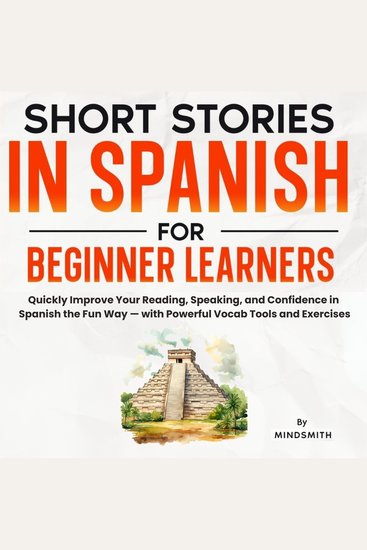
  • Short Stories in Spanish For Beginner Learners - Quickly Improve Your Reading Speaking and Confidence in Spanish the Fun Way — with Powerful Vocab Tools and Exercises - cover

    Short Stories in Spanish For...

    Mind Smith

    • 0
    • 0
    • 0
    * Over 10,000 students have skyrocketed their learning so far with our short stories books * 
    The only beginner Spanish short stories book with bilingual summaries, quizzes, translations + a 7-day challenge — your complete starter kit! 
    What if Spanish felt so easy you didn't need translations or apps, even as a beginner… and reading just flowed? You could feel confident in record time. These engaging short stories make learning natural, fun, and confidence-building, while giving you tools that no textbook or app could. 
    What you’ll get: 
    ✅ 15 Culturally-relevant stories that are fun to listen to in 10 minutes or less 
    ✅ Chapter summaries in both languages so you don't get stuck 
    ✅ Quizzes, vocab lists and verb conjugations - to solidify your learning 
    ✅ English translations to check your understanding and build confidence 
    ✅ 7-Day Spanish Reading Challenge - your step-by-step plan to build momentum and confidence in just one week ($20 value) 
    ✅ Our Exclusive “Cheat Sheet” of 500 Spanish Words You Already Know – to instantly boost your vocab and confidence ($20 value) 
    Designed for beginners with at least a little bit of experience*, and intermediate learners. Focused primarily on Latin American Spanish and culture (but the Spanish you learn will 100% work in Spain too!) 
    Use the 7-Day Challenge and see the difference. If you don’t feel more confident after reading the stories and completing the challenge, Amazon’s easy returns have you covered. 
    Ready to drastically boost your confidence in reading, speaking and thinking in Spanish? Grab your copy and start reading today.
    Show book
  • Are We There Yet? - Travel as a Spiritual Practice - cover

    Are We There Yet? - Travel as a...

    Shefa Gold

    • 0
    • 0
    • 0
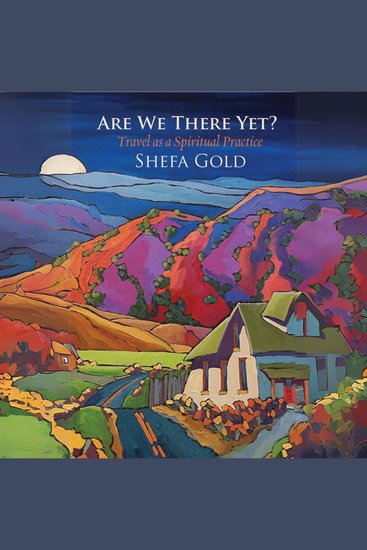
    It's the perpetual question: Are we there yet? We've probably asked and answered it countless times. But impatience can cloud the real question: Where are we right now? Are We There Yet? shows a way to turn travel into a spiritual practice. 
    From the Gully to the Crossroads--walking, driving, flying--Rabbi Shefa Gold shares her experience and insight on travel and helps us reexamine our natural inclination to focus on our destinations--both physical and spiritual. 
    Ride along with her on her many journeys--some mundane, some mysterious, and a few near miraculous--and discover the joy of what can happen when you stop worrying about there and focus on here. 
    Are We There Yet? lets you tap into the potential of each journey--starting with the first step. 
    Music by Steve Cramer 
    With the permission of the publisher  Ben Yehuda Press 
    Visit https://www.rabbishefagold.com/ to learn more.
    Show book
  • Accidentally Wes Anderson: Adventures - cover

    Accidentally Wes Anderson:...

    Wally Koval, Amanda Koval, Wes...

    • 0
    • 0
    • 0
    Adventure awaits in this new visual odyssey from Accidentally Wes Anderson, taking readers on stunning trips to every continent and sharing oddly moving human tales along the way. For lovers of travel, design, and exploration, AWA presents a brand-new collection of real-world places that seem plucked from the films of Wes Anderson, and the stories that bring each location to life. You’ll venture to Antarctica through the treacherous Drake Passage, make a stop in lesser-known Jincumbilly, Australia (where platypuses outnumber people), discover the bridge in Wisconsin that went to nowhere, and drop into the most peculiar umbrella shop in London. But adventure means nothing without someone to tell the tale.    You’ll meet the father of American skydiving, who created the officially-sanctioned center of Earth—a California town with a population of two. You’ll visit the “post office at the end of the world”—and meet its mustachioed letter carrier, who runs an anarchist island nation in his free time. And you’ll travel to a town in the Arctic Circle where cats are prohibited, humans may not be buried, and doomsday vaults hold all we need to survive an apocalypse—including the secret recipe for the Oreo cookie.    Authorized by the legendary filmmaker himself, Accidentally Wes Anderson Adventures reminds us that the world is ours to explore.
    Show book
  • The Kingdom of Kush - Nubian Kings and the Black Pharaohs of the Nile - cover

    The Kingdom of Kush - Nubian...

    Rolf Hedger

    • 0
    • 0
    • 0
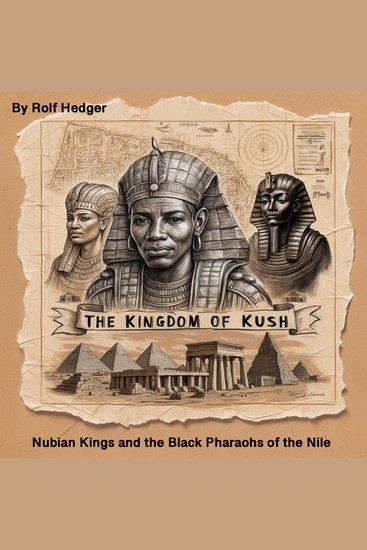
    The Kingdom of Kush, an ancient African civilization, flourished along the Nile River in what is now modern-day Sudan. This powerful kingdom played a crucial role in the history of northeastern Africa, often interacting with its northern neighbor, Egypt. The land of Kush was known for its rich natural resources, strategic location, and unique cultural identity, which set it apart from other civilizations of the time. 
    Geographically, Kush was centered in the region known as Nubia, a stretch of land between the first and sixth cataracts of the Nile. This location provided fertile lands for agriculture, supported by the annual flooding of the river. Unlike Egypt, which relied heavily on the predictable flooding of the Nile, the Kushites also adapted to drier conditions, developing irrigation techniques to sustain their crops. The region was abundant in valuable resources such as gold, ivory, ebony, and exotic animal skins, making it an important trade hub in the ancient world. These resources attracted merchants from Egypt, the Mediterranean, and even as far as the Middle East, contributing to the kingdom's economic strength. 
    Kushite civilization was heavily influenced by its relationship with Egypt, but it also maintained distinct cultural and political traditions. Early Kushite settlements date back to around 2500 BCE, and by the time of the Egyptian Middle and New Kingdoms, Kush had grown into a formidable power. Egyptian pharaohs often sought control over Nubia due to its wealth, leading to periods of conquest and integration. However, Kush was not merely a passive recipient of Egyptian influence. It developed its own identity, blending Egyptian religious beliefs with native Nubian traditions, which would later be reflected in Kushite art, architecture, and burial practices.
    Show book
  • The Pharaohs of Ancient Egypt - Rulers of the Nile - cover

    The Pharaohs of Ancient Egypt -...

    Omar Khalil

    • 0
    • 0
    • 0
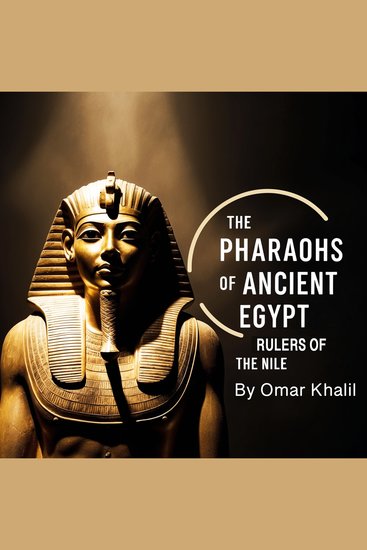
    The emergence of the pharaohs marked the beginning of one of history’s most iconic civilizations. In the early dynastic period around 3100 BCE, Egypt underwent a dramatic transformation as Upper and Lower Egypt were unified under a single ruler, traditionally identified as King Narmer or Menes. This unification not only established centralized rule but also laid the foundations for a dynastic tradition that would endure for millennia. The pharaoh, whose name means “great house,” came to be seen as both a political leader and a divine figure, embodying the will of the gods on earth. 
    As Egypt’s first kings consolidated power, they created administrative systems to manage resources, command armies, and oversee large-scale construction projects. Hierarchical governance emerged, with officials and scribes acting under the pharaoh’s authority to maintain order throughout the land. This new system allowed the pharaohs to centralize authority, control the fertile Nile Valley, and ensure the production and redistribution of grain and other goods, which became critical for sustaining a growing population and for asserting royal dominance. 
    Religious ideology played a key role in solidifying the power of the pharaohs. They were often depicted as the sons of deities, particularly associated with the sun god Ra and the sky god Horus. Temples were erected not just as places of worship, but as instruments of royal propaganda, showcasing the divine legitimacy of the ruler. Rituals, festivals, and monumental inscriptions reinforced the pharaoh’s sacred status and his role in maintaining ma’at, the cosmic order of balance and harmony.
    Show book